
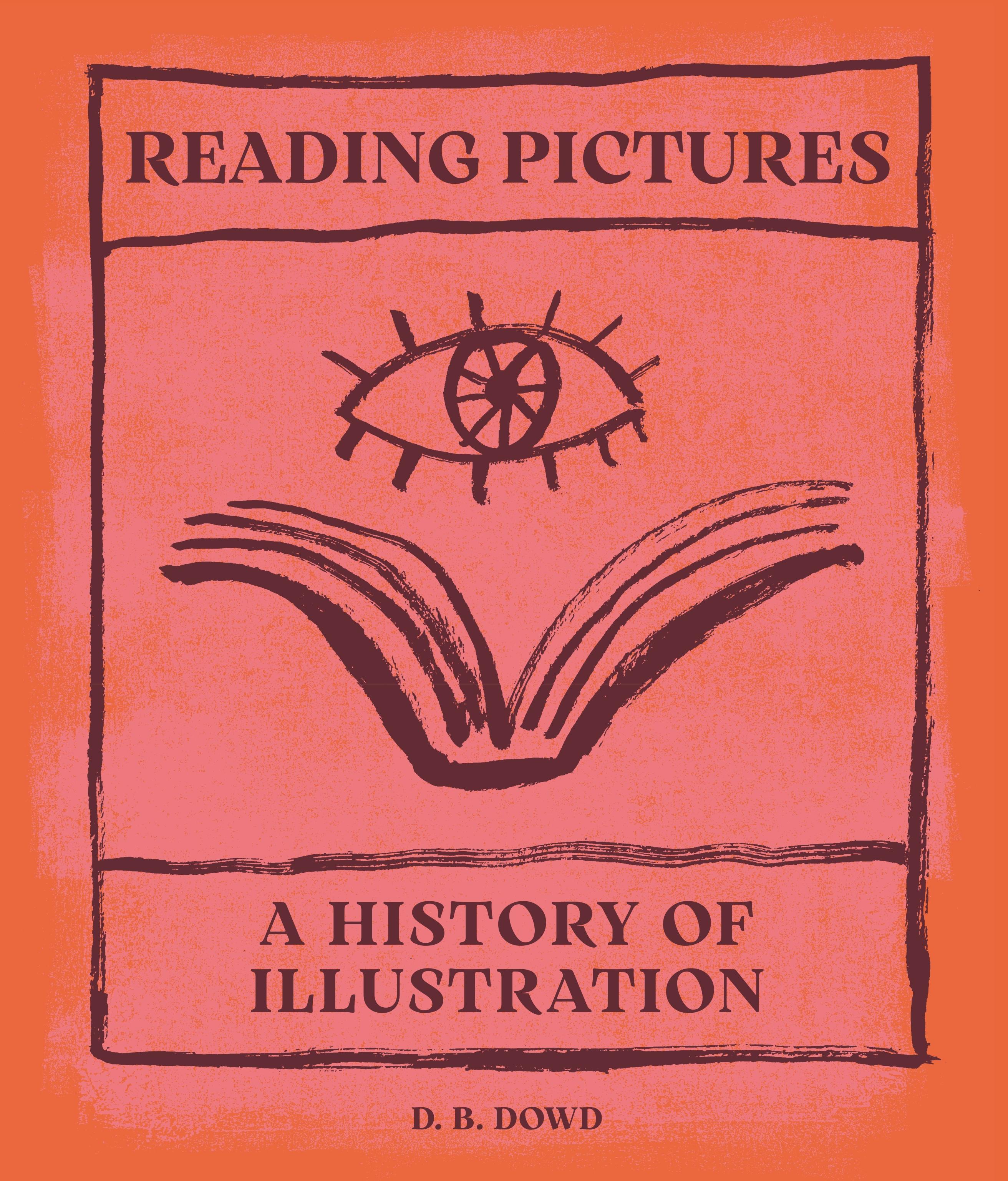
A history of illustration from the beginning of popular print to the rise of mass literacy and into today’s age of digital media
Of all the visual arts, illustration shares a unique relationship with the written word, often serving to visualize, enhance, or respond to a text. Reading Pictures presents a global history of this versatile art form, linking its emergence to modern developments such as the illustrated news, recreational reading, and ad-driven consumer culture.
From the advent of the printing press in the mid-fifteenth century to the modernist artistic and cultural movements of the nineteenth and twentieth centuries, D. B. Dowd traces the development of illustration as an integral part of the reading experience. He examines the move from ancient scrolls to pamphlets and book forms, and a return to the scroll in electronic form on smartphones and tablets. His story begins with relief prints and woodcuts in ancient China and Japan before moving to printing and platemaking in early modern Europe. Dowd discusses how book and periodical publishing rose sharply with the innovations of wood engraving and lithography, leading to a boom in cultural literacy; and how the illustrated press reached its zenith between the 1860s and 1960s, as printed entertainment and the news of the world became commonplace in every household, bringing with them advertising, propaganda, and consumer culture.
Richly illustrated with more than four hundred images spanning the iconic to the unexpected, Reading Pictures reframes the story of illustration within the broader histories of race, gender, literacy, and the transmission of cultural memory. It reveals how reading and looking have become increasingly integrated, and that, as images have become ever more prevalent today with the digital revolution, what is meant by literacy has evolved.
Pay easily by card, Klarna, Apple Pay or Google Pay. Not happy? You always have a 14-day money-back guarantee. Read more in our terms. If you have any questions, email us at hello@memmo.org.
Memmo makes studying easier – wherever you are in the world. We bring your course books and smart study tools together in one place: summaries, quizzes, podcasts and flashcards. Plus Ted, your study buddy who answers anything you wonder. Over 50,000 students already study here – built to help you learn faster and stress less.