
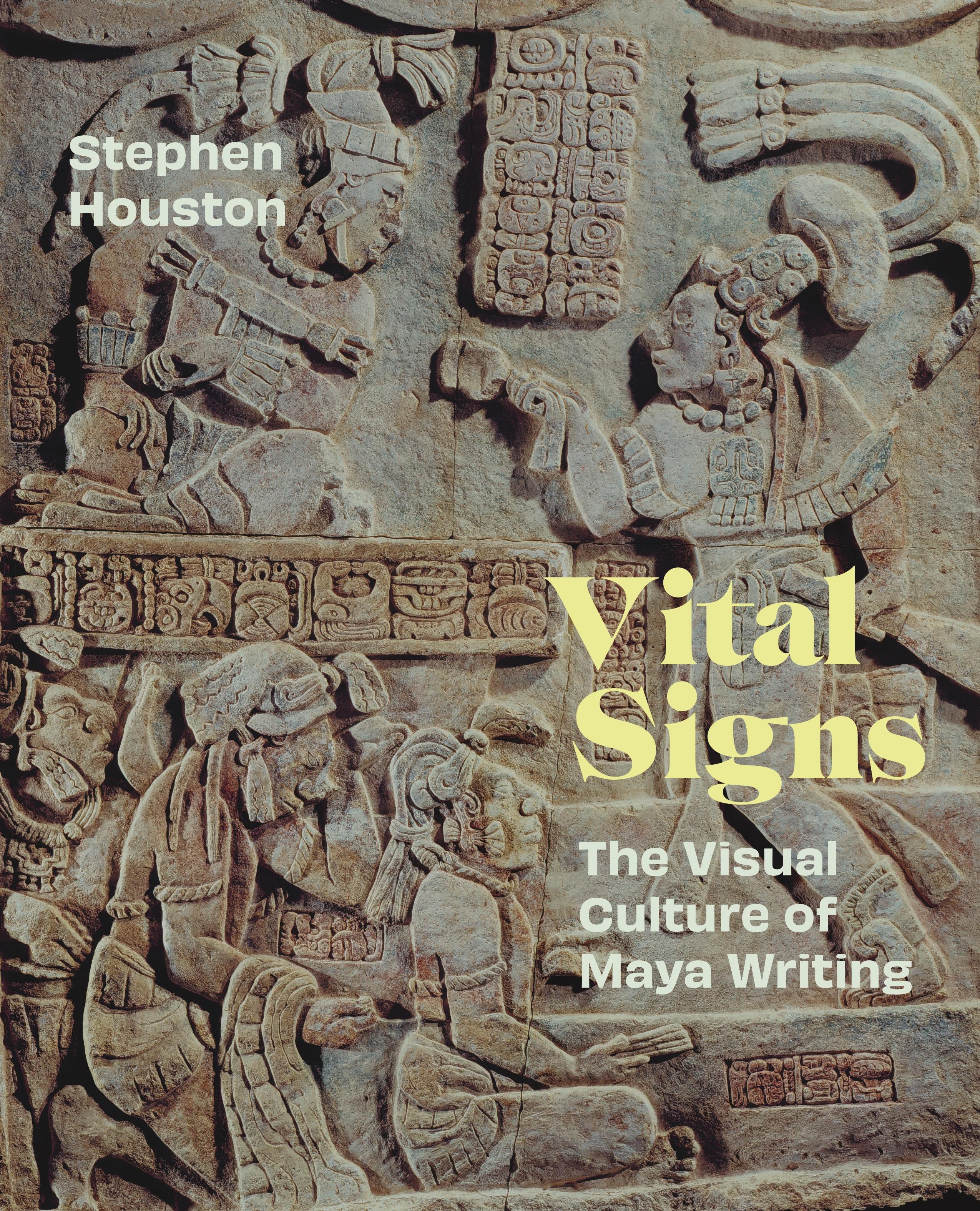
How scribes of the ancient Maya pictured sound and meaning through inventive hieroglyphic writing that pulsed with vitality and wit
For two millennia, the ancestral Maya of Mexico and Central America created a rich legacy of image and text. Vital Signs explains how this graphic system worked, shedding new light on its design, intent, and authorship.
One of the few peoples of the ancient world with hieroglyphic writing, the Maya developed an innovative form of visual representation in which written signs, known as “glyphs,” took their shape from pictures. In this groundbreaking book, archaeologist and anthropologist Stephen Houston shows how recent decipherments of this system unveil a world where sacred kings and dynastic courts affirmed the truths that upheld their authority and underpinned the cosmos. He explores how scribes and sculptors created vibrant, sometimes humorous glyphs and images saturated with esoteric messages. Houston covers a host of topics along the way, such as how Maya artists conveyed sound, movement, size, and scale, thus expressing their deepest beliefs about transient things and meaningful space.
Drawing on more than four decades of research by a leading scholar of Maya civilization, Vital Signs reveals larger human histories of how the eyes could be coaxed to hear and static forms brought to life in the visual culture of the Maya.
Published in association with the Center for Advanced Study in the Visual Arts, National Gallery of Art, Washington, DC
Pay easily by card, Klarna, Apple Pay or Google Pay. Not happy? You always have a 14-day money-back guarantee. Read more in our terms. If you have any questions, email us at hello@memmo.org.
Memmo makes studying easier – wherever you are in the world. We bring your course books and smart study tools together in one place: summaries, quizzes, podcasts and flashcards. Plus Ted, your study buddy who answers anything you wonder. Over 75,000 students already study here – built to help you learn faster and stress less.