
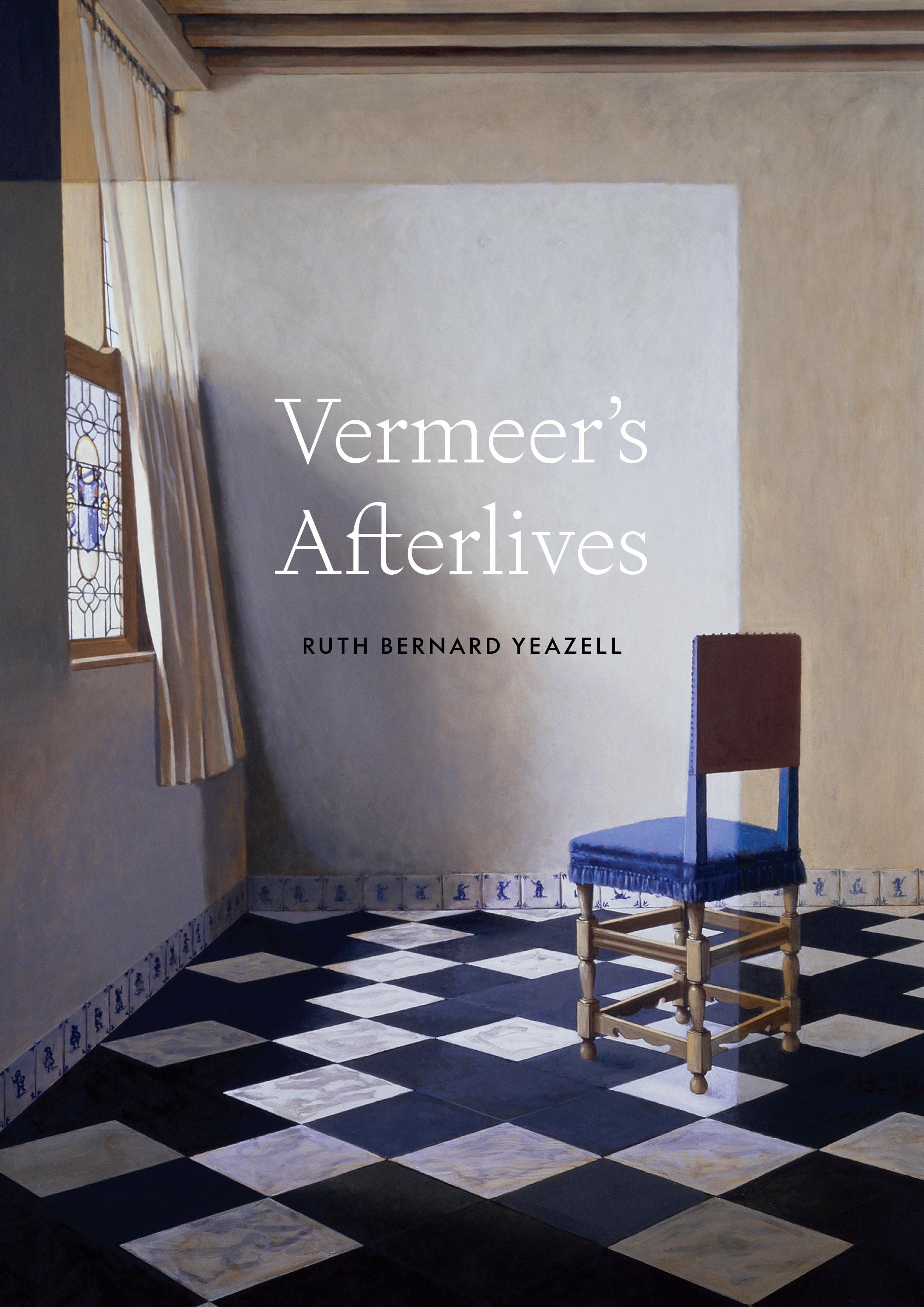
How a once-forgotten Dutch painter inspired generations of artists, writers, and filmmakers
Johannes Vermeer (1632–1675) is one of the most beloved painters in the world. But when an enterprising French journalist and art critic set out to recover his work in the mid-nineteenth century, both his name and achievement were virtually forgotten. Vermeer’s Afterlives tells the remarkable story of how one of the great masters of the Dutch Golden Age was lost to obscurity until the rise of art history as a new discipline introduced his work to modern audiences and asks why his art compels so many other artists to respond with works of their own.
Ruth Bernard Yeazell traces the cultural ascendency of this extraordinary painter, whose enigmatic subjects and quiet, introspective interiors, transfigured by light and color, continue to captivate viewers far removed from his native Delft. We meet the critics who first welcomed Vermeer into the canon along with the painters who sought to imitate him, the forgers who tried to pass off their work as his own, and the contemporary artists who openly repurpose it. The enquiry concludes by looking at Vermeer’s paintings through the eyes of the poets and novelists who have attempted to translate his silence into words and give voice to the stories he left untold. Along the way, Yeazell interrogates the changing assumptions that govern art history, while demonstrating how paintings live on not only in later paintings but in poetry, fiction, photography, and film.
Marking the 350th anniversary of Vermeer’s death, this beautifully illustrated book explores the variety of ways in which Vermeer’s art has been interpreted through the centuries and shows how his paintings take on afterlives of their own in the imaginations of those who view them.
Pay easily by card, Klarna, Apple Pay or Google Pay. Not happy? You always have a 14-day money-back guarantee. Read more in our terms. If you have any questions, email us at hello@memmo.org.
Memmo makes studying easier – wherever you are in the world. We bring your course books and smart study tools together in one place: summaries, quizzes, podcasts and flashcards. Plus Ted, your study buddy who answers anything you wonder. Over 50,000 students already study here – built to help you learn faster and stress less.