
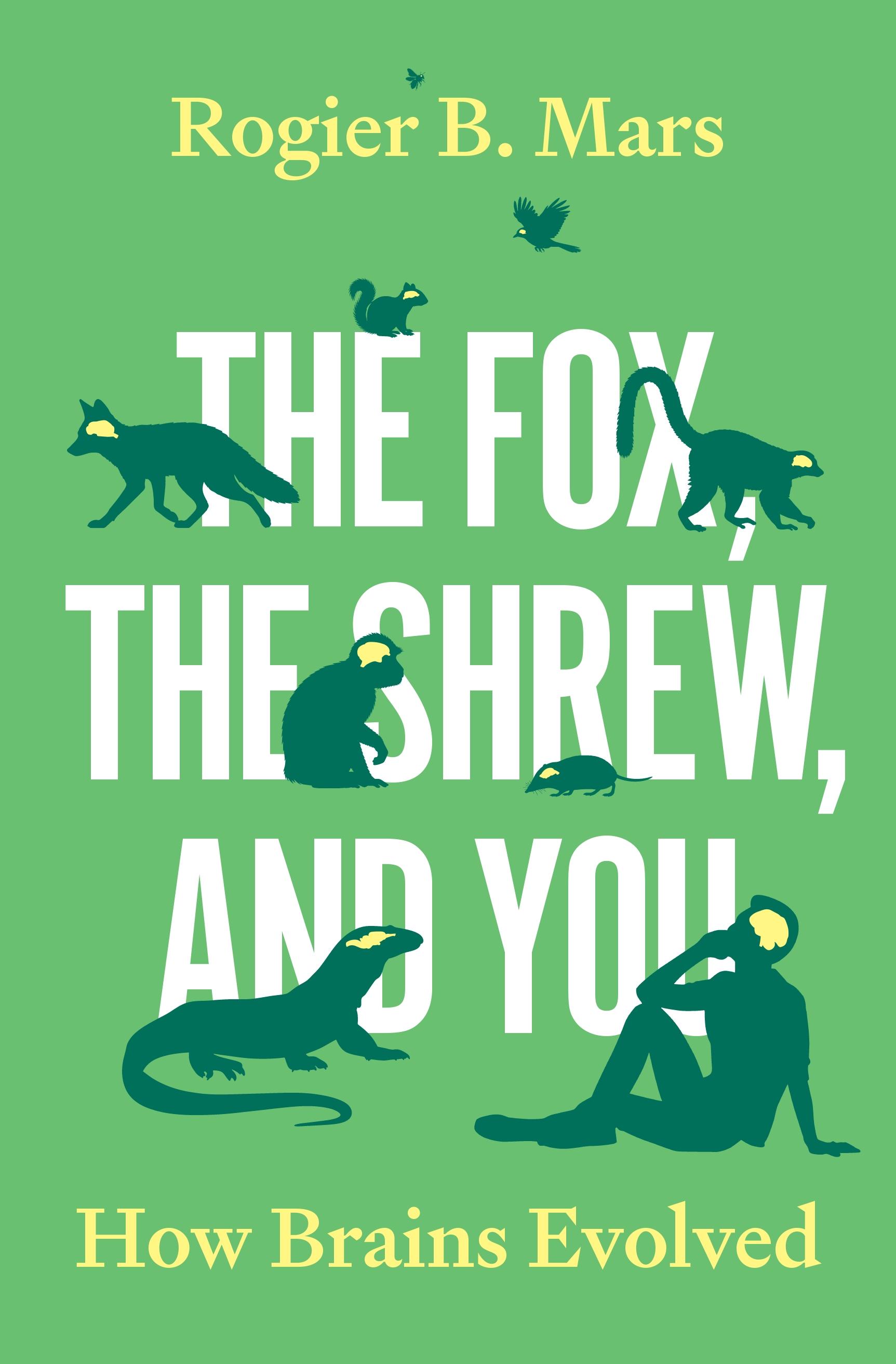
A leading neuroscientist describes the long evolutionary process that led to the human brain
Our human brain is both unique and similar to that of other species. The only way we can trace its evolution is by comparing it to the brains of animals alive today. In this book, leading neuroscientist Rogier Mars offers an engaging account of the evolution of the brain by exploring the brains and cognitive capacities of animals from the humble sea squirt to the socially minded fox and the tiny shrew.
By examining the challenges that different animals and their ancestors faced, Mars shows that we can understand what drove the evolution of their brains. Early vertebrates became predators of the sea; mammals evolved a complex neocortex to deal with foraging for high-energy food; and social primates adapted to contend with a fast-changing environment in which groups of individuals team up to get food. Over the course of a long evolutionary road, the ancestors of present-day animals and their descendants continually adapted to challenges, modifying their brains again and again. For us humans, this process gradually led to a brain that is capable of so much, from inventing language to traveling into space.
Mars leads readers across eras and species, showing us how we resemble our animal cousins, how we differ from them, and how animals in one branch of the evolutionary tree did the hard evolutionary work of becoming human.
Pay easily by card, Klarna, Apple Pay or Google Pay. Not happy? You always have a 14-day money-back guarantee. Read more in our terms. If you have any questions, email us at hello@memmo.org.
Memmo makes studying easier – wherever you are in the world. We bring your course books and smart study tools together in one place: summaries, quizzes, podcasts and flashcards. Plus Ted, your study buddy who answers anything you wonder. Over 50,000 students already study here – built to help you learn faster and stress less.