
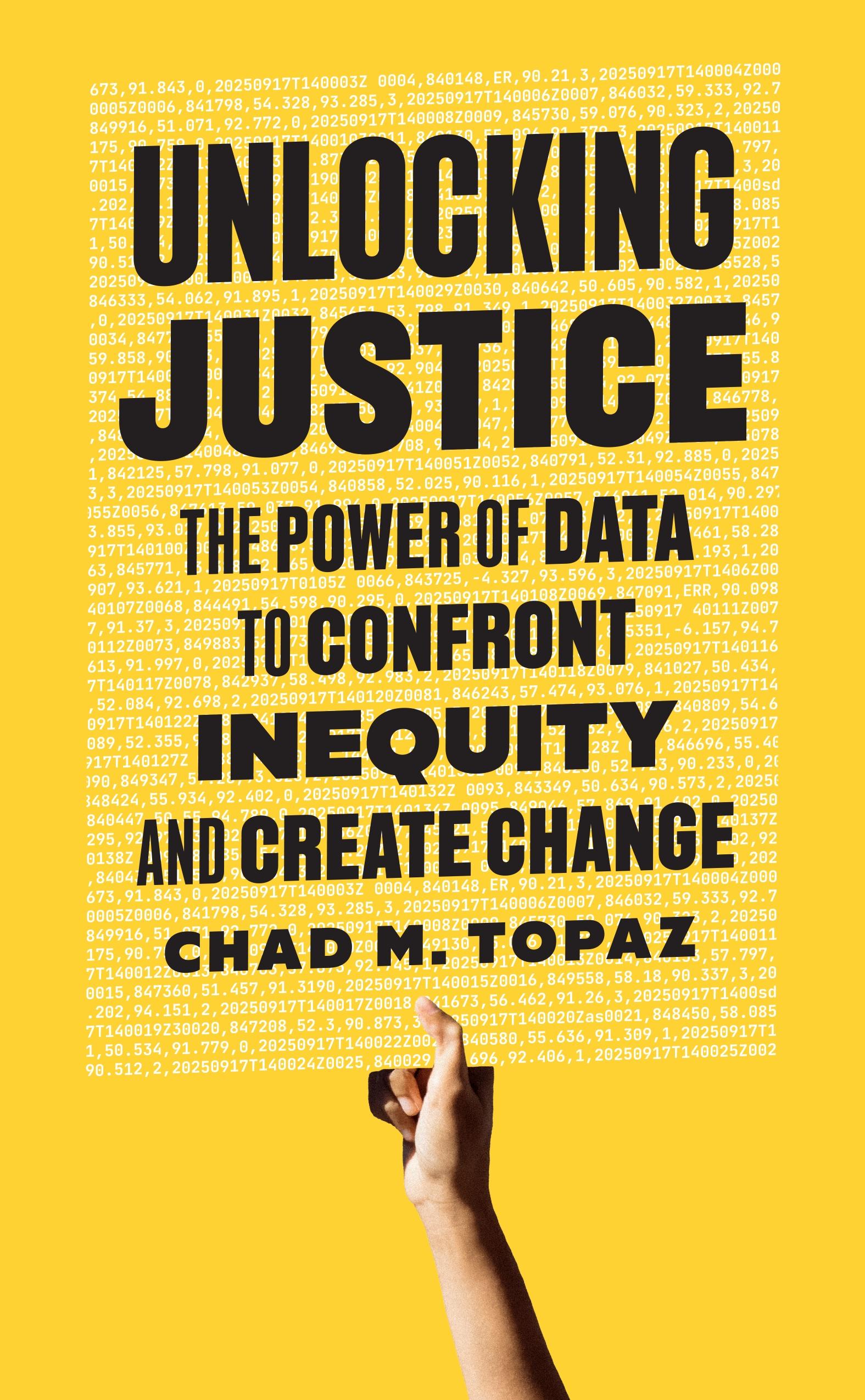
How we can challenge social injustice—with data and humanity
The American legal system does not offer equal justice to all; we can see obvious racial disparities in sentencing, policing, and incarceration. In Unlocking Justice, Chad Topaz offers a concrete way forward, demonstrating how a candid dialogue between social justice and data science can empower communities, spark informed debate, and inspire advocacy. In addition to big ideas, Topaz brings the receipts—the data. Drawing on unedited police call logs, chaotic city websites, fragmented judicial records, and other overlooked sources, Topaz explains how social forces shape the data we collect, influencing whose voices are heard and whose remain unheard. From a rural New England town plagued by police misconduct to New York’s notorious Rikers Island jail, the stories Topaz tells demonstrate how numbers can expose injustice—and how data can underpin activism.
Topaz shows readers how to interpret data in context and question underlying assumptions, providing even those who might be math-averse with practical tools to challenge inequities. He takes readers through his own data science activism, including an examination of public judicial data that revealed the identities of judges who imposed excessive bail; a data-driven investigation of racial disparities in policing, prompted by a police station’s openly displayed portrait of Hitler; and an analysis of Florida’s controversial risk algorithm, COMPAS, for racial bias. The book’s “Show Your Work” companion website connects readers to data sources and the studies behind the stories. When we are armed with the facts and the numbers, Topaz assures us, we can all be effective advocates for transparency, accountability, and justice.
Pay easily by card, Klarna, Apple Pay or Google Pay. Not happy? You always have a 14-day money-back guarantee. Read more in our terms. If you have any questions, email us at hello@memmo.org.
Memmo makes studying easier – wherever you are in the world. We bring your course books and smart study tools together in one place: summaries, quizzes, podcasts and flashcards. Plus Ted, your study buddy who answers anything you wonder. Over 50,000 students already study here – built to help you learn faster and stress less.