
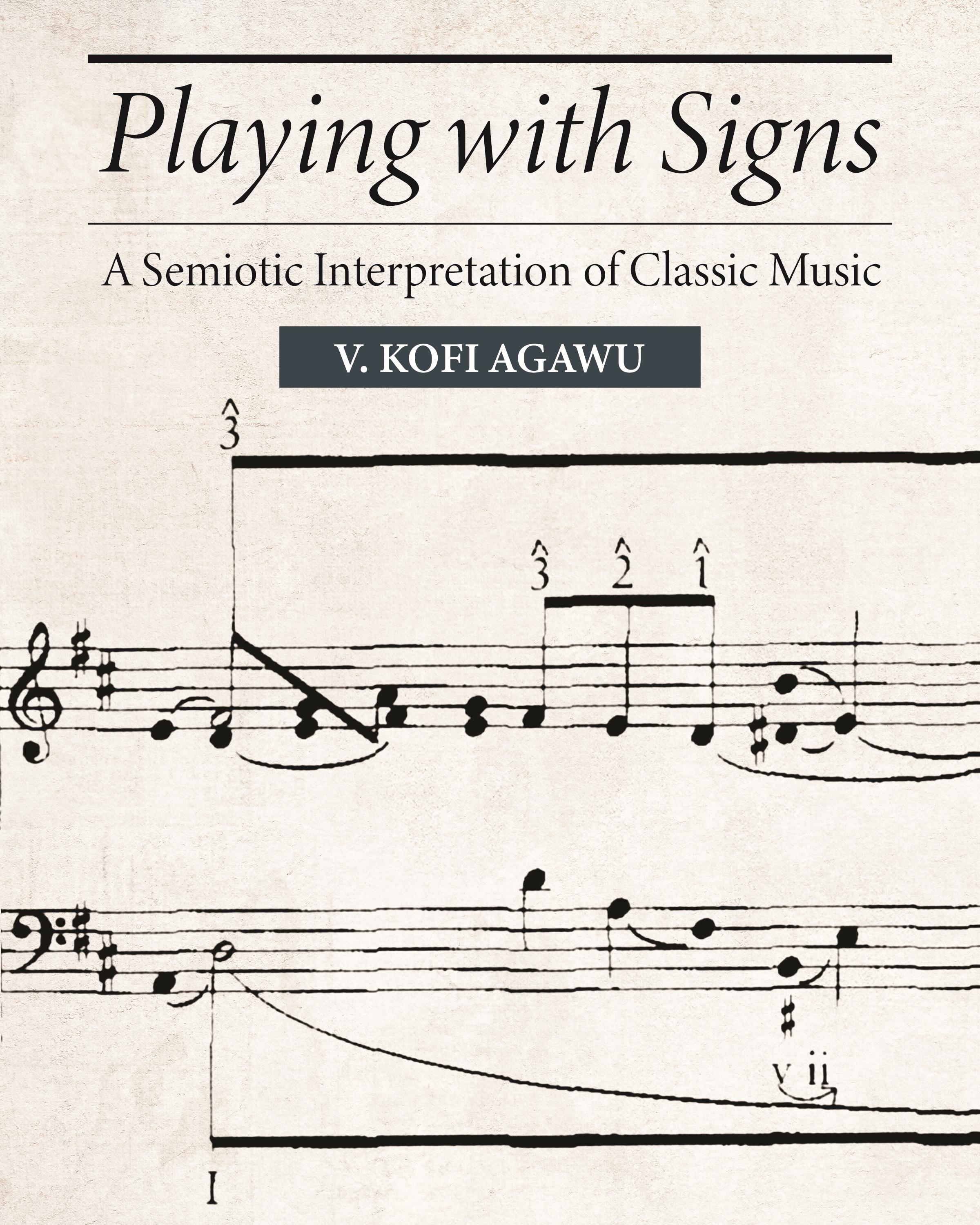
An award-winning account of the importance of semiotic play in Classic instrumental music, including that of Mozart, Haydn, and Beethoven
Of all the repertories of Western Art music, none is as explicitly listener-oriented as that of the late eighteenth and early nineteenth centuries. Yet few attempts to analyze the so-called Classic Style have embraced the semiotic implications of this fact. In Playing with Signs, Kofi Agawu proposes a listener-oriented theory of Classic instrumental music that encompasses its two most fundamental communicative dimensions: expression and structure.
Units of expression, defined in reference to topoi, are shown here to interact with, confront, and merge into units of structure, defined in terms of the rhetorical conventions of beginning, continuing, and ending. The book draws on examples from works by Mozart, Haydn, and Beethoven to show that the explicitly referential, even theatrical, surface of Classic music derives from a play with signs. Although addressed primarily to readers interested in musical analysis, the book opens fruitful avenues for further research into musical semiotics, aesthetics, and Classicism.
Pay easily by card, Klarna, Apple Pay or Google Pay. Not happy? You always have a 14-day money-back guarantee. Read more in our terms. If you have any questions, email us at hello@memmo.org.
Memmo makes studying easier – wherever you are in the world. We bring your course books and smart study tools together in one place: summaries, quizzes, podcasts and flashcards. Plus Ted, your study buddy who answers anything you wonder. Over 50,000 students already study here – built to help you learn faster and stress less.