
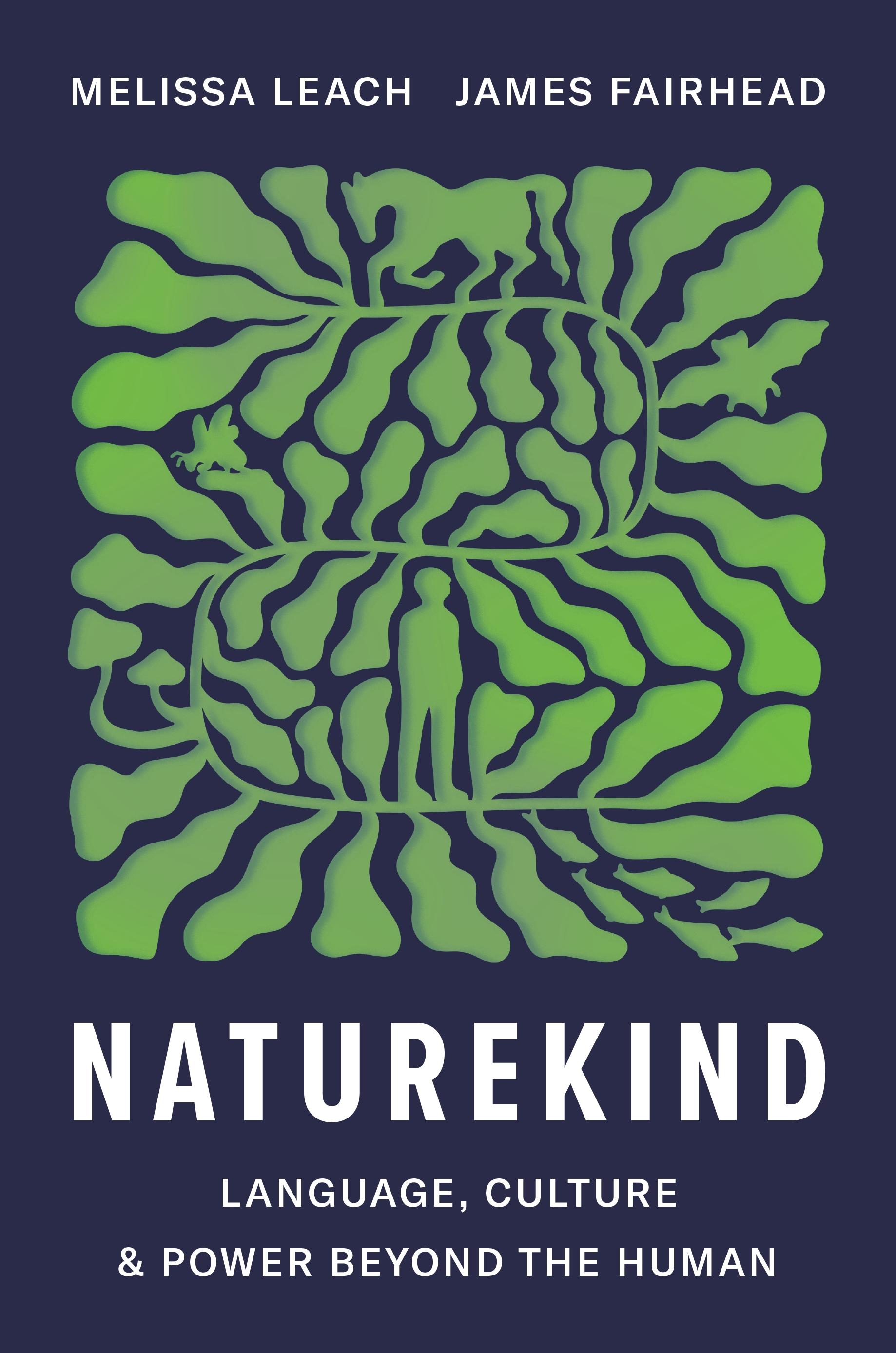
A new paradigm that integrates human and nonhuman communication and culture
Are language and culture uniquely human, justifying an exceptionalism that sets people apart from the rest of nature? New discoveries in the biological sciences have challenged this assumption, finding syntax, symbolism and social learning beyond the human, and identifying culture as a second inheritance system across the phyla from whales to insects and plants. Biologists are constrained, however, by the mechanistic ways communication is understood. In Naturekind, Melissa Leach and James Fairhead address this impasse by extending insights from structural linguistics, social semiotics, anthropology and Indigenous theorization into wider life, integrating them with new biological findings to develop a new structural biosemiotics paradigm.
Leach and Fairhead argue that such a paradigm can provide a unified theory of meaning-making across all of nature, or “naturekind,” allowing new theorisation about human and nonhuman communication and culture. They examine people’s communicative encounters with chickens, horses, bees, bats and plants, and with assemblages of living and nonliving entities—forests, seas, soils and cities. Marrying the new biology with the structural social sciences, they contend, provides powerful insights for living well with wider life on a shared planet and transforming political relations.
Pay easily by card, Klarna, Apple Pay or Google Pay. Not happy? You always have a 14-day money-back guarantee. Read more in our terms. If you have any questions, email us at hello@memmo.org.
Memmo makes studying easier – wherever you are in the world. We bring your course books and smart study tools together in one place: summaries, quizzes, podcasts and flashcards. Plus Ted, your study buddy who answers anything you wonder. Over 50,000 students already study here – built to help you learn faster and stress less.