
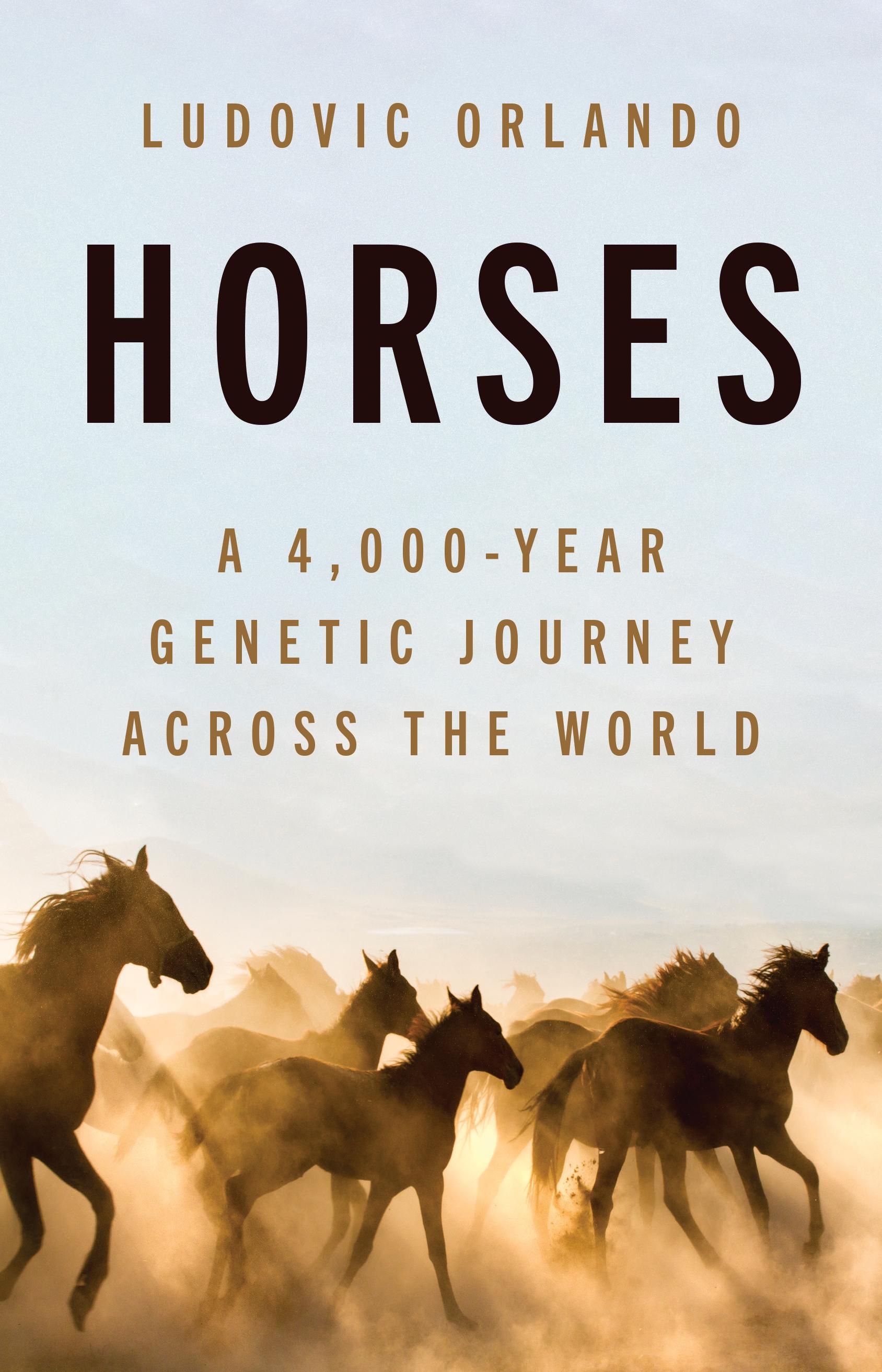
From one of today’s leading experts on ancient DNA, a sweeping genetic history that unravels the mystery of where horses were first domesticated
Ludovic Orlando garnered world acclaim for helping to rewrite the genomic history of horse domestication. Horses takes you behind the scenes of this ambitious genealogical investigation, revealing how he and an international team of scientists discovered the elusive origins of modern horses. Along the way, he shows how the domestication of the horse changed the trajectory of civilization—with benefits and unforeseen consequences for the animals themselves.
Orlando brought together world-class experts in genomics, archaeology, and the history of peoples, languages, and migrations. Comparing the DNA of ancient horses to the genomes of dozens of modern horse breeds, these researchers reconstructed millennia of equine evolutionary history. They now believe that horses were first domesticated some 4,200 years ago on the steppes of the North Caucasus. Orlando discusses how selective breeding has significantly intensified over the past two centuries, giving rise to faster, stronger horses but also creating a severe decline in genetic diversity that has made horses more prone to genetic diseases. He looks at breeds throughout history and around the world, explaining how they have been bred for particular purposes or environments, from Botai and Przewalski’s horses to the warhorses of the Vikings and Genghis Khan, Arabian horses, thoroughbreds, Himalayan steeds, and mules.
Blending panoramic storytelling with cutting-edge genetic science, Horses chronicles an unbreakable bond that was forged thousands of years ago on the windswept Eurasian Steppe, one that heralded a bold new era in the human drama—that of speed.
Pay easily by card, Klarna, Apple Pay or Google Pay. Not happy? You always have a 14-day money-back guarantee. Read more in our terms. If you have any questions, email us at hello@memmo.org.
Memmo makes studying easier – wherever you are in the world. We bring your course books and smart study tools together in one place: summaries, quizzes, podcasts and flashcards. Plus Ted, your study buddy who answers anything you wonder. Over 50,000 students already study here – built to help you learn faster and stress less.