
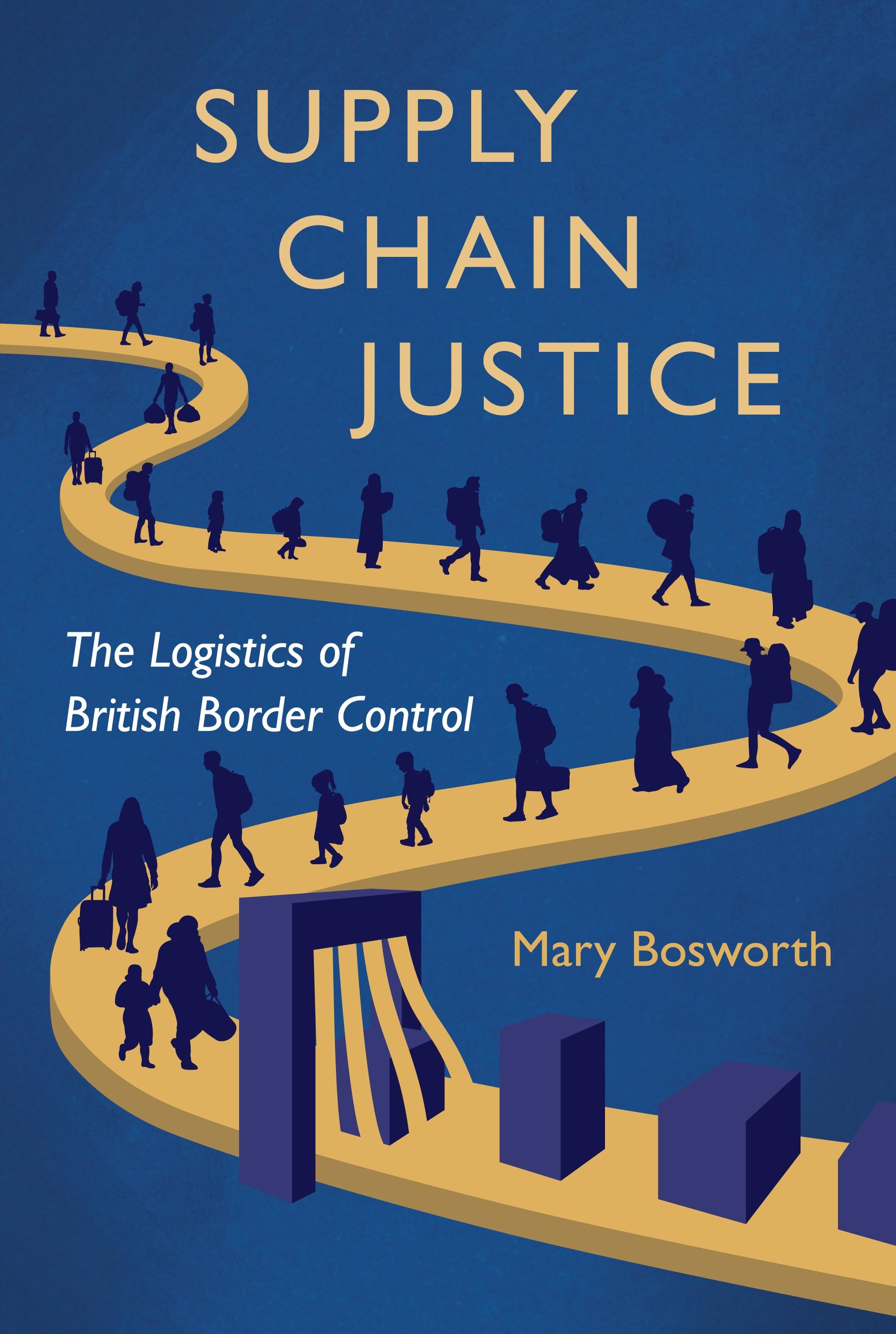
How the UK’s immigration detention and deportation system turns people into monetized, measurable units on a supply chain
In the UK’s fully outsourced “immigration detainee escorting system,” private sector security employees detain, circulate and deport foreign national citizens. Run and organized like a supply chain, this system dehumanises those who are detained and deported, treating them as if they were packages to be moved from place to place and relying on poorly paid, minimally trained staff to do so. In Supply Chain Justice, Mary Bosworth offers the first empirically grounded, scholarly analysis of the British detention and deportation system. Drawing on four years of extensive ethnographic research, Bosworth examines what keeps the system in place and whether it might be effectively challenged.
Told by a senior manager that “this is a logistics business,” Bosworth documents how the public and private sectors have built a supply chain in which people’s humanity is transformed both symbolically and tangibly through administrative processes and bureaucracy into monetized, measurable units. Like all logistics, the system has failure built into it. The contract does not seek to eradicate risk but rather to manage it, determining responsibility and apportioning a financial value to such “failures” as delay, escape, aborted flight or death in custody. Front-line workers and managers depoliticise and normalise their efforts by casting their duties in familiar bureaucratic terms, with targets, “service level agreements” and “key performance indicators.” Focusing on first-hand accounts from workers and lengthy observation and document analysis, Bosworth explores the impact of border logistics in order to ask what it would take to build inclusive infrastructures rather than those designed to exclude.
Pay easily by card, Klarna, Apple Pay or Google Pay. Not happy? You always have a 14-day money-back guarantee. Read more in our terms. If you have any questions, email us at hello@memmo.org.
Memmo makes studying easier – wherever you are in the world. We bring your course books and smart study tools together in one place: summaries, quizzes, podcasts and flashcards. Plus Ted, your study buddy who answers anything you wonder. Over 50,000 students already study here – built to help you learn faster and stress less.