
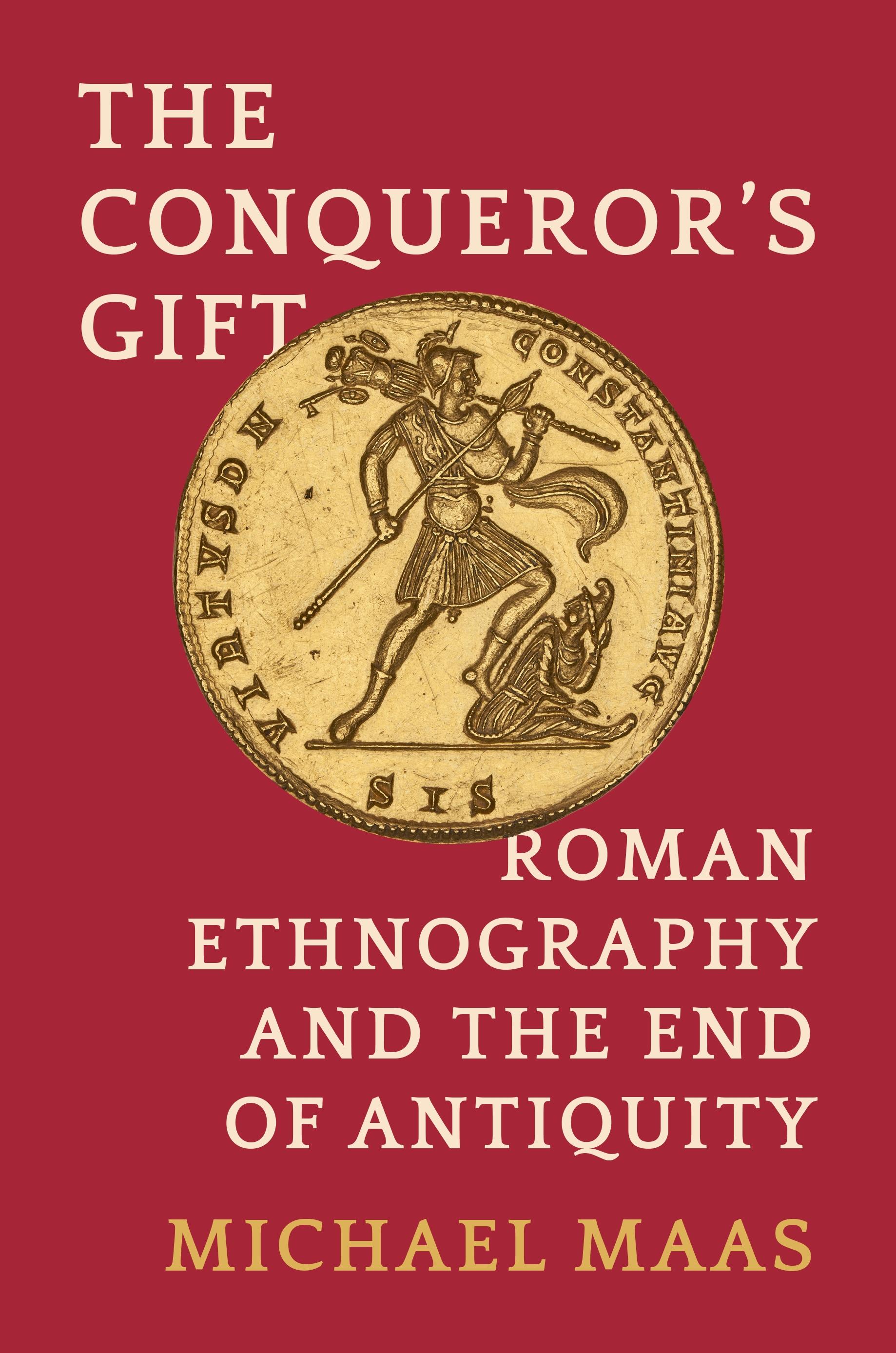
The essential role of ethnographic thought in the Roman empire and how it evolved in Late Antiquity
Ethnography is indispensable for every empire, as important as armies, tax collectors, or ambassadors. It helps rulers articulate cultural differences, and it lets the inhabitants of the empire, especially those who guide its course, understand themselves in the midst of enemies, allies, and friends. In The Conqueror’s Gift, Michael Maas examines the ethnographic infrastructure of the Roman Empire and the transformation of Rome’s ethnographic vision during Late Antiquity. Drawing on a wide range of texts, Maas shows how the Romans’ ethnographic thought evolved as they attended to the business of ruling an empire on three continents.
Ethnography, the “conqueror’s gift,” gave Romans structured ways of finding a place for foreigners in the imperial worldview and helped justify imperial action affecting them. In Late Antiquity, Christianity revolutionized the imperial ethnographic infrastructure by altering old concepts and introducing credal models of community. The Bible became a source for organizing the Roman world. At the same time, many previously unseen collective identities emerged across Western Eurasia in reaction to the diminution of Roman power. These changes deeply affected the Empire’s ethnographic infrastructure and vision of the world. Maas argues that a major consequence of these developments was the beginning of a sectarian age, as individuals and political communities came to identify themselves primarily in terms of religion as well as ethnicity. As they adjusted to changing ethnographic realities, Romans understood their place among the peoples of the world in new ways. Willingly or not, we continue to be recipients of the conqueror’s gift today.
Pay easily by card, Klarna, Apple Pay or Google Pay. Not happy? You always have a 14-day money-back guarantee. Read more in our terms. If you have any questions, email us at hello@memmo.org.
Memmo makes studying easier – wherever you are in the world. We bring your course books and smart study tools together in one place: summaries, quizzes, podcasts and flashcards. Plus Ted, your study buddy who answers anything you wonder. Over 75,000 students already study here – built to help you learn faster and stress less.