
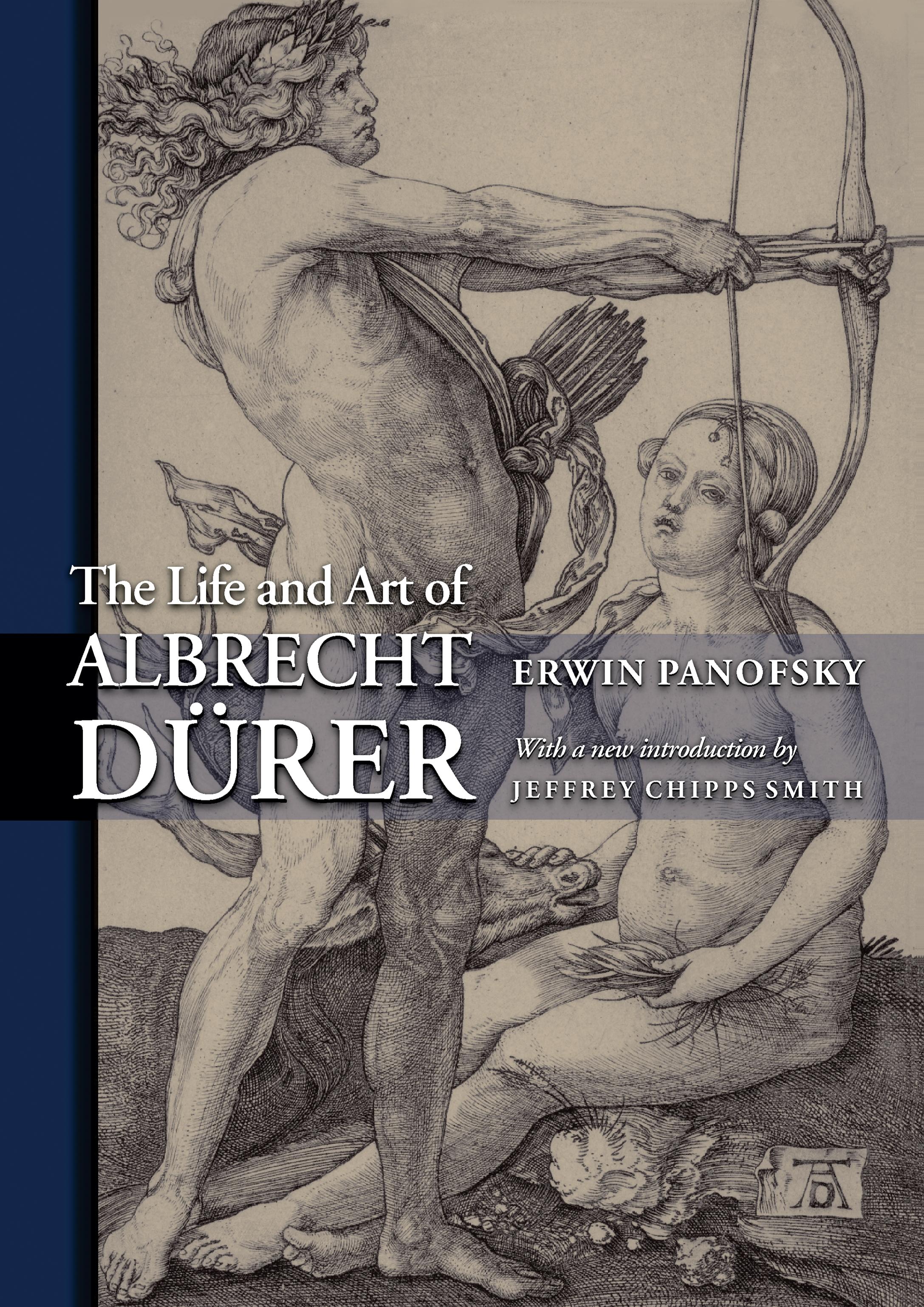
This classic text presents the life, times, and works of Albrecht Dürer. Through the skill and immense knowledge of Erwin Panofsky, the reader is dazzled not only by Dürer the artist but also Dürer in a wide array of other roles, including mathematician and scientific thinker. Originally published in 1943 in two volumes, The Life and Art of Albrecht Dürer met with such wide popular and scholarly acclaim that it led to three editions and then, in 1955, to the first one-volume edition. Without sacrifice of text or illustrations, the book was reduced to this single volume by the omission of the Handlist and Concordance. The new introduction by Jeffrey Chipps Smith reflects upon Panofsky the man, the tumultuous circumstances surrounding the creation of his masterful monograph, its innovative contents, and its early critical reception. Erwin Panofsky was one of the most important art historians of the twentieth century. Panofsky taught for many years at Hamburg University but was forced by the Nazis to leave Germany. He joined the faculty at the Institute for Advanced Study in 1935, where he spent the remainder of his career and wrote The Life and Art of Albrecht Dürer. He developed an iconographic approach to art and interpreted works through an analysis of symbolism, history, and social factors.
This book, one of his most important, is a comprehensive study of painter and printmaker Albrecht Dürer (1471-1528), the greatest exponent of northern European Renaissance art. Although an important painter, Dürer was most renowned for his graphic works. Artists across Europe admired and copied his innovative and powerful prints, ranging from religious and mythological scenes to maps and exotic animals. The book covers Dürer's entire career in exacting detail. With multiple indexes and more than three hundred illustrations, it has served as an indispensable reference, remaining crucial to an understanding of the work of the great artist and printmaker. Subsequent Dürer studies have necessarily made reference to Panofsky's masterpiece. Panofsky's work continues to be admired for the author's immense erudition, subtlety of appreciation, technical knowledge, and profound analyses.
Pay easily by card, Klarna, Apple Pay or Google Pay. Not happy? You always have a 14-day money-back guarantee. Read more in our terms. If you have any questions, email us at hello@memmo.org.
Memmo makes studying easier – wherever you are in the world. We bring your course books and smart study tools together in one place: summaries, quizzes, podcasts and flashcards. Plus Ted, your study buddy who answers anything you wonder. Over 50,000 students already study here – built to help you learn faster and stress less.