
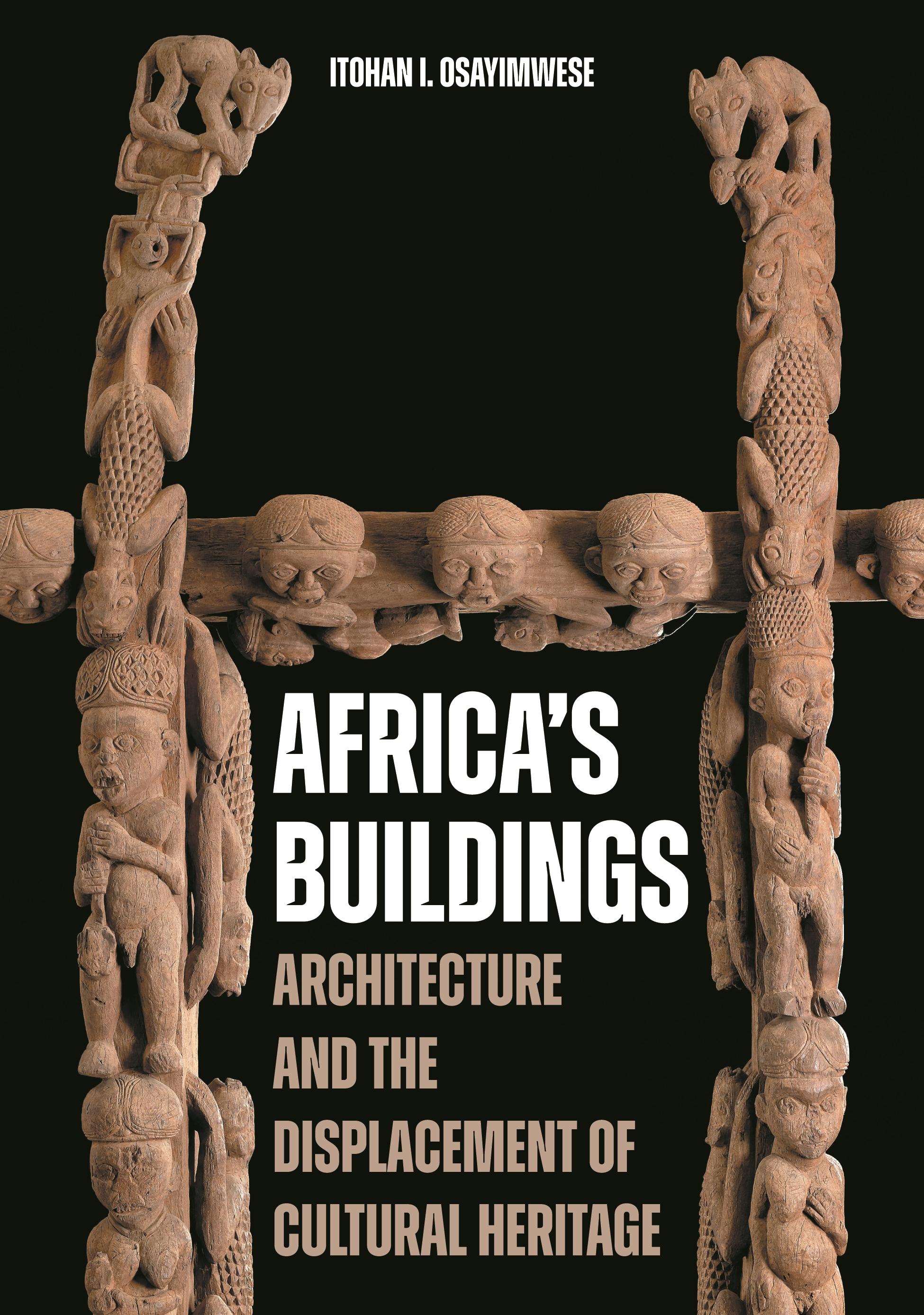
A groundbreaking history of Africa’s looted architectural heritage—and a bold proposal for the repatriation of the continent’s stolen cultural artifacts
Between the nineteenth century and today, colonial officials, collectors, and anthropologists dismembered African buildings and dispersed their parts to museums in Europe and the United States. Most of these artifacts were cataloged as ornamental art objects, which erased their intended functions, and the removal of these objects often had catastrophic consequences for the original structures. Africa’s Buildings traces the history of the collection and distribution of African architectural fragments, documenting the brutality of the colonial regimes that looted Africa’s buildings and addressing the ethical questions surrounding the display of these objects.
Itohan Osayimwese ranges across the whole of Africa, from Egypt in the north to Zimbabwe in the south, and spanning the western, central, and eastern regions of the continent. She describes how collectors employed violent means to remove elements such as columns and door panels from buildings, and how these methods differentiated architectural collecting from conventional collecting. She shows how Western collectors mischaracterized building components as ornament, erasing their architectural character and concealing the evidence of their theft. Osayimwese discusses how the very act of displacing building parts like floor tiles and woven screen walls has resulted in a loss of knowledge about their original function and argues that because of these removals, scholars have yet to fully grasp the variety and character of African architecture.
Richly illustrated, Africa’s Buildings uncovers the vast scale of cultural displacement perpetrated by the West and proposes a new role for museums in this history, one in which they champion the repatriation of Africa’s architectural heritage and restitution for African communities.
Pay easily by card, Klarna, Apple Pay or Google Pay. Not happy? You always have a 14-day money-back guarantee. Read more in our terms. If you have any questions, email us at hello@memmo.org.
Memmo makes studying easier – wherever you are in the world. We bring your course books and smart study tools together in one place: summaries, quizzes, podcasts and flashcards. Plus Ted, your study buddy who answers anything you wonder. Over 75,000 students already study here – built to help you learn faster and stress less.