
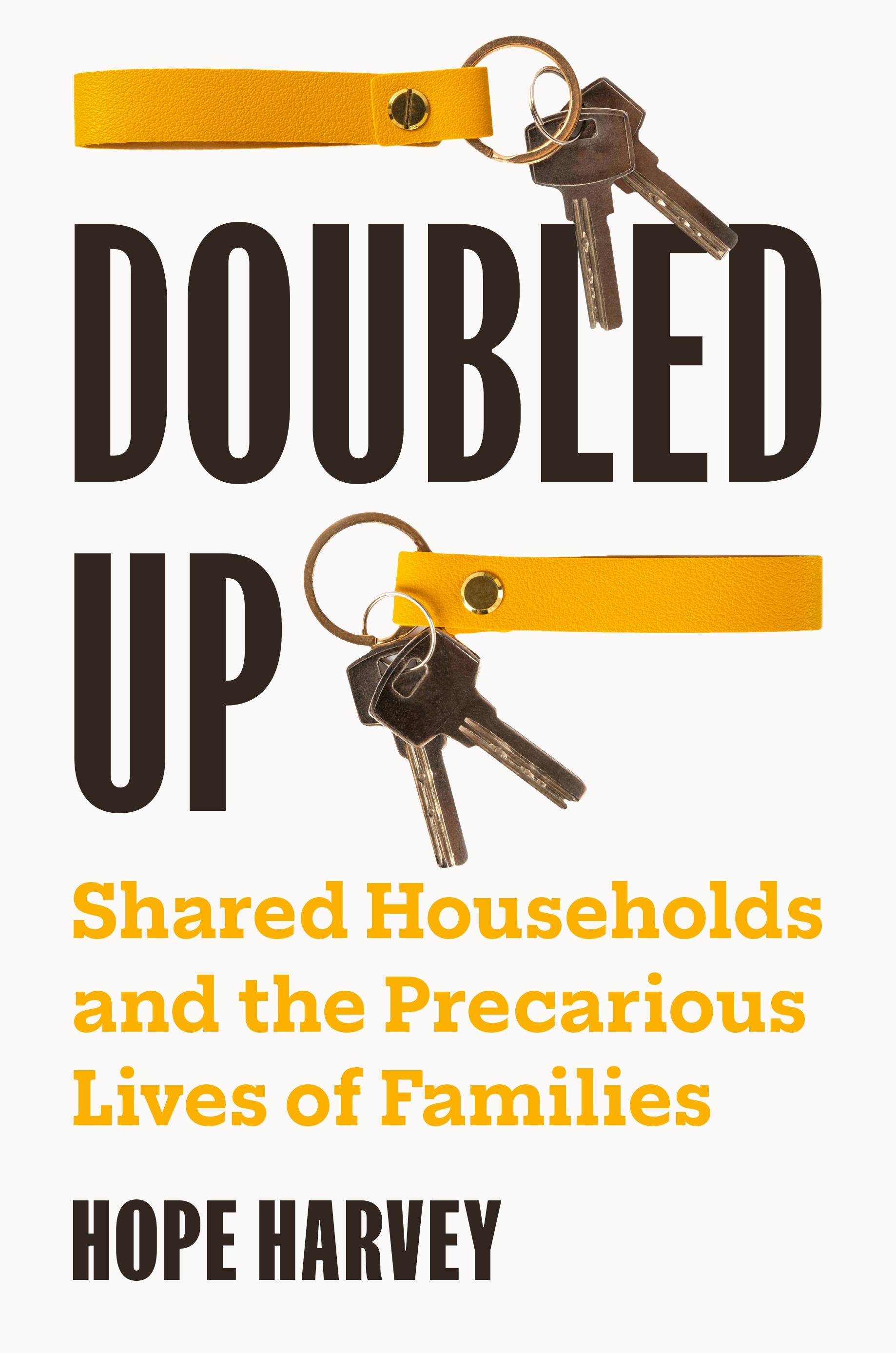
How sharing a home with extended family or friends serves as a crucial, but imperfect, private safety net for families with children
More than fifteen percent of US children—over eleven million—live in doubled-up households, sharing space with extended family or friends. These households are even more common among low-income families, families of color, and single-parent families, functioning as a private safety net for many in a country with extremely limited public support for families. Yet despite their prevalence, we know little about how shared households form and how they shape family life. Doubled Up is an in-depth look at the experiences of families with children living in doubled-up households.
Drawing on extensive interviews with sixty parents living in doubled-up households, Hope Harvey examines what circumstances and motivations lead families to form doubled-up households, how living in shared households affects daily routines, and how families fare after these arrangements dissolve.
Harvey shows that although families rely on doubling up to get by in the face of rapidly rising housing costs, precarious labor markets, and unaffordable childcare, these private arrangements are rarely sufficient to overcome such structural barriers. And doubling up incurs its own costs for both host and guest families. For doubled-up families, negotiating household relationships and navigating shared space reshapes family life. Understanding the dynamics of doubled-up households extends scholarship on family life beyond the nuclear family and points the way toward better policies that will serve all families.
Pay easily by card, Klarna, Apple Pay or Google Pay. Not happy? You always have a 14-day money-back guarantee. Read more in our terms. If you have any questions, email us at hello@memmo.org.
Memmo makes studying easier – wherever you are in the world. We bring your course books and smart study tools together in one place: summaries, quizzes, podcasts and flashcards. Plus Ted, your study buddy who answers anything you wonder. Over 50,000 students already study here – built to help you learn faster and stress less.