
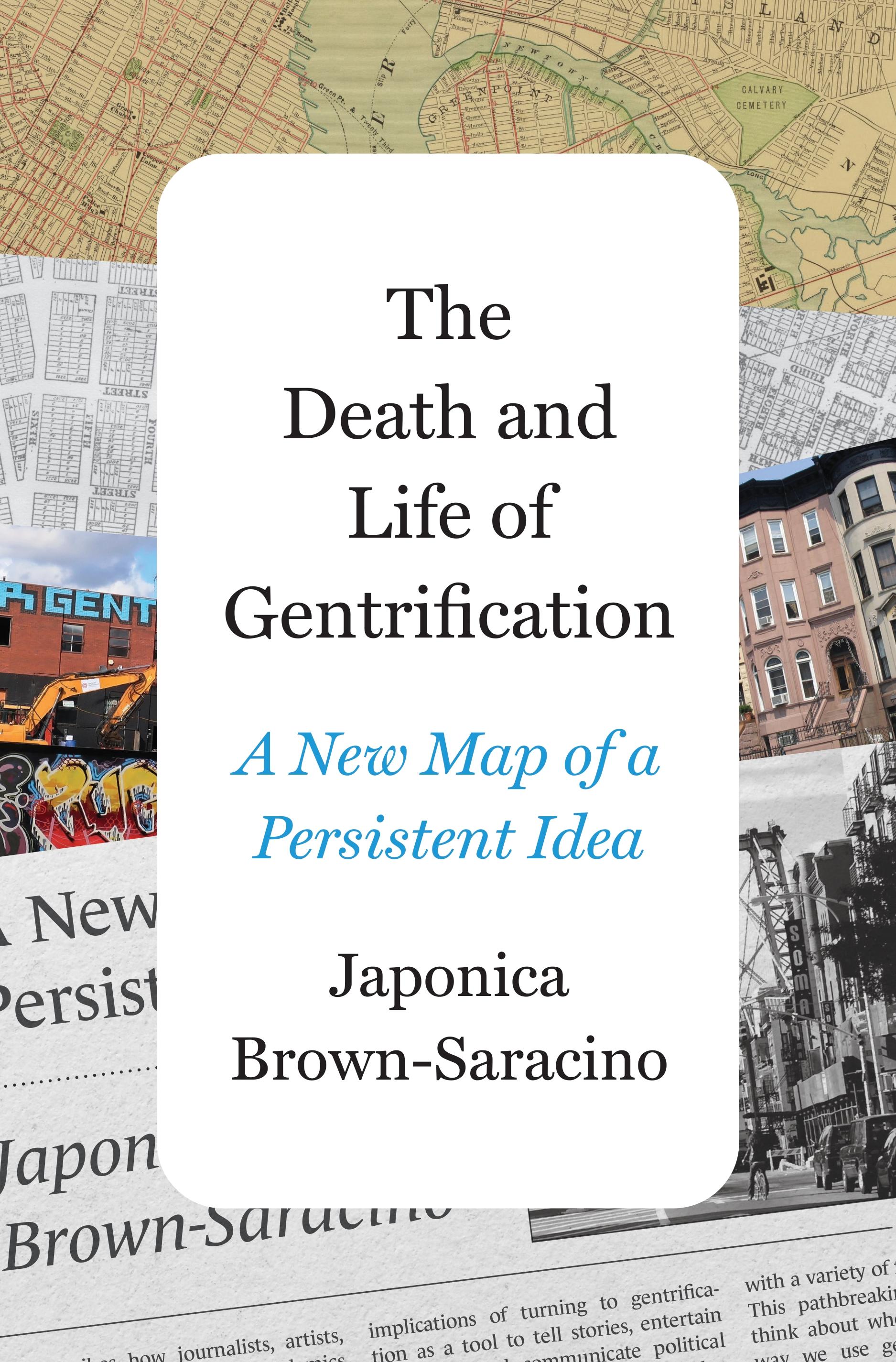
A provocative account of what is gained and what is lost when a word that once narrowly referred to neighborhood change takes on a life all its own
Sociologist Ruth Glass coined the term gentrification in the 1960s to mark the displacement of working-class residents in London neighborhoods by the professional classes. The Death and Life of Gentrification traces how the word has far outgrown Glass’s meaning, becoming a socially charged metaphor for cultural appropriation, upscaling, and the loss of authenticity.
In this lively and insightful book, Japonica Brown-Saracino traces how a concept originally intended to describe the brick-and-mortar transformation of neighborhoods has come to characterize transformations that have little to do with cities. She describes how journalists, artists, filmmakers, novelists, and academics use gentrification as a symbolic device to mourn how everyday pleasures and forms of self-expression—from music to marijuana, kale, and tattoos—entered the domain of the elite. She weighs the implications of turning to gentrification as a tool to tell stories, entertain audiences, and communicate political messages. Relying on vivid examples, the book reveals how the term today expresses widespread ambivalence about rising economic inequality and unease with a variety of forms of social change. This pathbreaking book forces us to think about whether the wide-ranging way we use gentrification dilutes its meaning and stymies efforts to identify and resist urban displacement.
Drawing on everything from film and television to novels and art, The Death and Life of Gentrification sheds critical light on the changing meaning of gentrification in contemporary life. The book is a must-read for anyone interested in gentrification and urban dynamics, as well as for readers curious about attitudes about growing income inequality and the evolution and circulation of ideas.
Pay easily by card, Klarna, Apple Pay or Google Pay. Not happy? You always have a 14-day money-back guarantee. Read more in our terms. If you have any questions, email us at hello@memmo.org.
Memmo makes studying easier – wherever you are in the world. We bring your course books and smart study tools together in one place: summaries, quizzes, podcasts and flashcards. Plus Ted, your study buddy who answers anything you wonder. Over 50,000 students already study here – built to help you learn faster and stress less.