
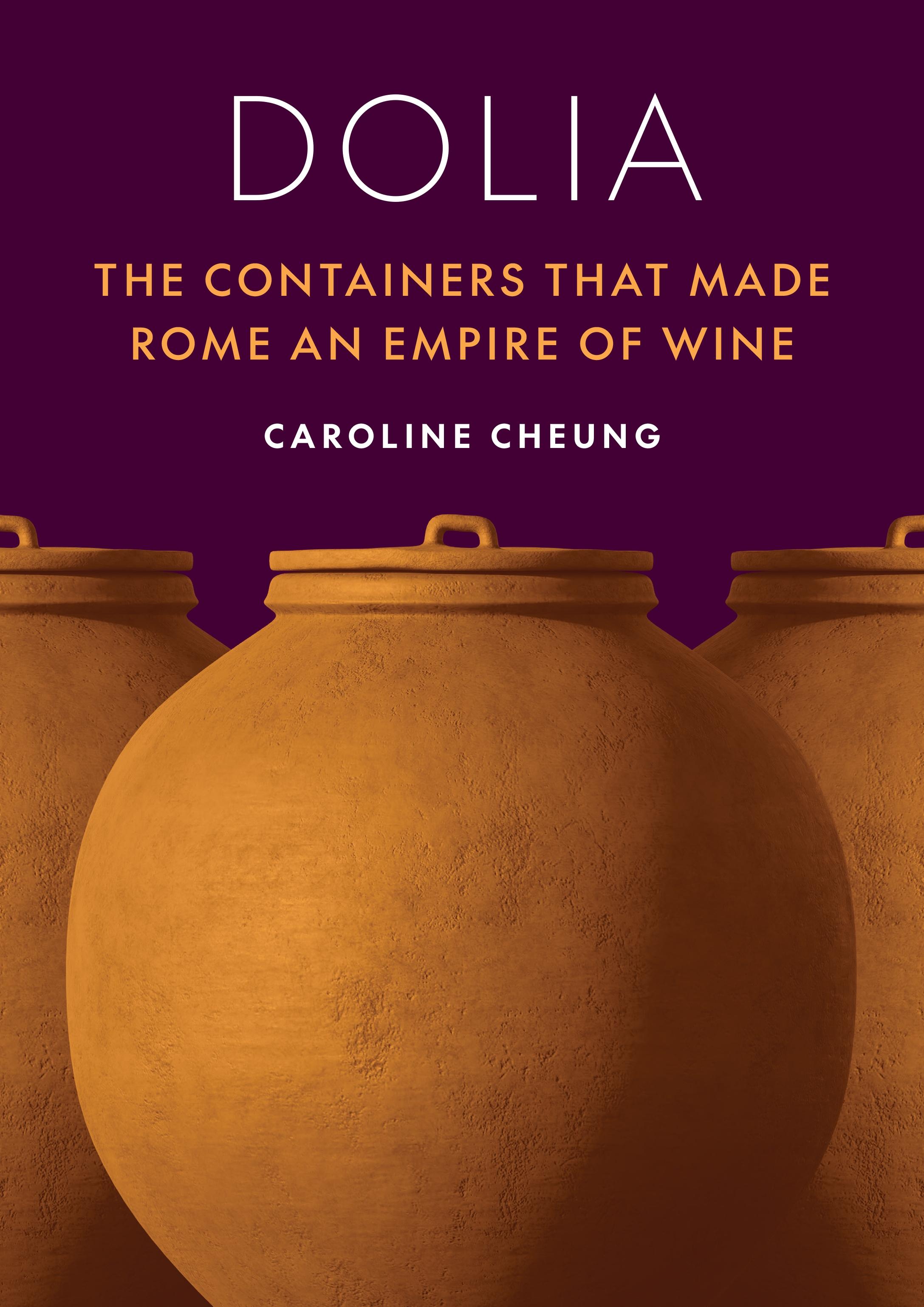
The story of the Roman Empire’s enormous wine industry told through the remarkable ceramic storage and shipping containers that made it possible
The average resident of ancient Rome drank two-hundred-and-fifty liters of wine a year, almost a bottle a day, and the total annual volume of wine consumed in the imperial capital would have overflowed the Pantheon. But Rome was too densely developed and populated to produce its own food, let alone wine. How were the Romans able to get so much wine? The key was the dolium—the ancient world’s largest type of ceramic wine and food storage and shipping container, some of which could hold as much as two-thousand liters. In Dolia, classicist and archaeologist Caroline Cheung tells the story of these vessels—from their emergence and evolution to their major impact on trade and their eventual disappearance.
Drawing on new archaeological discoveries and unpublished material, Dolia uncovers the industrial and technological developments, the wide variety of workers and skills, and the investments behind the Roman wine trade. As the trade expanded, potters developed new techniques to build large, standardized dolia for bulk fermentation, storage, and shipment. Dolia not only determined the quantity of wine produced but also influenced its quality, becoming the backbone of the trade. As dolia swept across the Mediterranean and brought wine from the far reaches of the empire to the capital’s doorstep, these vessels also drove economic growth—from rural vineyards and ceramic workshops to the wine shops of Rome.
Placing these unique containers at the center of the story, Dolia is a groundbreaking account of the Roman Empire’s Mediterranean-wide wine industry.
Pay easily by card, Klarna, Apple Pay or Google Pay. Not happy? You always have a 14-day money-back guarantee. Read more in our terms. If you have any questions, email us at hello@memmo.org.
Memmo makes studying easier – wherever you are in the world. We bring your course books and smart study tools together in one place: summaries, quizzes, podcasts and flashcards. Plus Ted, your study buddy who answers anything you wonder. Over 75,000 students already study here – built to help you learn faster and stress less.