
How a new mathematical field grew and matured in America
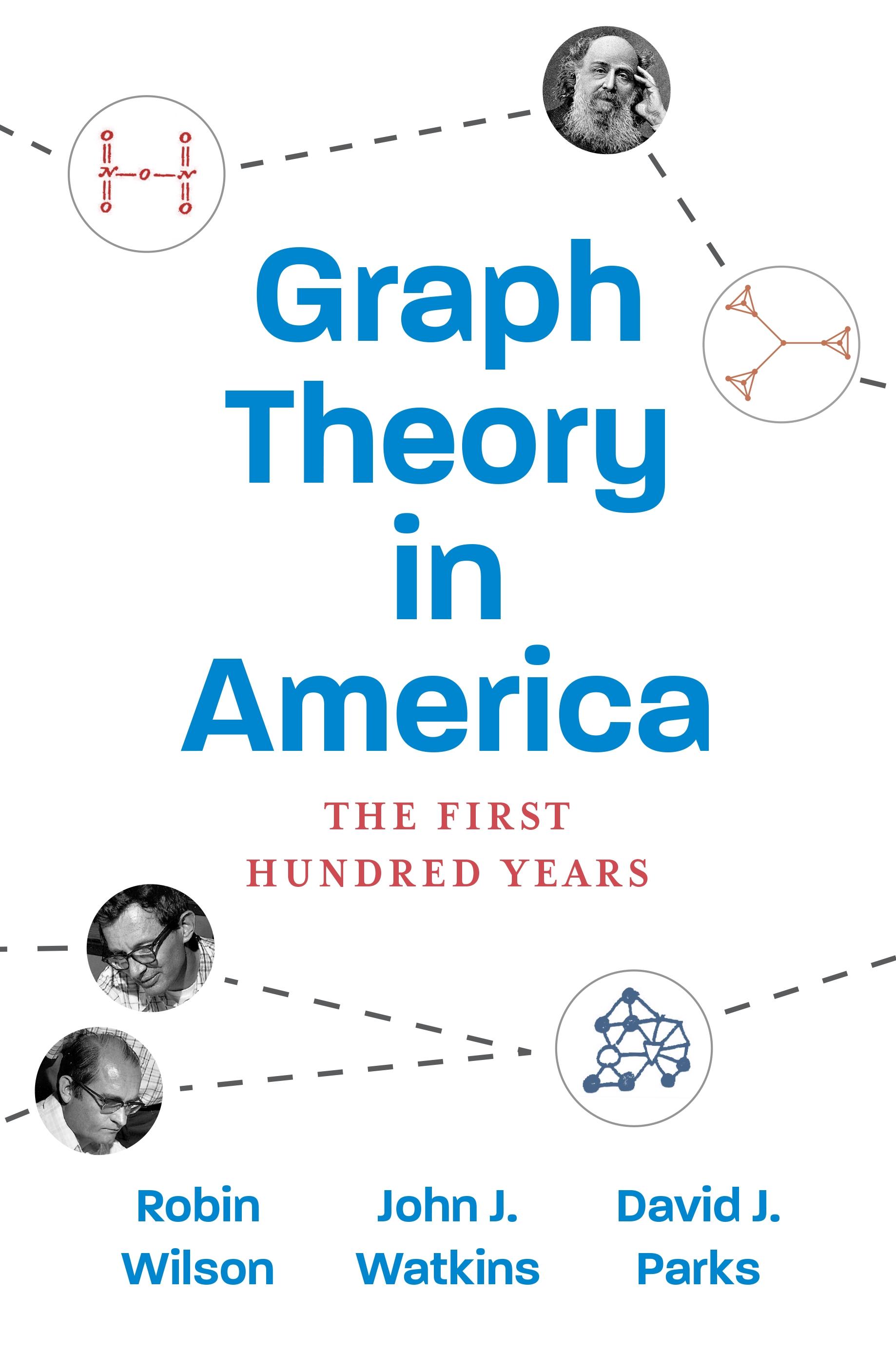
Graph Theory in America focuses on the development of graph theory in North America from 1876 to 1976. At the beginning of this period, James Joseph Sylvester, perhaps the finest mathematician in the English-speaking world, took up his appointment as the first professor of mathematics at the Johns Hopkins University, where his inaugural lecture outlined connections between graph theory, algebra, and chemistry—shortly after, he introduced the word graph in our modern sense. A hundred years later, in 1976, graph theory witnessed the solution of the long-standing four color problem by Kenneth Appel and Wolfgang Haken of the University of Illinois.
Tracing graph theory’s trajectory across its first century, this book looks at influential figures in the field, both familiar and less known. Whereas many of the featured mathematicians spent their entire careers working on problems in graph theory, a few such as Hassler Whitney started there and then moved to work in other areas. Others, such as C. S. Peirce, Oswald Veblen, and George Birkhoff, made excursions into graph theory while continuing their focus elsewhere. Between the main chapters, the book provides short contextual interludes, describing how the American university system developed and how graph theory was progressing in Europe. Brief summaries of specific publications that influenced the subject’s development are also included.
Graph Theory in America tells how a remarkable area of mathematics landed on American soil, took root, and flourished.
Pay easily by card, Klarna, Apple Pay or Google Pay. Not happy? You always have a 14-day money-back guarantee. Read more in our terms. If you have any questions, email us at hello@memmo.org.
Memmo makes studying easier – wherever you are in the world. We bring your course books and smart study tools together in one place: summaries, quizzes, podcasts and flashcards. Plus Ted, your study buddy who answers anything you wonder. Over 75,000 students already study here – built to help you learn faster and stress less.