
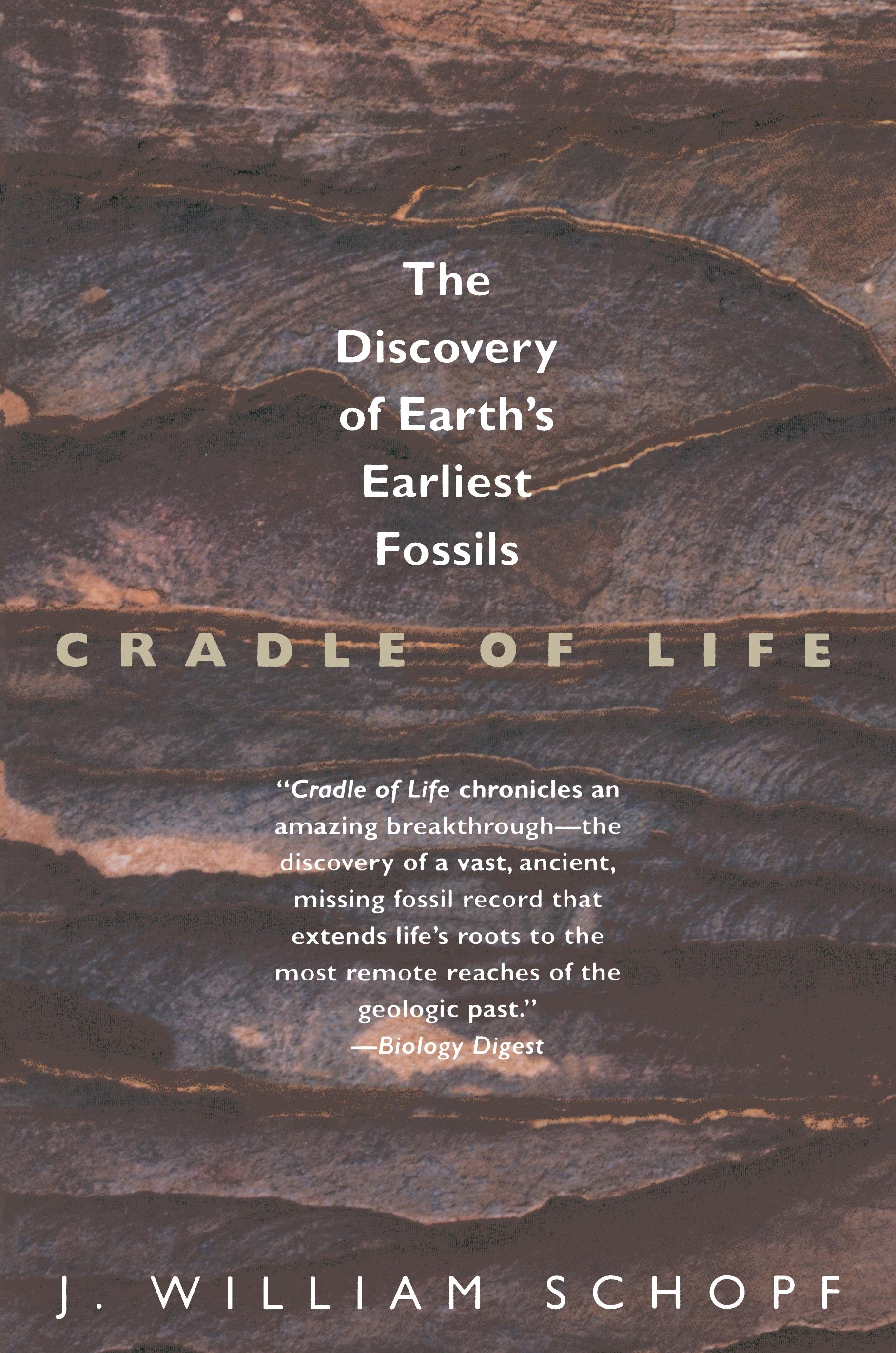
One of the greatest mysteries in reconstructing the history of life on Earth has been the apparent absence of fossils dating back more than 550 million years. We have long known that fossils of sophisticated marine life-forms existed at the dawn of the Cambrian Period, but until recently scientists had found no traces of Precambrian fossils. The quest to find such traces began in earnest in the mid-1960s and culminated in one dramatic moment in 1993 when William Schopf identified fossilized microorganisms three and a half billion years old. This startling find opened up a vast period of time--some eighty-five percent of Earth's history--to new research and new ideas about life's beginnings. In this book, William Schopf, a pioneer of modern paleobiology, tells for the first time the exciting and fascinating story of the origins and earliest evolution of life and how that story has been unearthed.
Gracefully blending his personal story of discovery with the basics needed to understand the astonishing science he describes, Schopf has produced an introduction to paleobiology for the interested reader as well as a primer for beginning students in the field. He considers such questions as how did primitive bacteria, pond scum, evolve into the complex life-forms found at the beginning of the Cambrian Period? How do scientists identify ancient microbes and what do these tiny creatures tell us about the environment of the early Earth? (And, in a related chapter, Schopf discusses his role in the controversy that swirls around recent claims of fossils in the famed meteorite from Mars.) Like all great teachers, Schopf teaches the non-specialist enough about his subject along the way that we can easily follow his descriptions of the geology, biology, and chemistry behind these discoveries. Anyone interested in the intriguing questions of the origins of life on Earth and how those origins have been discovered will find this story the best place to start.
Pay easily by card, Klarna, Apple Pay or Google Pay. Not happy? You always have a 14-day money-back guarantee. Read more in our terms. If you have any questions, email us at hello@memmo.org.
Memmo makes studying easier – wherever you are in the world. We bring your course books and smart study tools together in one place: summaries, quizzes, podcasts and flashcards. Plus Ted, your study buddy who answers anything you wonder. Over 50,000 students already study here – built to help you learn faster and stress less.