
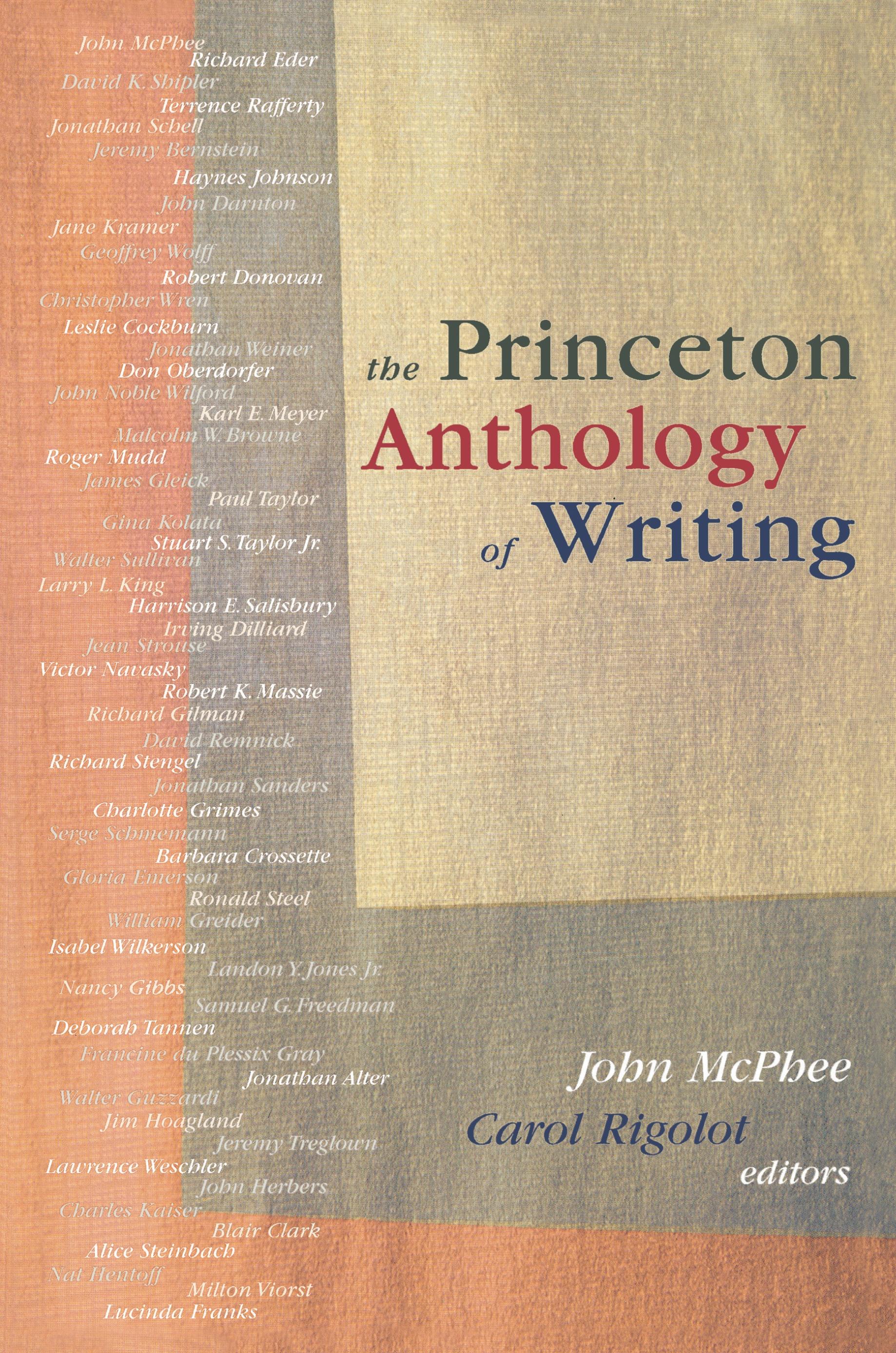
In 1957--long before colleges awarded degrees in creative nonfiction and back when newspaper writing's reputation was tainted by the fish it wrapped--Princeton began honoring talented literary journalists. Since then, fifty-nine of the finest, most dedicated, and most decorated nonfiction writers have held the Ferris and McGraw professorships. This monumental volume harbors their favorite and often most influential works. Each contribution is rewarding reading, and collectively the selections validate journalism's ascent into the esteem of the academy and the reading public.
Necessarily eclectic and delightfully idiosyncratic, the fifty-nine pieces are long and short, political and personal, comic and deadly serious. Students will be provoked by William Greider's pointed critique of the democracy industry, eerily entertained by Leslie Cockburn's fraternization with the Cali cartel, inspired by David K. Shipler's thoughts on race, unsettled by Haynes Johnson's account of Bay of Pigs survivors, and moved by Lucinda Frank's essay on a mother fighting to save a child born with birth defects. Many of the essays are finely crafted portraits: Charlotte Grimes's biography of her grandmother, Blair Clark's obituary for Robert Lowell, and Jane Kramer's affecting story of a woman hero of the French Resistance.
Other contributions to savor include Harrison Salisbury on the siege of Leningrad, Landon Jones on the 1950s, Christopher Wren on Soviet mountaineering, James Gleick on technology, Gloria Emerson on Vietnam, Gina Kolata on Fermat's last theorem, and Roger Mudd on the media. Whether approached chronologically, thematically, randomly, or, as the editors order them, more intuitively, each suggests a perfect evening reading.
Designed for students as well as general readers, The Princeton Anthology of Writing splendidly attests to the elegance, eloquence, and endurance of fine nonfiction.
Pay easily by card, Klarna, Apple Pay or Google Pay. Not happy? You always have a 14-day money-back guarantee. Read more in our terms. If you have any questions, email us at hello@memmo.org.
Memmo makes studying easier – wherever you are in the world. We bring your course books and smart study tools together in one place: summaries, quizzes, podcasts and flashcards. Plus Ted, your study buddy who answers anything you wonder. Over 75,000 students already study here – built to help you learn faster and stress less.