
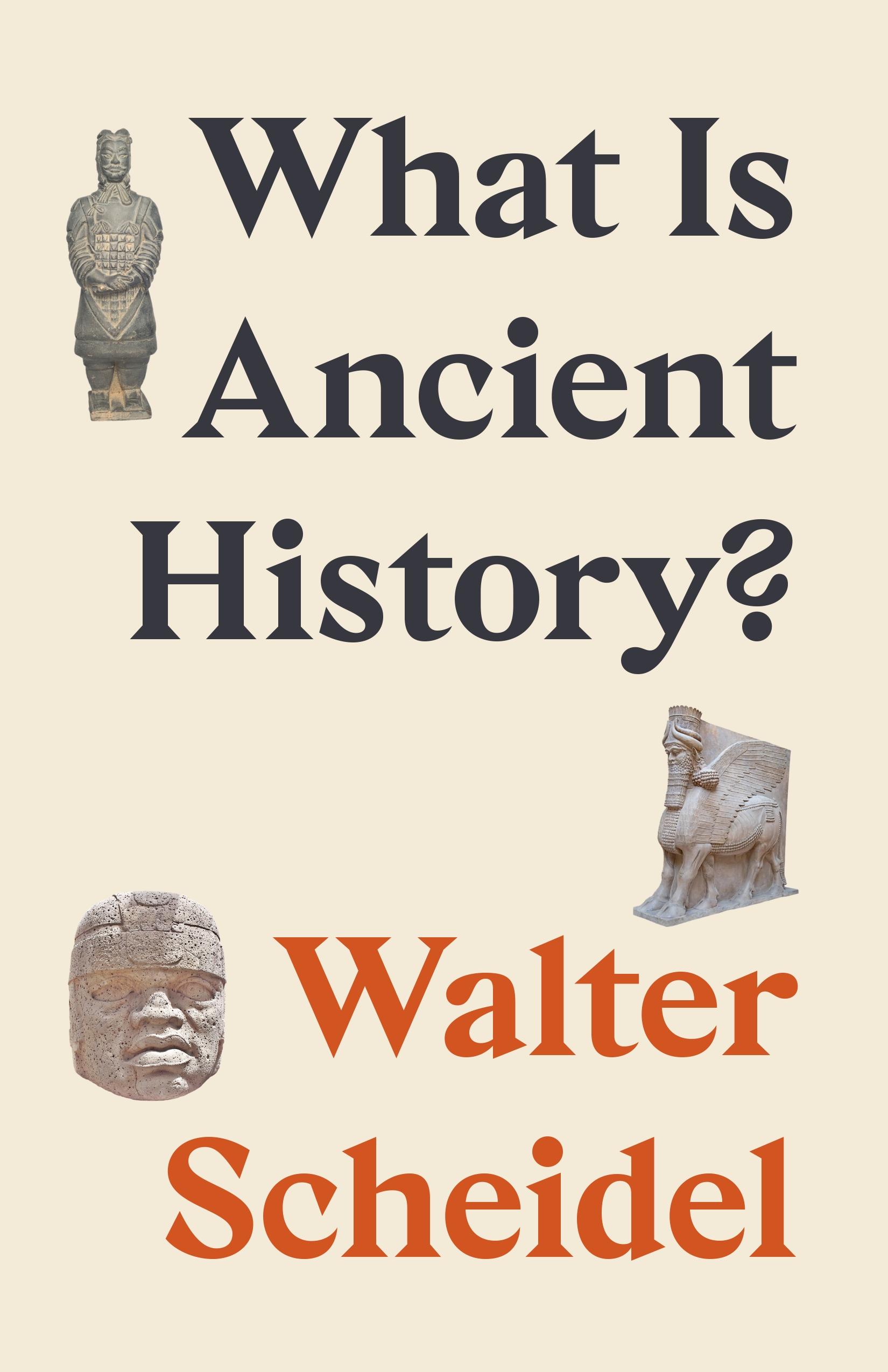
From one of today’s most innovative ancient historians, a provocative new vision of why ancient history matters—and why it needs to be told in a radically different, global way
It’s easy to think that ancient history is, well, ancient history—obsolete, irrelevant, unjustifiably focused on Greece and Rome, and at risk of extinction. In What Is Ancient History?, Walter Scheidel presents a compelling case for a new kind of ancient history—a global history that captures antiquity’s pivotal role as a decisive phase in human development, one that provided the shared foundation of our world and continues to shape our lives today.
For Scheidel, ancient history is when the earliest versions of today’s ways of life were created and spread—from farming, mining, and engineering to housing and transportation, cities and government, writing and belief systems. Transforming the planet, this process unfolded all over the world, in Eurasia, Africa, and the Americas, often at different times, sometimes haltingly but ultimately unstoppably. Yet it’s rarely studied or taught that way. Since the eighteenth century, Western intellectuals have dismembered the ancient world, driven not only by their quest for professional expertise but also by nationalism, colonialism, racism, and the idealization of Greece and Rome. Specialized scholarship has fractured into numerous academic niches, obscuring broader patterns and dynamics and keeping us from understanding just how much humanity has long had in common.
The time has come, Scheidel argues, to put the ancient world back together—by moving beyond the limitations of Greco-Roman “classics,” by systematically comparing ancient societies, and by exploring early exchanges and connections between them. The time has come, in other words, for an ancient history for everyone.
Pay easily by card, Klarna, Apple Pay or Google Pay. Not happy? You always have a 14-day money-back guarantee. Read more in our terms. If you have any questions, email us at hello@memmo.org.
Memmo makes studying easier – wherever you are in the world. We bring your course books and smart study tools together in one place: summaries, quizzes, podcasts and flashcards. Plus Ted, your study buddy who answers anything you wonder. Over 75,000 students already study here – built to help you learn faster and stress less.