
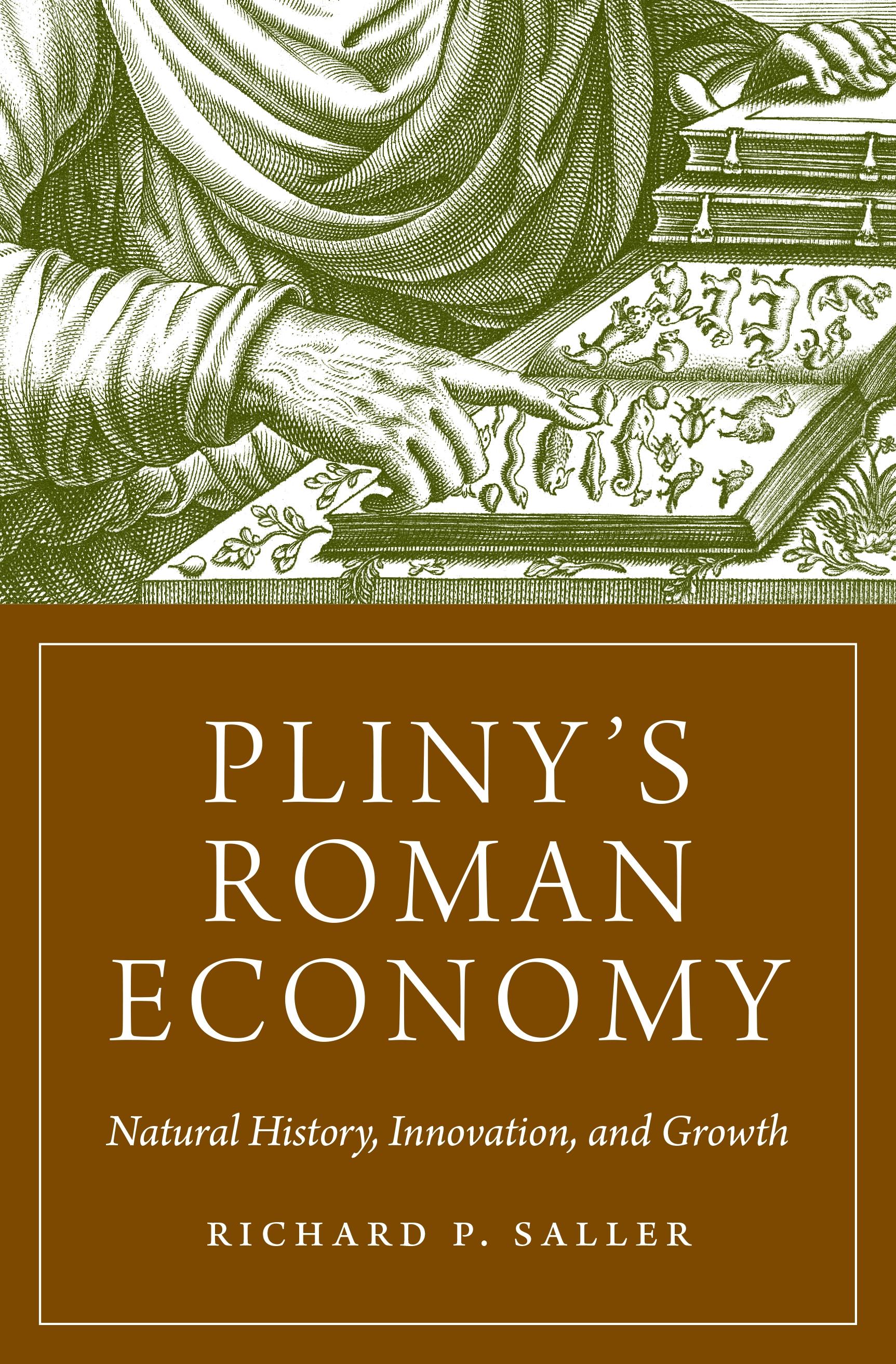
The first comprehensive study of Pliny the Elder’s economic thought—and its implications for understanding the Roman Empire’s constrained innovation and economic growth
The elder Pliny’s Natural History (77 CE), an astonishing compilation of 20,000 “things worth knowing,” was avowedly intended to be a repository of ancient Mediterranean knowledge for the use of craftsmen and farmers, but this 37-book, 400,000-word work was too expensive, unwieldy, and impractically organized to be of utilitarian value. Yet, as Richard Saller shows, the Natural History offers more insights into Roman ideas about economic growth than any other ancient source. Pliny’s Roman Economy is the first comprehensive study of Pliny’s economic thought and its implications for understanding the economy of the Roman Empire.
As Saller reveals, Pliny sometimes anticipates modern economic theory, while at other times his ideas suggest why Rome produced very few major inventions that resulted in sustained economic growth. On one hand, Pliny believed that new knowledge came by accident or divine intervention, not by human initiative; research and development was a foreign concept. When he lists 136 great inventions, they are mostly prehistoric and don’t include a single one from Rome—offering a commentary on Roman innovation and displaying a reverence for the past that contrasts with the attitudes of the eighteenth-century encyclopedists credited with contributing to the Industrial Revolution. On the other hand, Pliny shrewdly recognized that Rome’s lack of competition from other states suppressed incentives for innovation. Pliny’s understanding should be noted because, as Saller shows, recent efforts to use scientific evidence about the ancient climate to measure the Roman economy are flawed.
By exploring Pliny’s ideas about discovery, innovation, and growth, Pliny’s Roman Economy makes an important new contribution to the ongoing debate about economic growth in ancient Rome.
Pay easily by card, Klarna, Apple Pay or Google Pay. Not happy? You always have a 14-day money-back guarantee. Read more in our terms. If you have any questions, email us at hello@memmo.org.
Memmo makes studying easier – wherever you are in the world. We bring your course books and smart study tools together in one place: summaries, quizzes, podcasts and flashcards. Plus Ted, your study buddy who answers anything you wonder. Over 75,000 students already study here – built to help you learn faster and stress less.