
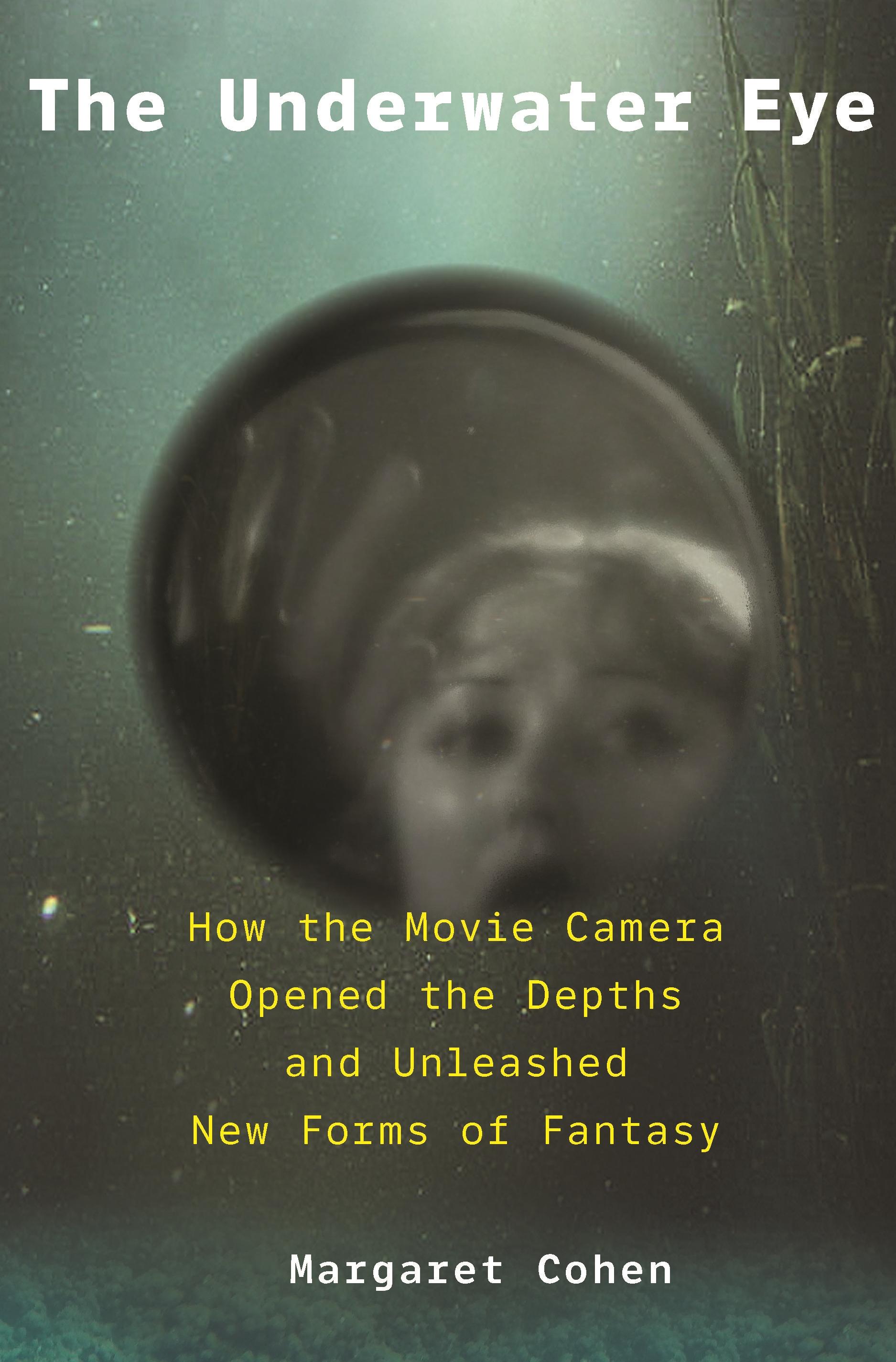
A rich history of underwater filmmaking and how it has profoundly influenced the aesthetics of movies and public perception of the oceans
In The Underwater Eye, Margaret Cohen tells the fascinating story of how the development of modern diving equipment and movie camera technology has allowed documentary and narrative filmmakers to take human vision into the depths, creating new imagery of the seas and the underwater realm, and expanding the scope of popular imagination. Innovating on the most challenging film set on earth, filmmakers have tapped the emotional power of the underwater environment to forge new visions of horror, tragedy, adventure, beauty, and surrealism, entertaining the public and shaping its perception of ocean reality.
Examining works by filmmakers ranging from J. E. Williamson, inventor of the first undersea film technology in 1914, to Wes Anderson, who filmed the underwater scenes of his 2004 The Life Aquatic with Steve Zissou entirely in a pool, The Underwater Eye traces how the radically alien qualities of underwater optics have shaped liquid fantasies for more than a century. Richly illustrated, the book explores documentaries by Jacques Cousteau, Louis Malle, and Hans Hass, art films by Man Ray and Jean Vigo, and popular movies and television shows such as 20,000 Leagues Under the Sea, Creature from the Black Lagoon, Sea Hunt, the Bond films, Jaws, The Abyss, and Titanic. In exploring the cultural impact of underwater filmmaking, the book also asks compelling questions about the role film plays in engaging the public with the remote ocean, a frontline of climate change.
Pay easily by card, Klarna, Apple Pay or Google Pay. Not happy? You always have a 14-day money-back guarantee. Read more in our terms. If you have any questions, email us at hello@memmo.org.
Memmo makes studying easier – wherever you are in the world. We bring your course books and smart study tools together in one place: summaries, quizzes, podcasts and flashcards. Plus Ted, your study buddy who answers anything you wonder. Over 50,000 students already study here – built to help you learn faster and stress less.