
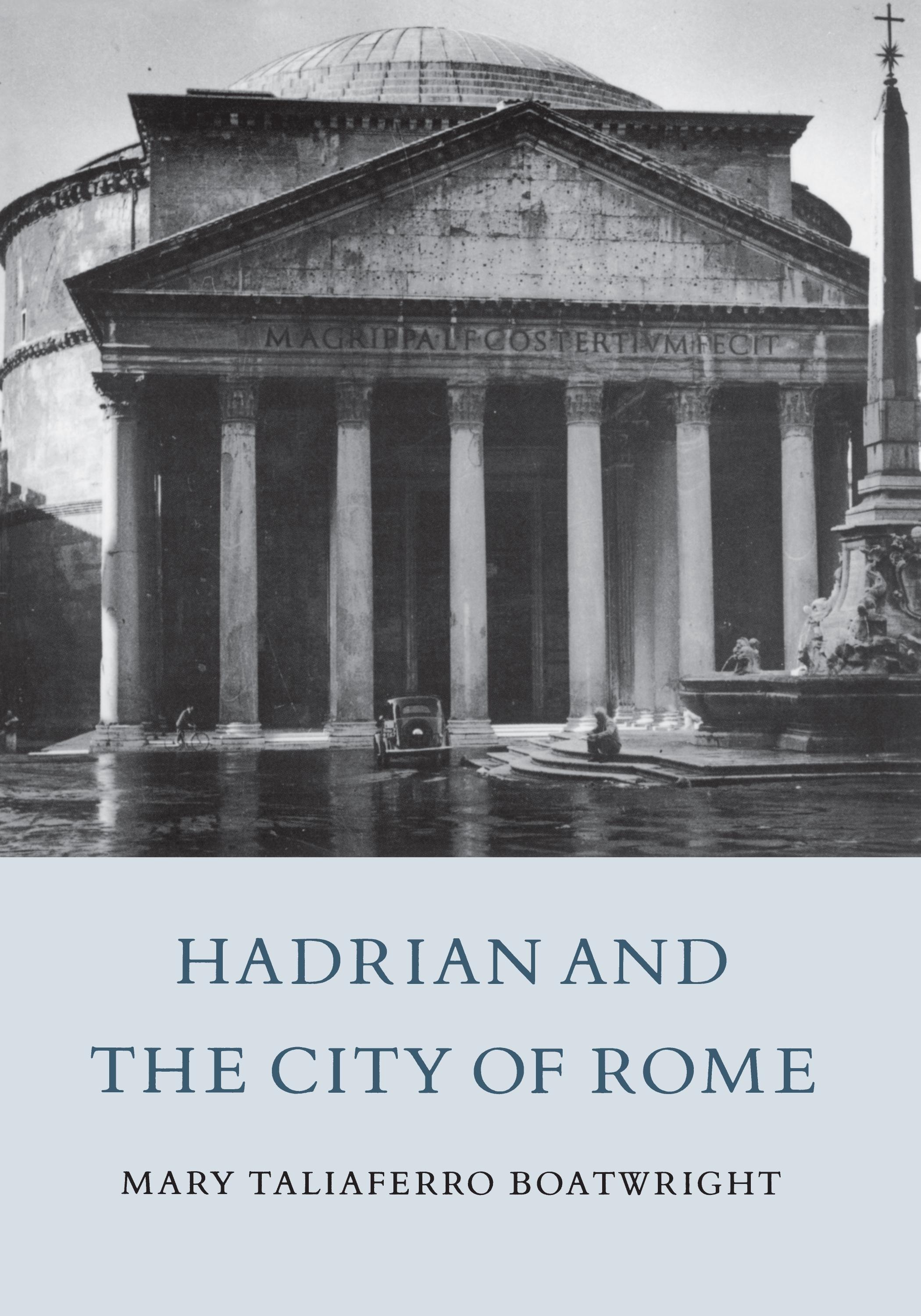
How Hadrian left an enduring mark on the architecture and urban topography of ancient Rome
The Pantheon, the Temple of Venus and Roma, Hadrian’s Mausoleum transformed into Castel Sant’Angelo, and his villa at Tivoli epitomize for many the power and resources of Rome at its zenith. Because other urban changes during Hadrian’s principate (A.D. 117–138) left less visible traces, however, few people realize how powerfully he transformed the capital city not only by erecting these and other monumental edifices but also by renovating buildings, even entire districts, and by reorganizing the building industry and neighborhood life. Mary Taliaferro Boatwright compiles and assesses the varied evidence for Hadrian’s buildings and his administrative changes and evaluates his effect on the capital city in a topographical and historical context. A comprehensive catalogue follows the illustrated text.
Pay easily by card, Klarna, Apple Pay or Google Pay. Not happy? You always have a 14-day money-back guarantee. Read more in our terms. If you have any questions, email us at hello@memmo.org.
Memmo makes studying easier – wherever you are in the world. We bring your course books and smart study tools together in one place: summaries, quizzes, podcasts and flashcards. Plus Ted, your study buddy who answers anything you wonder. Over 75,000 students already study here – built to help you learn faster and stress less.