
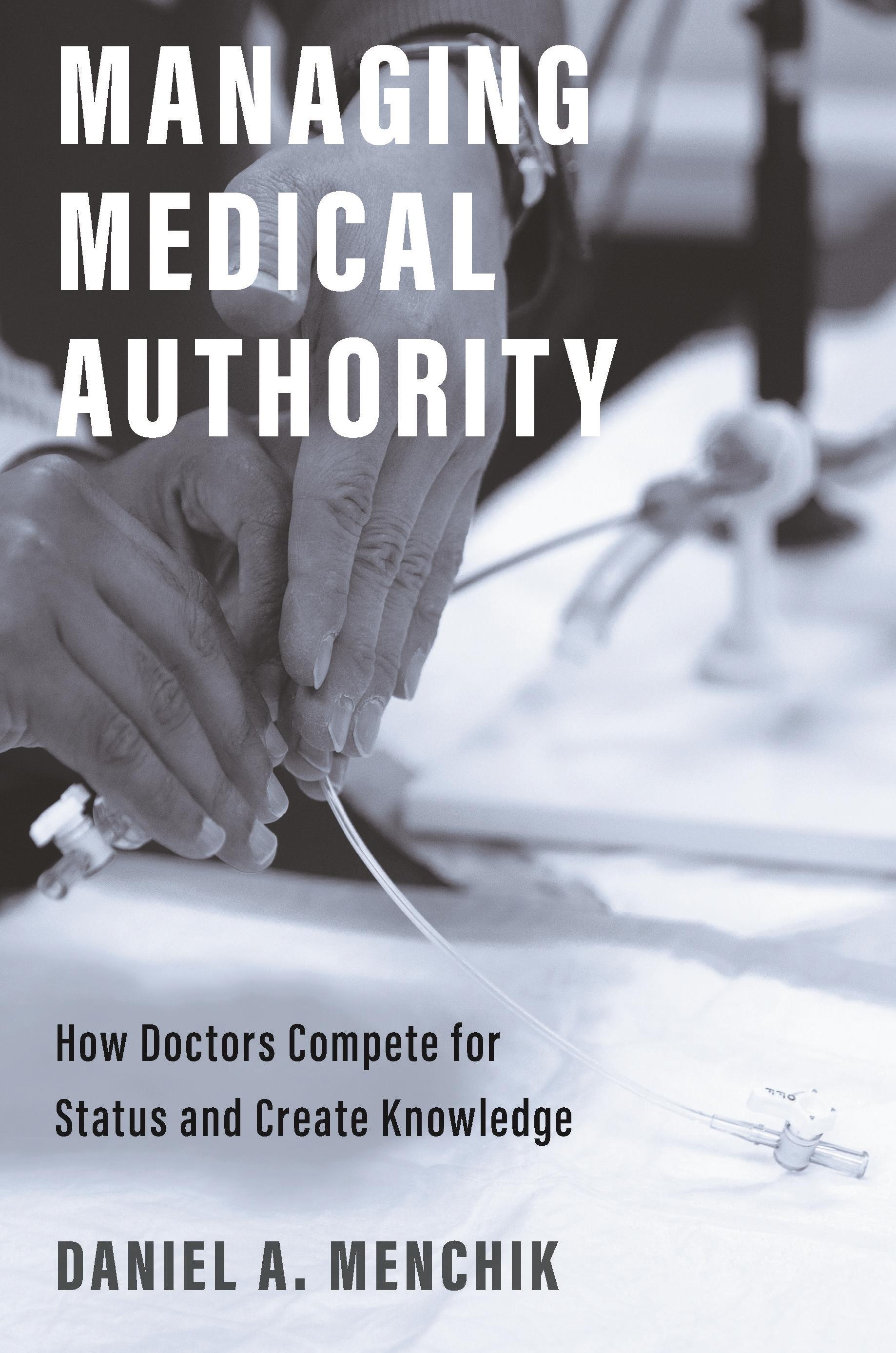
How the authority of medicine is continuously shaped by relationships among physicians, industry, colleagues, and organizations
Exploring how the authority of medicine is controlled, negotiated, and organized, Managing Medical Authority asks: How is knowledge shared throughout the profession? Who makes decisions when your heart malfunctions—physicians, hospital administrators, or private companies who sell pacemakers? How do physicians gain and keep their influence? Arguing that medicine’s authority is managed in collegial competition across venues, Daniel Menchik examines the full range of stakeholders driving the direction of the field: medical trainees, clinicians, researchers, administrators, and even the corporations that develop groundbreaking technologies enabling longer and better lives.
Menchik takes us into Superior Hospital to witness surgeries and executive negotiations. He moves outside the hospital to watch professional committees craft standards for treatments, case management, and professional ethics. At industry-sponsored meetings, he observes company representatives who train some experienced doctors on their technologies, while deterring others who they think might injure patients. Using an innovative ethnographic approach tying individual actions and their collective consequences, he considers how stakeholders ally across the various venues of medicine, even as they are sometimes pressed into competition within those venues. Menchik finds that these alliances and rivalries strengthen the authority of medicine as a whole. From place to place, and group to group, we see how a medical specialty renews and reinvigorates itself.
Beginning within the walls of the hospital, and moving to the professional and commercial venues that shape it, Managing Medical Authority offers an agenda-setting take on the social organization of medical authority.
Pay easily by card, Klarna, Apple Pay or Google Pay. Not happy? You always have a 14-day money-back guarantee. Read more in our terms. If you have any questions, email us at hello@memmo.org.
Memmo makes studying easier – wherever you are in the world. We bring your course books and smart study tools together in one place: summaries, quizzes, podcasts and flashcards. Plus Ted, your study buddy who answers anything you wonder. Over 50,000 students already study here – built to help you learn faster and stress less.