
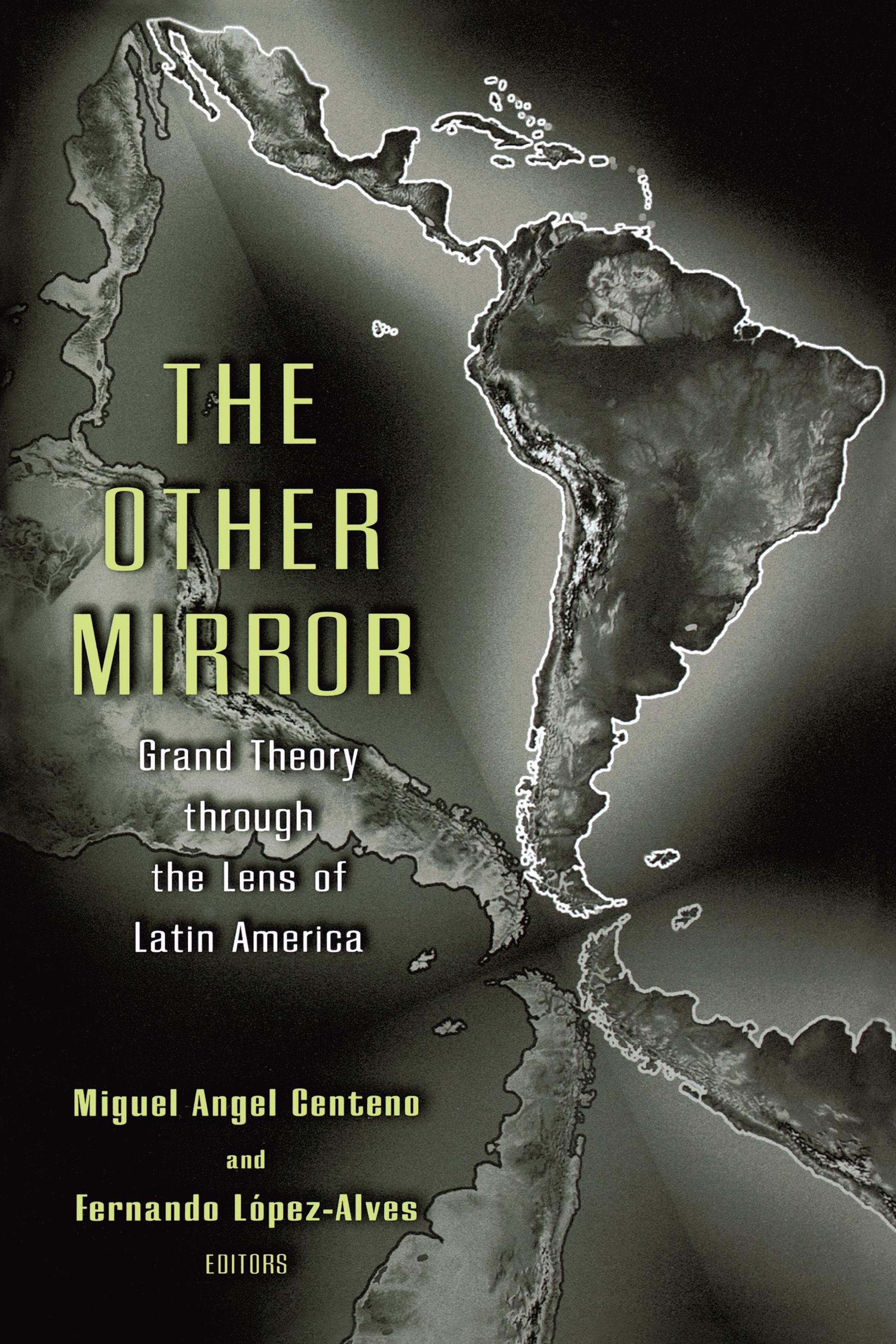
If social science's "cultural turn" has taught us anything, it is that knowledge is constrained by the time and place in which it is produced. In response, scholars have begun to reassess social theory from the standpoints of groups and places outside of the European context upon which most grand theory is based. Here a distinguished group of scholars reevaluates widely accepted theories of state, property, race, and economics against Latin American experiences with a two-fold purpose. They seek to deepen our understanding of Latin America and the problems it faces. And, by testing social science paradigms against a broader variety of cases, they pursue a better and truly generalizable map of the social world.
Bringing universal theory into dialogue with specific history, the contributors consider what forms Latin American variations of classical themes might take and which theories are most useful in describing Latin America. For example, the Argentinian experience reveals the limitations of neoclassical descriptions of economic development, but Charles Tilly's emphasis on the importance of war and collective action to statemaking holds up well when thoughtfully adapted to Latin American situations. Marxist structural analysis is problematic in a region where political divisions do not fully expresses class cleavages, but aspects of Karl Polanyi's socioeconomic theory cross borders with relative ease.
This fresh theoretical discussion expands the scope of Latin American studies and social theory, bringing the two into an unprecedented conversation that will benefit both. Contributors are, in addition to the editors, Jeremy Adelman, Jorge I. Domínguez, Paul Gootenberg, Alan Knight, Robert M. Levine, Claudio Lomnitz, John Markoff, Verónica Montecinos, Steven C. Topik, and J. Samuel Valenzuela.
Pay easily by card, Klarna, Apple Pay or Google Pay. Not happy? You always have a 14-day money-back guarantee. Read more in our terms. If you have any questions, email us at hello@memmo.org.
Memmo makes studying easier – wherever you are in the world. We bring your course books and smart study tools together in one place: summaries, quizzes, podcasts and flashcards. Plus Ted, your study buddy who answers anything you wonder. Over 50,000 students already study here – built to help you learn faster and stress less.