
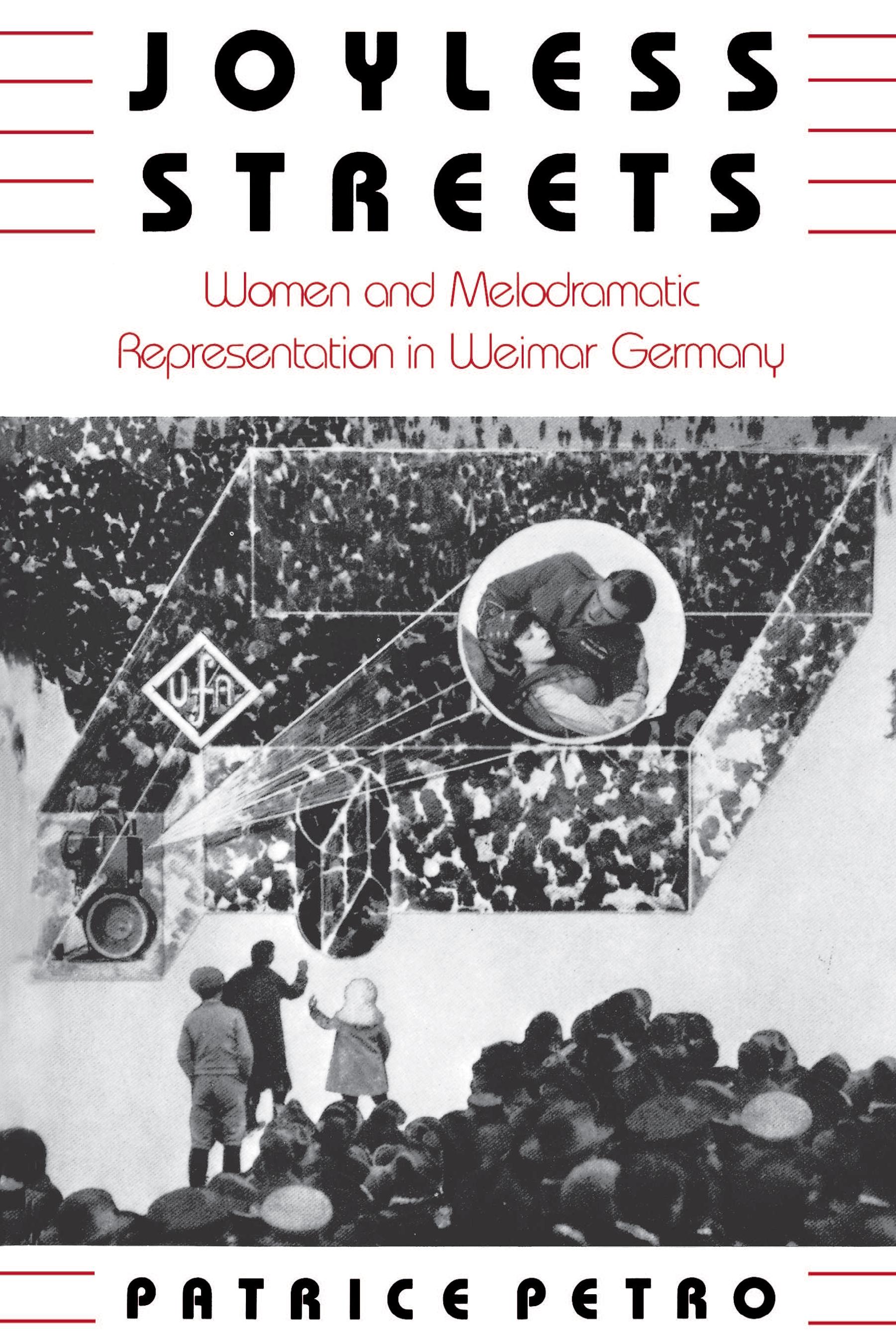
Patrice Petro challenges the conventional assessment of German film history, which sees classical films as responding solely to male anxieties and fears. Exploring the address made to women in melodramatic films and in popular illustrated magazines, she shows how Weimar Germany had a commercially viable female audience, fascinated with looking at images that called traditional representations of gender into question.
Interdisciplinary in her approach, Petro interweaves archival research with recent theoretical debates to offer not merely another view of the Weimar cinema but also another way of looking at Weimar film culture. Women's modernity, she suggests, was not the same as men's modernism, and the image of the city street in film and photojournalism reveals how women responded differently from men to the political, economic, and psychic upheaval of their times.
Pay easily by card, Klarna, Apple Pay or Google Pay. Not happy? You always have a 14-day money-back guarantee. Read more in our terms. If you have any questions, email us at hello@memmo.org.
Memmo makes studying easier – wherever you are in the world. We bring your course books and smart study tools together in one place: summaries, quizzes, podcasts and flashcards. Plus Ted, your study buddy who answers anything you wonder. Over 50,000 students already study here – built to help you learn faster and stress less.