
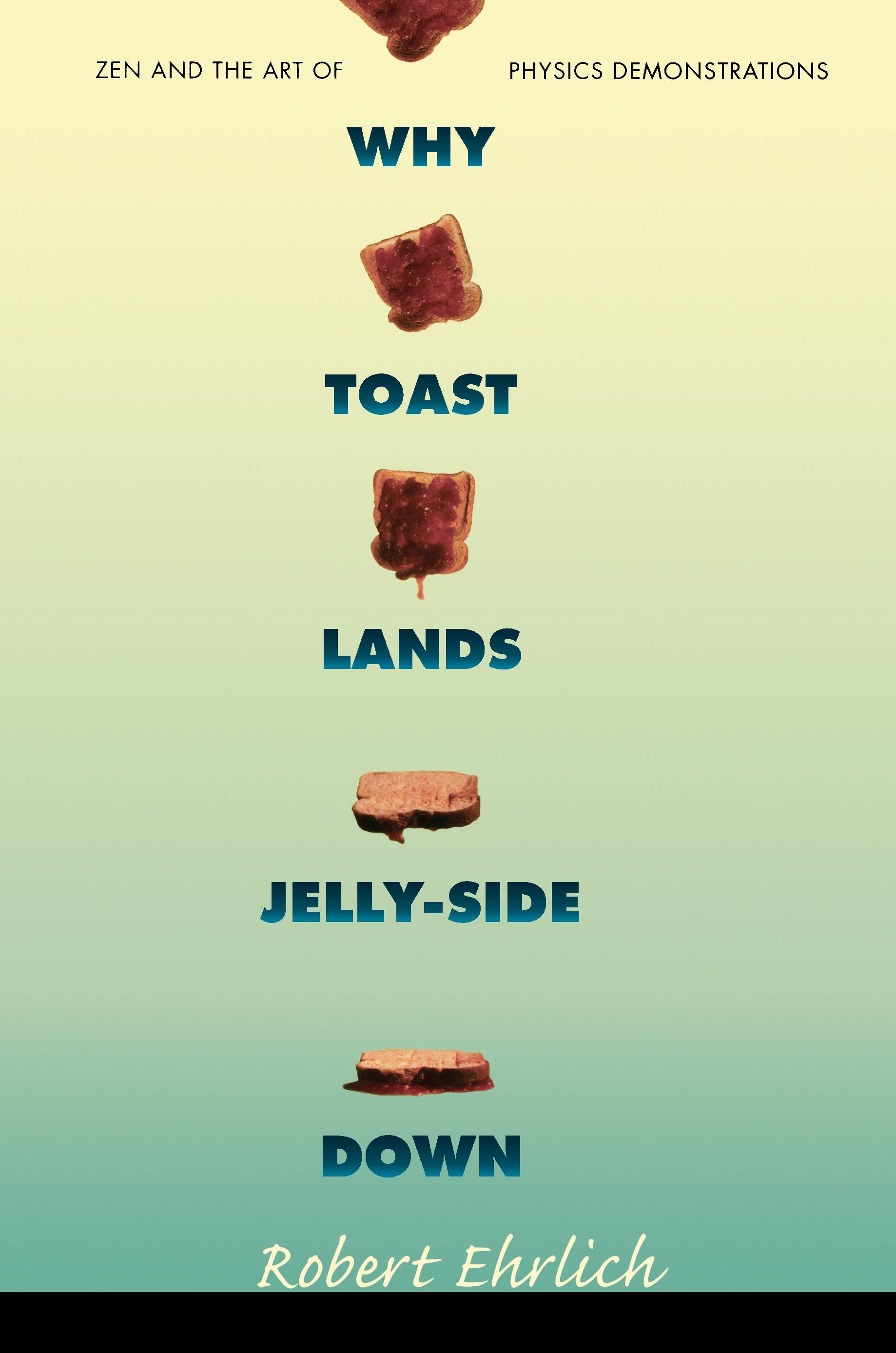
Physics has the reputation of being difficult to understand and remote from everyday life. Robert Ehrlich, however, has spent much of his career disproving these stereotypes. In the long-awaited sequel to Turning the World Inside Out and 175 Other Simple Physics Demonstrations, he provides a new collection of physics demonstrations and experiments that prove that physics can, in fact, be "made simple." Intentionally using "low tech" and inexpensive materials from everyday life, Why Toast Lands Jelly-Side Down makes key principles of physics surprisingly easy to understand.
After laying out the basic principles of what constitutes a successful demonstration, Ehrlich provides more than 100 examples. Some of the more intriguing include: Terminal Velocity of Falling Coffee Filters; Spinning a Penny; Dropping Two Rolls of Toilet Paper; Avalanches in a Sand Pile; When to Add the Cream to Your Coffee; Deep Knee Bends on a Bathroom Scale; Recoil Force on a Bent Straw; Swinging Your Arms While Walking; Estimating the Net Force on a Moving Book; and, of course, Why Toast Lands Jelly-Side Down.
The book begins with a practical introduction on how to design physics demonstrations. The benefits of designing one's own "demos" are numerous, but primary among them is an increased understanding of basic physics. For many people who teach the principles of physics, demonstrations seem dauntingly complex, filled with hard-to-find equipment and too many possibilities for failure. The demonstrations described in this book are exactly the opposite. Ehrlich describes them with characteristic candor: "You can fit many of them in your pocket, bring them to your class without any set-up required, and best of all, you need not fear that your demo will more likely illustrate Murphy's laws rather than Newton's."
For anyone with even the slightest interest in physics, Why Toast Lands Jelly-Side Down is filled with learning opportunities. For everyone who is studying physics or teaching the subject at any level, from amateur scientists to professional teachers, it is an essential resource.
Pay easily by card, Klarna, Apple Pay or Google Pay. Not happy? You always have a 14-day money-back guarantee. Read more in our terms. If you have any questions, email us at hello@memmo.org.
Memmo makes studying easier – wherever you are in the world. We bring your course books and smart study tools together in one place: summaries, quizzes, podcasts and flashcards. Plus Ted, your study buddy who answers anything you wonder. Over 50,000 students already study here – built to help you learn faster and stress less.