
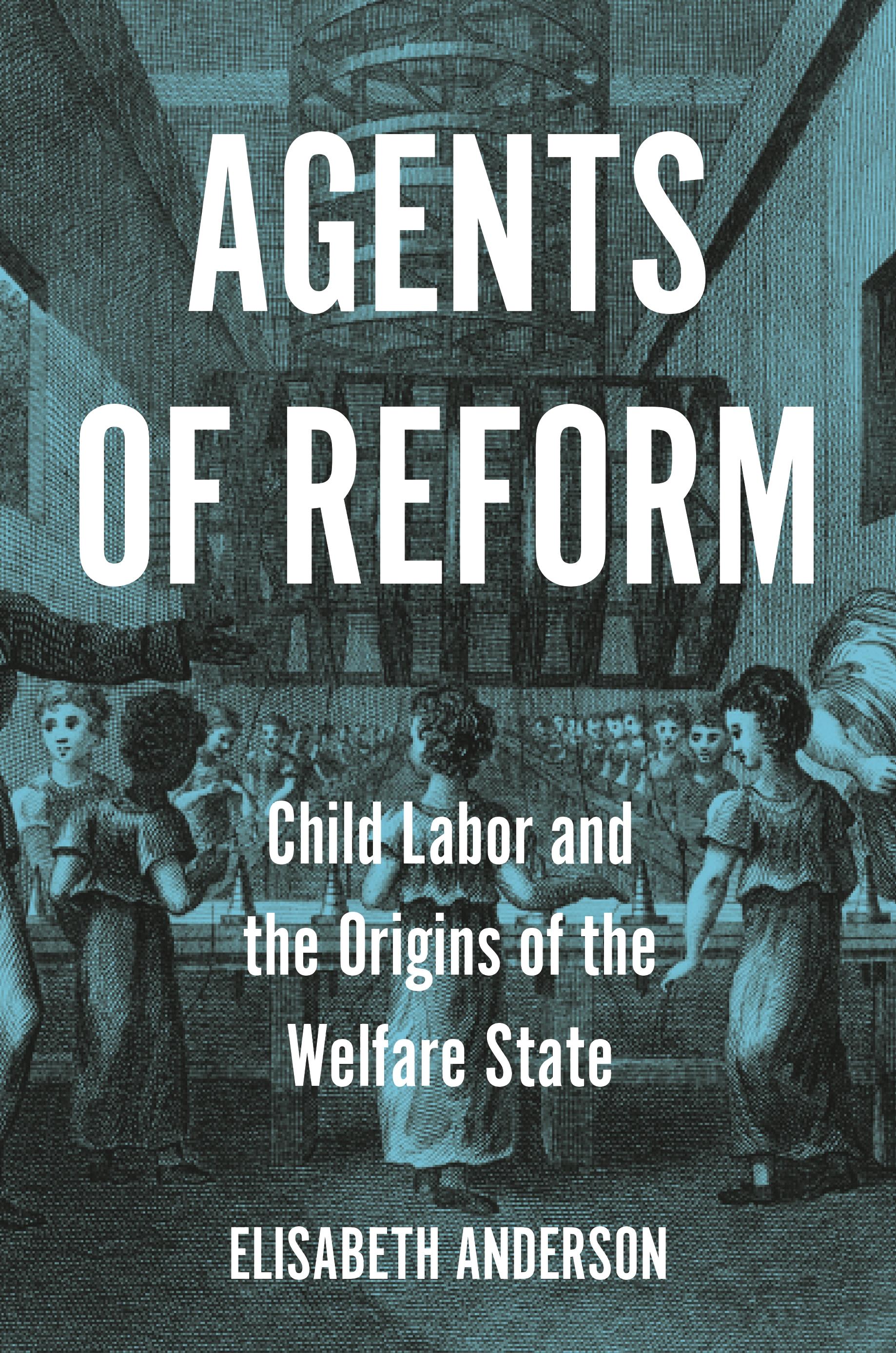
A groundbreaking account of how the welfare state began with early nineteenth-century child labor laws, and how middle-class and elite reformers made it happen
The beginnings of the modern welfare state are often traced to the late nineteenth-century labor movement and to policymakers’ efforts to appeal to working-class voters. But in Agents of Reform, Elisabeth Anderson shows that the regulatory welfare state began a half century earlier, in the 1830s, with the passage of the first child labor laws.
Agents of Reform tells the story of how middle-class and elite reformers in Europe and the United States defined child labor as a threat to social order, and took the lead in bringing regulatory welfare into being. They built alliances to maneuver around powerful political blocks and instituted pathbreaking new employment protections. Later in the century, now with the help of organized labor, they created factory inspectorates to strengthen and routinize the state’s capacity to intervene in industrial working conditions.
Agents of Reform compares seven in-depth case studies of key policy episodes in Germany, France, Belgium, Massachusetts, and Illinois. Foregrounding the agency of individual reformers, it challenges existing explanations of welfare state development and advances a new pragmatist field theory of institutional change. In doing so, it moves beyond standard narratives of interests and institutions toward an integrated understanding of how these interact with political actors’ ideas and coalition-building strategies.
Pay easily by card, Klarna, Apple Pay or Google Pay. Not happy? You always have a 14-day money-back guarantee. Read more in our terms. If you have any questions, email us at hello@memmo.org.
Memmo makes studying easier – wherever you are in the world. We bring your course books and smart study tools together in one place: summaries, quizzes, podcasts and flashcards. Plus Ted, your study buddy who answers anything you wonder. Over 50,000 students already study here – built to help you learn faster and stress less.