
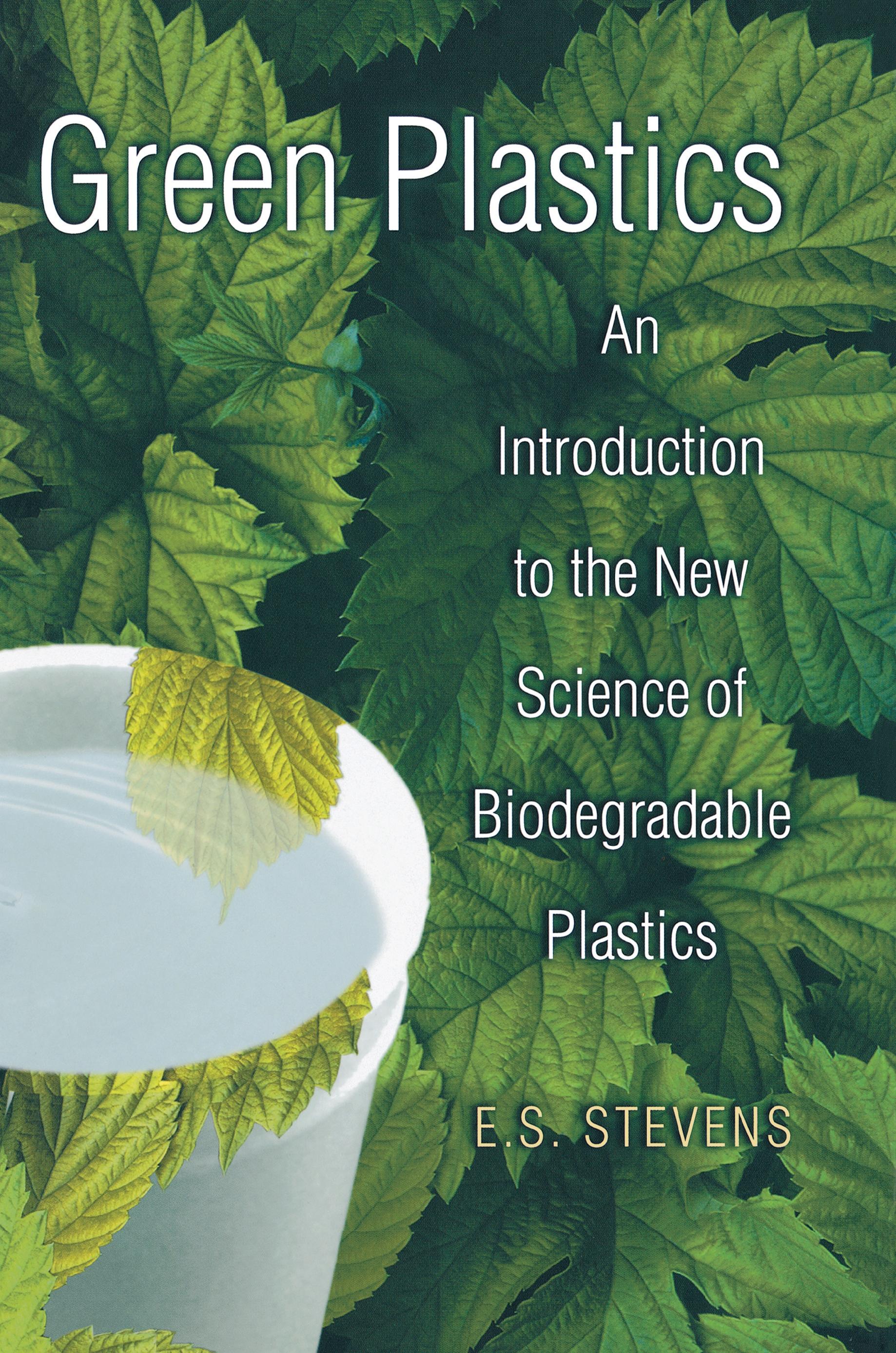
Plastics are everywhere. Bags, bank cards, bottles, and even boats can all be made of this celebrated but much-maligned material. Yet most of us know next to nothing about plastics. We do know that they are practical and cheap--but they also represent a huge environmental problem, for they literally take ages to decompose. In this engaging book, E.S. Stevens tells us everything we have always wondered about plastics and of the efforts, in America, Europe, and Asia, to develop a new breed of environmentally friendly plastics. He points to a possible future where plastics will no longer be made of petroleum, but of plants.
The first two chapters assess the increased use of plastics as a relatively new alternative to other materials. The third chapter introduces us to their impact on the environment and strategies for their disposal or recycling. The next two chapters cover basic concepts and terms used in polymer sciences and provide some basic chemistry. With these fundamentals in tow, the author compares how petroleum-based and biological polymers are made, and the various ways in which they decompose. He acquaints readers with the emerging technologies, their commercial viability, and their future. Finally, instructions are given for preparing basic bioplastics using readily available materials.
Nonspecialists will find Green Plastics a concise introduction to this exciting interdisciplinary topic--an introduction otherwise not available. For students it provides easy entry to an area of science with wide appeal and current importance; for teachers, excellent background reading for courses in various sciences. The prospect of depleted fossil fuel supplies, and the potential benefits of bioplastics to the environment and to rural areas that could supply the raw materials, make this book a compelling presentation of a subject whose time has come.
Pay easily by card, Klarna, Apple Pay or Google Pay. Not happy? You always have a 14-day money-back guarantee. Read more in our terms. If you have any questions, email us at hello@memmo.org.
Memmo makes studying easier – wherever you are in the world. We bring your course books and smart study tools together in one place: summaries, quizzes, podcasts and flashcards. Plus Ted, your study buddy who answers anything you wonder. Over 50,000 students already study here – built to help you learn faster and stress less.