
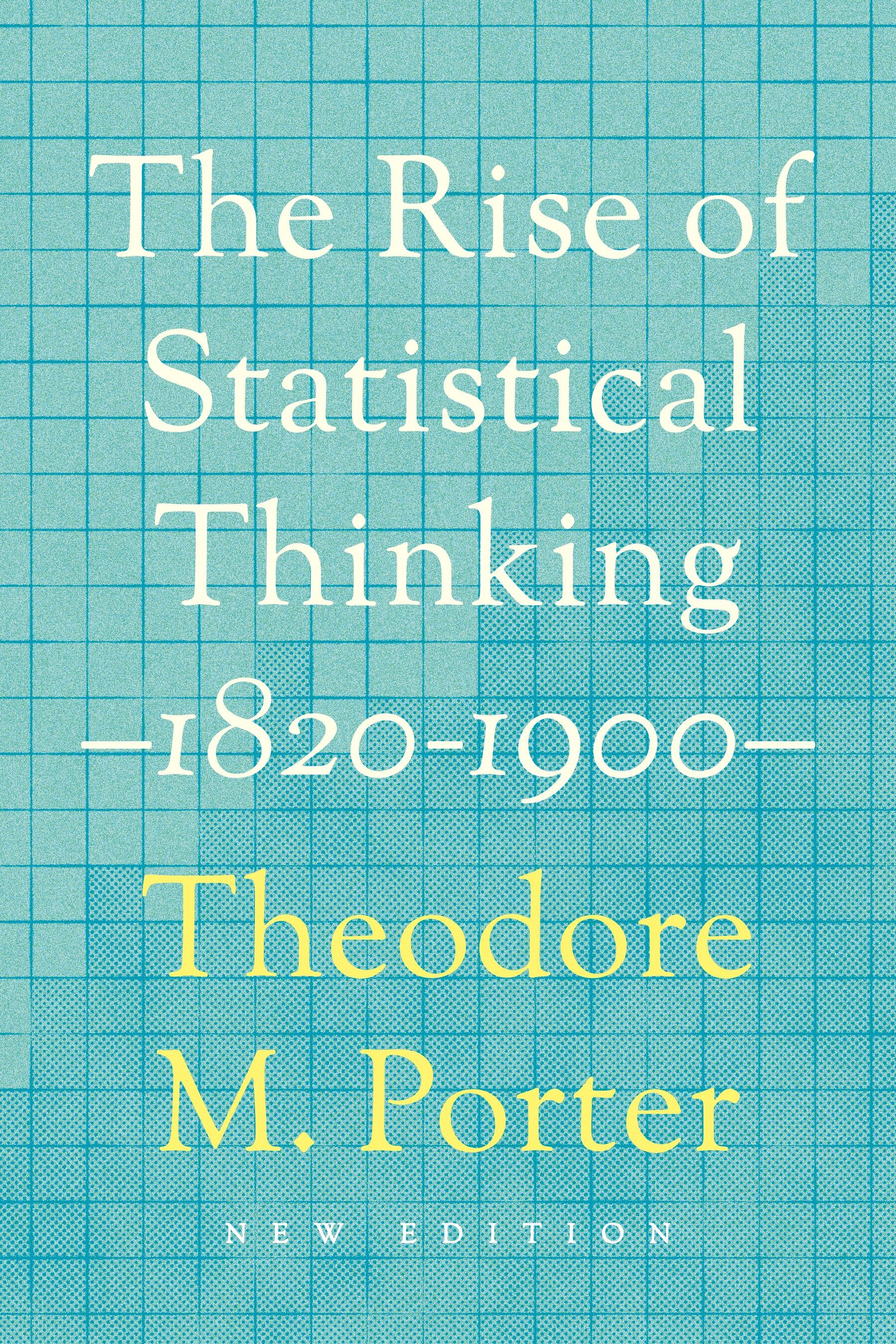
An essential work on the origins of statistics
The Rise of Statistical Thinking, 1820–1900 explores the history of statistics from the field's origins in the nineteenth century through to the factors that produced the burst of modern statistical innovation in the early twentieth century. Theodore Porter shows that statistics was not developed by mathematicians and then applied to the sciences and social sciences. Rather, the field came into being through the efforts of social scientists, who saw a need for statistical tools in their examination of society. Pioneering statistical physicists and biologists James Clerk Maxwell, Ludwig Boltzmann, and Francis Galton introduced statistical models to the sciences by pointing to analogies between their disciplines and the social sciences. A new preface by the author looks at how the book has remained relevant since its initial publication, and considers the current place of statistics in scientific research.
Pay easily by card, Klarna, Apple Pay or Google Pay. Not happy? You always have a 14-day money-back guarantee. Read more in our terms. If you have any questions, email us at hello@memmo.org.
Memmo makes studying easier – wherever you are in the world. We bring your course books and smart study tools together in one place: summaries, quizzes, podcasts and flashcards. Plus Ted, your study buddy who answers anything you wonder. Over 75,000 students already study here – built to help you learn faster and stress less.