
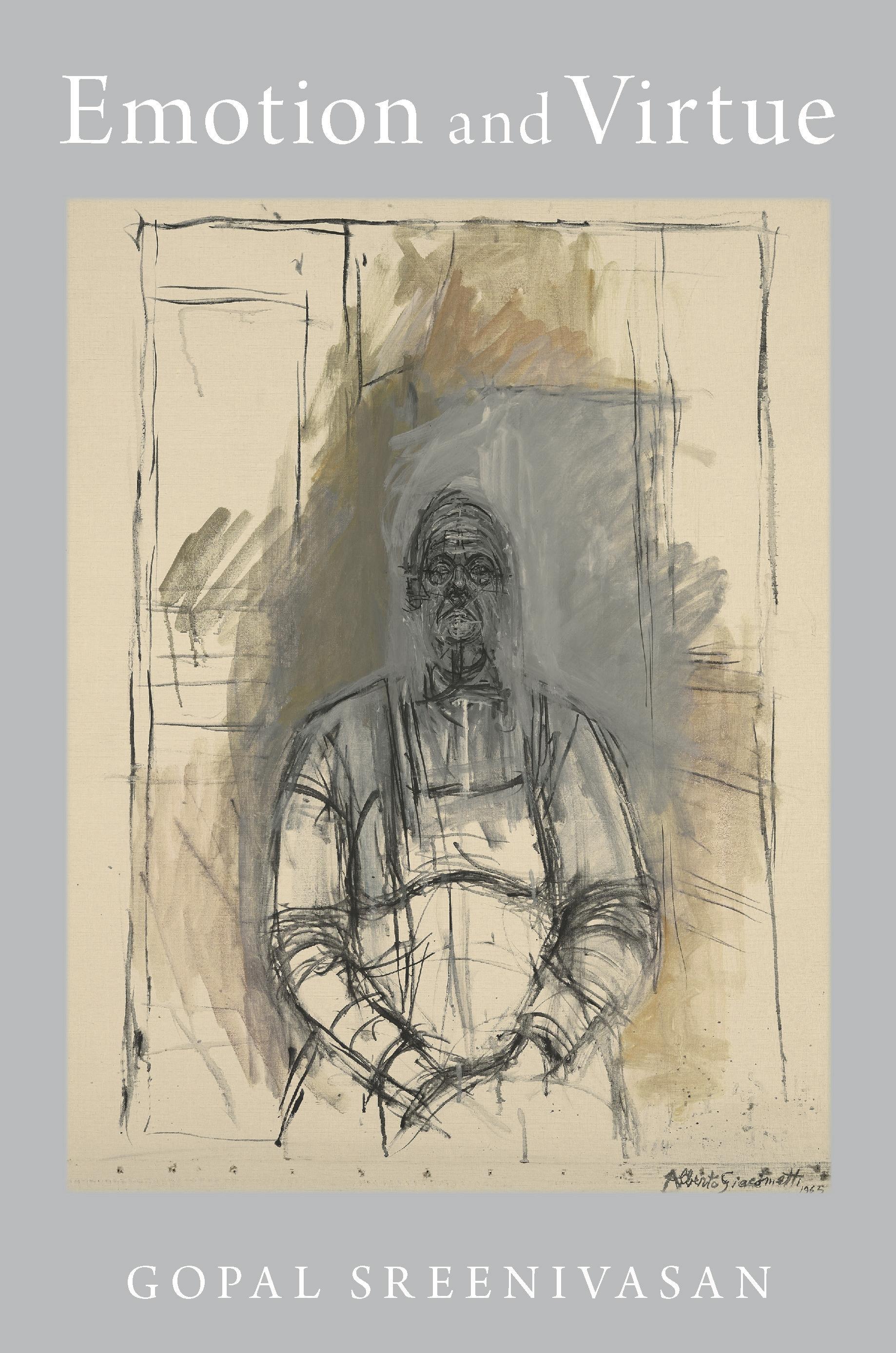
A novel approach to the crucial role emotion plays in virtuous action
What must a person be like to possess a virtue in full measure? What sort of psychological constitution does one need to be an exemplar of compassion, say, or of courage? Focusing on these two examples, Emotion and Virtue ingeniously argues that certain emotion traits play an indispensable role in virtue. With exemplars of compassion, for instance, this role is played by a modified sympathy trait, which is central to enabling these exemplars to be reliably correct judges of the compassionate thing to do in various practical situations. Indeed, according to Gopal Sreenivasan, the virtue of compassion is, in a sense, a modified sympathy trait, just as courage is a modified fear trait.
While he upholds the traditional definition of virtue as a species of character trait, Sreenivasan discards other traditional precepts. For example, he rejects the unity of the virtues and raises new questions about when virtue should be taught. Unlike orthodox virtue ethics, moreover, his account does not aspire to rival consequentialism and deontology. Instead Sreenivasan repudiates the ambitions of virtue imperialism.
Emotion and Virtue makes significant contributions to moral psychology and the theory of virtue alike.
Pay easily by card, Klarna, Apple Pay or Google Pay. Not happy? You always have a 14-day money-back guarantee. Read more in our terms. If you have any questions, email us at hello@memmo.org.
Memmo makes studying easier – wherever you are in the world. We bring your course books and smart study tools together in one place: summaries, quizzes, podcasts and flashcards. Plus Ted, your study buddy who answers anything you wonder. Over 50,000 students already study here – built to help you learn faster and stress less.