
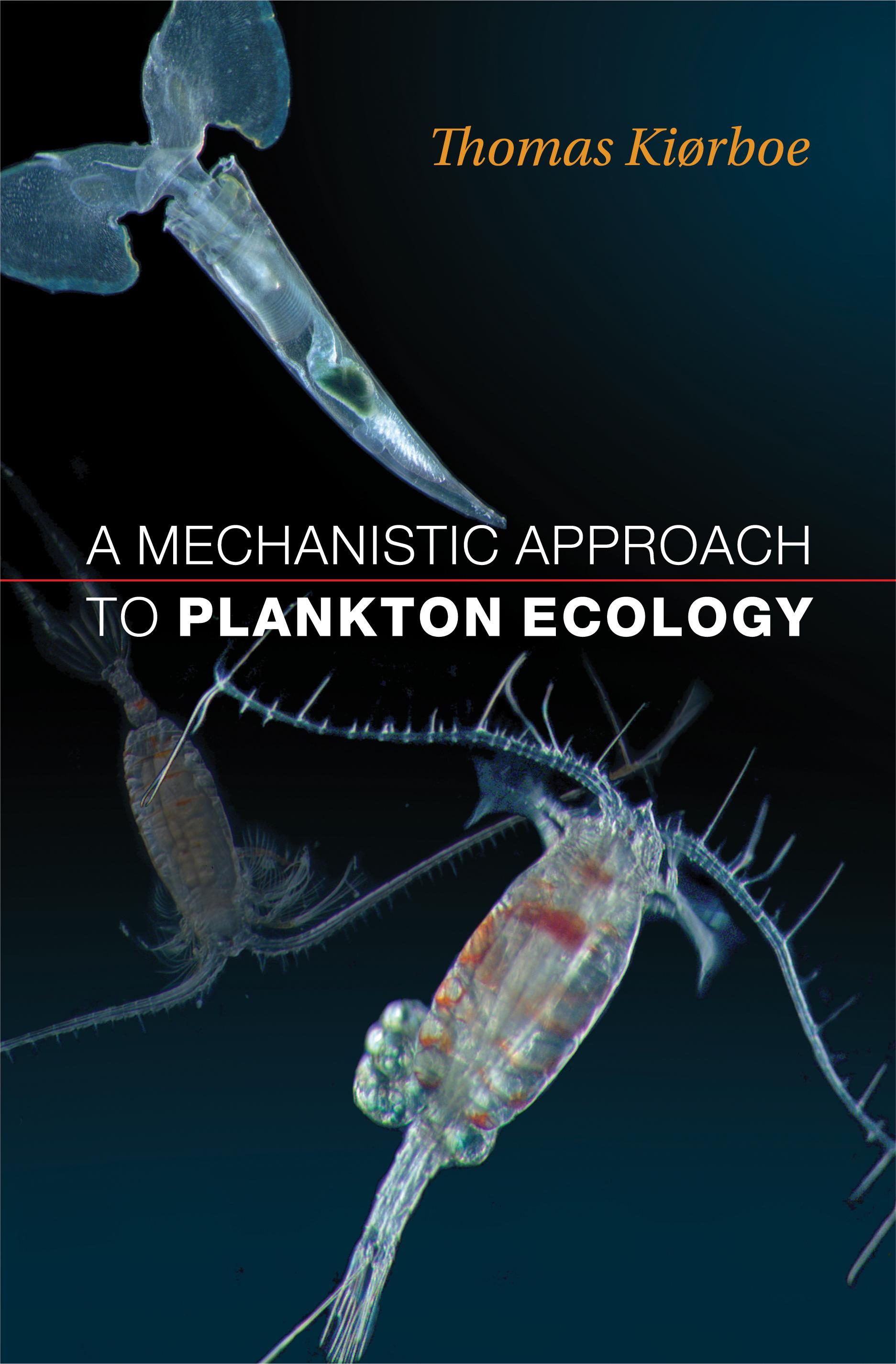
The three main missions of any organism--growing, reproducing, and surviving--depend on encounters with food and mates, and on avoiding encounters with predators. Through natural selection, the behavior and ecology of plankton organisms have evolved to optimize these tasks. This book offers a mechanistic approach to the study of ocean ecology by exploring biological interactions in plankton at the individual level. The book focuses on encounter mechanisms, since the pace of life in the ocean intimately relates to the rate at which encounters happen.
Thomas Kiørboe examines the life and interactions of plankton organisms with the larger aim of understanding marine pelagic food webs. He looks at plankton ecology and behavior in the context of the organisms' immediate physical and chemical habitats. He shows that the nutrient uptake, feeding rates, motility patterns, signal transmissions, and perception of plankton are all constrained by nonintuitive interactions between organism biology and small-scale physical and chemical characteristics of the three-dimensional fluid environment.
Most of the book's chapters consist of a theoretical introduction followed by examples of how the theory might be applied to real-world problems. In the final chapters, mechanistic insights of individual-level processes help to describe broader population dynamics and pelagic food web structure and function.
Pay easily by card, Klarna, Apple Pay or Google Pay. Not happy? You always have a 14-day money-back guarantee. Read more in our terms. If you have any questions, email us at hello@memmo.org.
Memmo makes studying easier – wherever you are in the world. We bring your course books and smart study tools together in one place: summaries, quizzes, podcasts and flashcards. Plus Ted, your study buddy who answers anything you wonder. Over 50,000 students already study here – built to help you learn faster and stress less.