
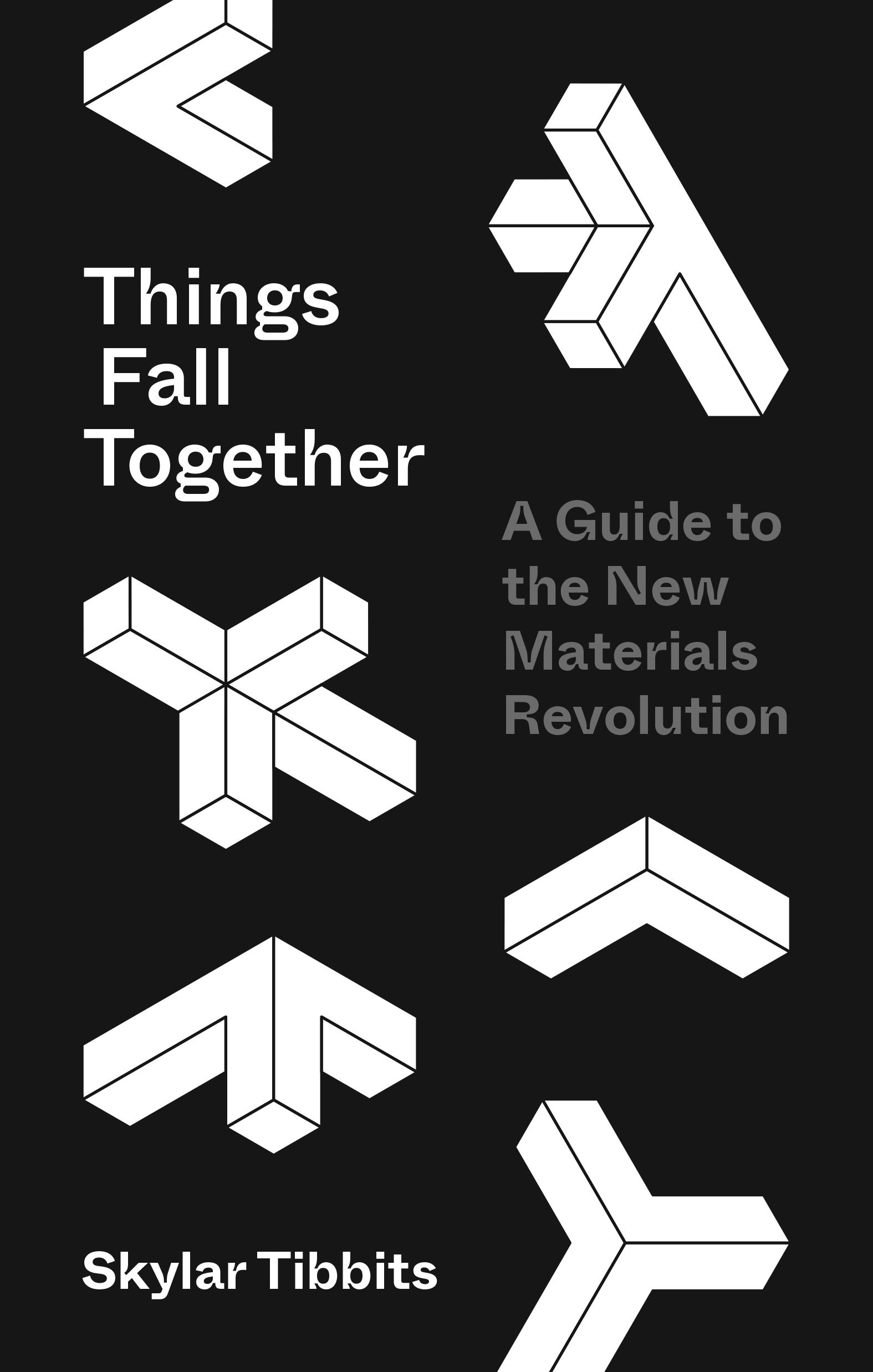
From the visionary founder of the Self-Assembly Lab at MIT, a manifesto for the dawning age of active materials
Things in life tend to fall apart. Cars break down. Buildings fall into disrepair. Personal items deteriorate. Yet today's researchers are exploiting newly understood properties of matter to program materials that physically sense, adapt, and fall together instead of apart. These materials open new directions for industrial innovation and challenge us to rethink the way we build and collaborate with our environment. Things Fall Together is a provocative guide to this emerging, often mind-bending reality, presenting a bold vision for harnessing the intelligence embedded in the material world.
Drawing on his pioneering work on self-assembly and programmable material technologies, Skylar Tibbits lays out the core, frequently counterintuitive ideas and strategies that animate this new approach to design and innovation. From furniture that builds itself to shoes printed flat that jump into shape to islands that grow themselves, he describes how matter can compute and exhibit behaviors that we typically associate with biological organisms, and challenges our fundamental assumptions about what physical materials can do and how we can interact with them. Intelligent products today often rely on electronics, batteries, and complicated mechanisms. Tibbits offers a different approach, showing how we can design simple and elegant material intelligence that may one day animate and improve itself—and along the way help us build a more sustainable future.
Compelling and beautifully designed, Things Fall Together provides an insider's perspective on the materials revolution that lies ahead, revealing the spectacular possibilities for designing active materials that can self-assemble, collaborate, and one day even evolve and design on their own.
Pay easily by card, Klarna, Apple Pay or Google Pay. Not happy? You always have a 14-day money-back guarantee. Read more in our terms. If you have any questions, email us at hello@memmo.org.
Memmo makes studying easier – wherever you are in the world. We bring your course books and smart study tools together in one place: summaries, quizzes, podcasts and flashcards. Plus Ted, your study buddy who answers anything you wonder. Over 50,000 students already study here – built to help you learn faster and stress less.