
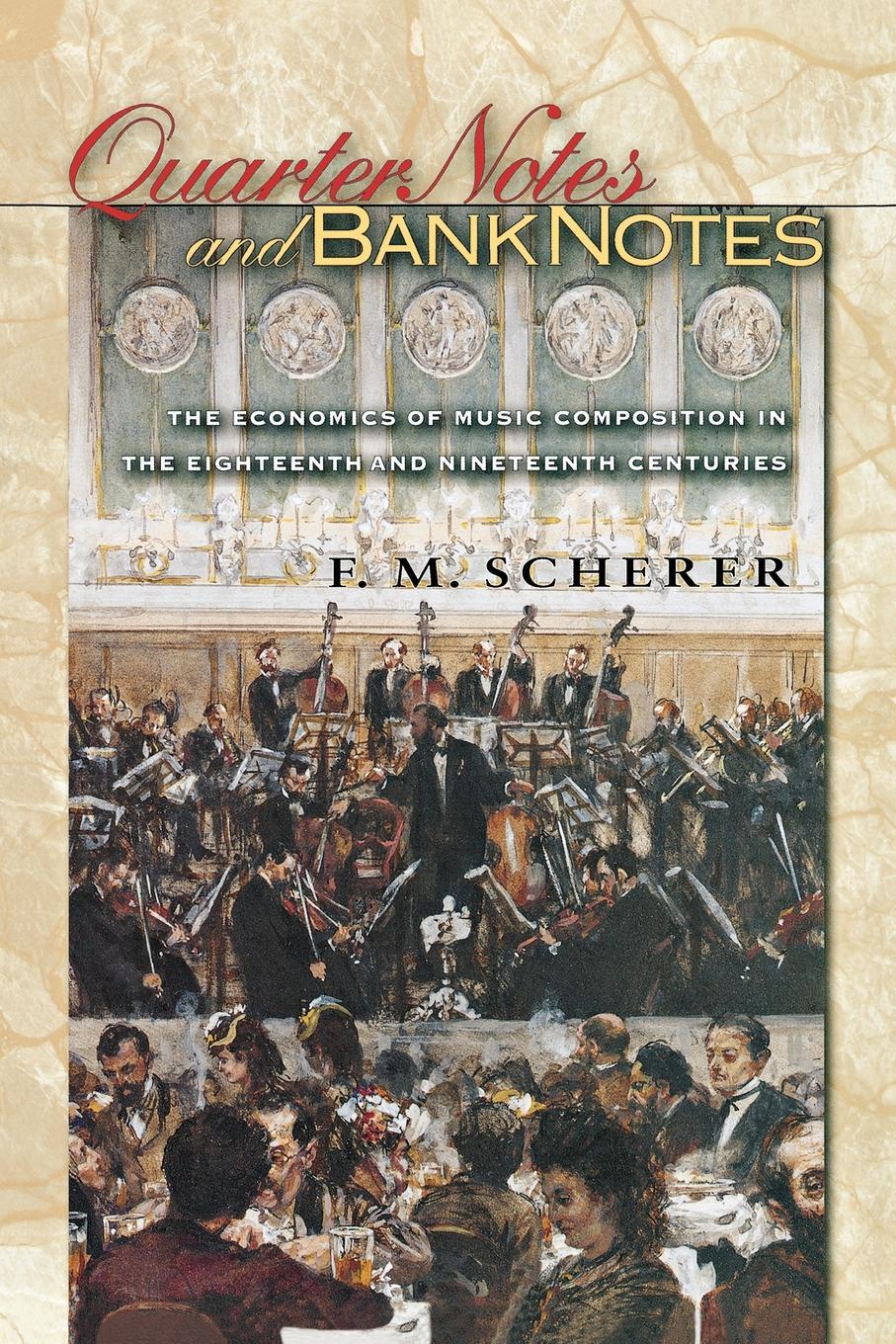
In 1700, most composers were employees of noble courts or the church. But by the nineteenth century, Chopin, Schumann, Brahms, Verdi, and many others functioned as freelance artists teaching, performing, and selling their compositions in the private marketplace. While some believe that Mozart's career marks a clean break between these two periods, this book tells the story of a more complex and interesting transition.
F. M. Scherer first examines the political, intellectual, and economic roots of the shift from patronage to a freelance market. He describes the eighteenth-century cultural "arms race" among noble courts, the spread of private concert halls and opera houses, the increasing attendance of middle-class music lovers, and the founding of conservatories. He analyzes changing trends in how composers acquired their skills and earned their living, examining such impacts as demographic developments and new modes of transportation. The book offers insight into the diversity of composers' economic aspirations, the strategies through which they pursued success, the burgeoning music publishing industry, and the emergence of copyright protection. Scherer concludes by drawing some parallels to the economic state of music composition in our own times.
Written by a leading economist with an unusually broad knowledge of music, this fascinating account is directed toward individuals intrigued by the world of classical composers as well as those interested in economic history or the role of money in art.
Pay easily by card, Klarna, Apple Pay or Google Pay. Not happy? You always have a 14-day money-back guarantee. Read more in our terms. If you have any questions, email us at hello@memmo.org.
Memmo makes studying easier – wherever you are in the world. We bring your course books and smart study tools together in one place: summaries, quizzes, podcasts and flashcards. Plus Ted, your study buddy who answers anything you wonder. Over 50,000 students already study here – built to help you learn faster and stress less.