
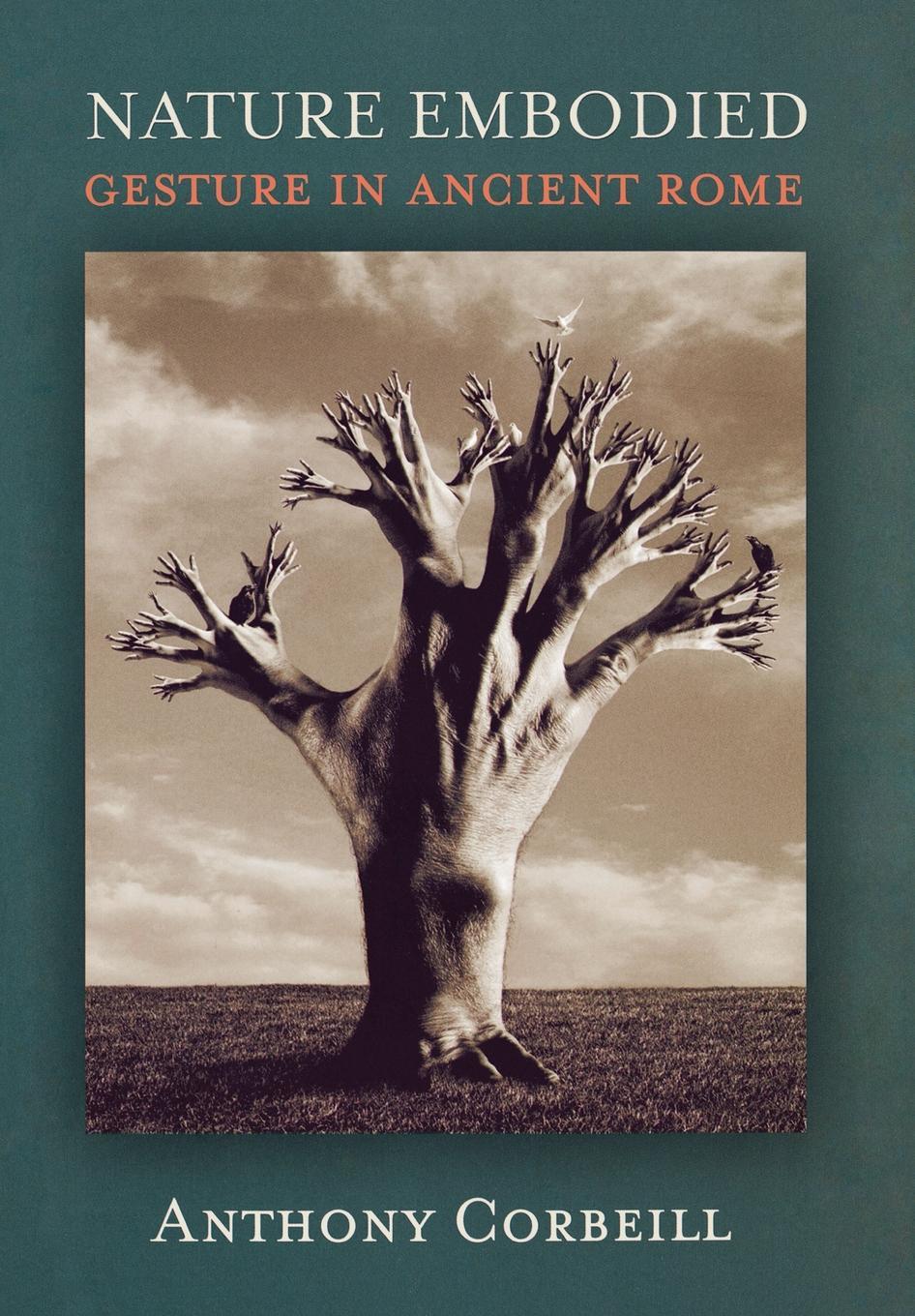
Bodily gesture. A Roman worshipper spins in a circle in front of a temple. Faced with death, a Roman woman tears her hair and beats her breasts. Enthusiastic spectators at a gladiatorial event gesticulate with thumbs. Examining the tantalizing glimpses of ancient bodies offered by surviving Roman sculptures, paintings, and literary texts, Anthony Corbeill analyzes the role of gesture in medical and religious ritual, in the gladiatorial arena, in mourning practice, in aristocratic competition of the late Republic, and in the court of the emperor Tiberius. Adopting approaches from anthropology, gender studies, and ecological theory, Nature Embodied offers both a series of case studies and an overarching narrative of the role and meanings of gesture in ancient Rome.
Arguing that bodily movement grew out of the relationship between Romans and their natural, social, and spiritual environment, the book explores the ways in which an originally harmonious relationship between nature and the body was manipulated as Rome became socially and politically complex. By the time that Tacitus was writing about the reign of Tiberius, the emergence of a new political order had prompted an increasingly inscrutable equation between truth and the body--and something vital in the once harmonizing relationship between bodies and the world beyond them had been lost.
Nature Embodied makes an important contribution to an expanding field of research by offering a new theoretical model for the study of gesture in classical times.
Pay easily by card, Klarna, Apple Pay or Google Pay. Not happy? You always have a 14-day money-back guarantee. Read more in our terms. If you have any questions, email us at hello@memmo.org.
Memmo makes studying easier – wherever you are in the world. We bring your course books and smart study tools together in one place: summaries, quizzes, podcasts and flashcards. Plus Ted, your study buddy who answers anything you wonder. Over 75,000 students already study here – built to help you learn faster and stress less.