
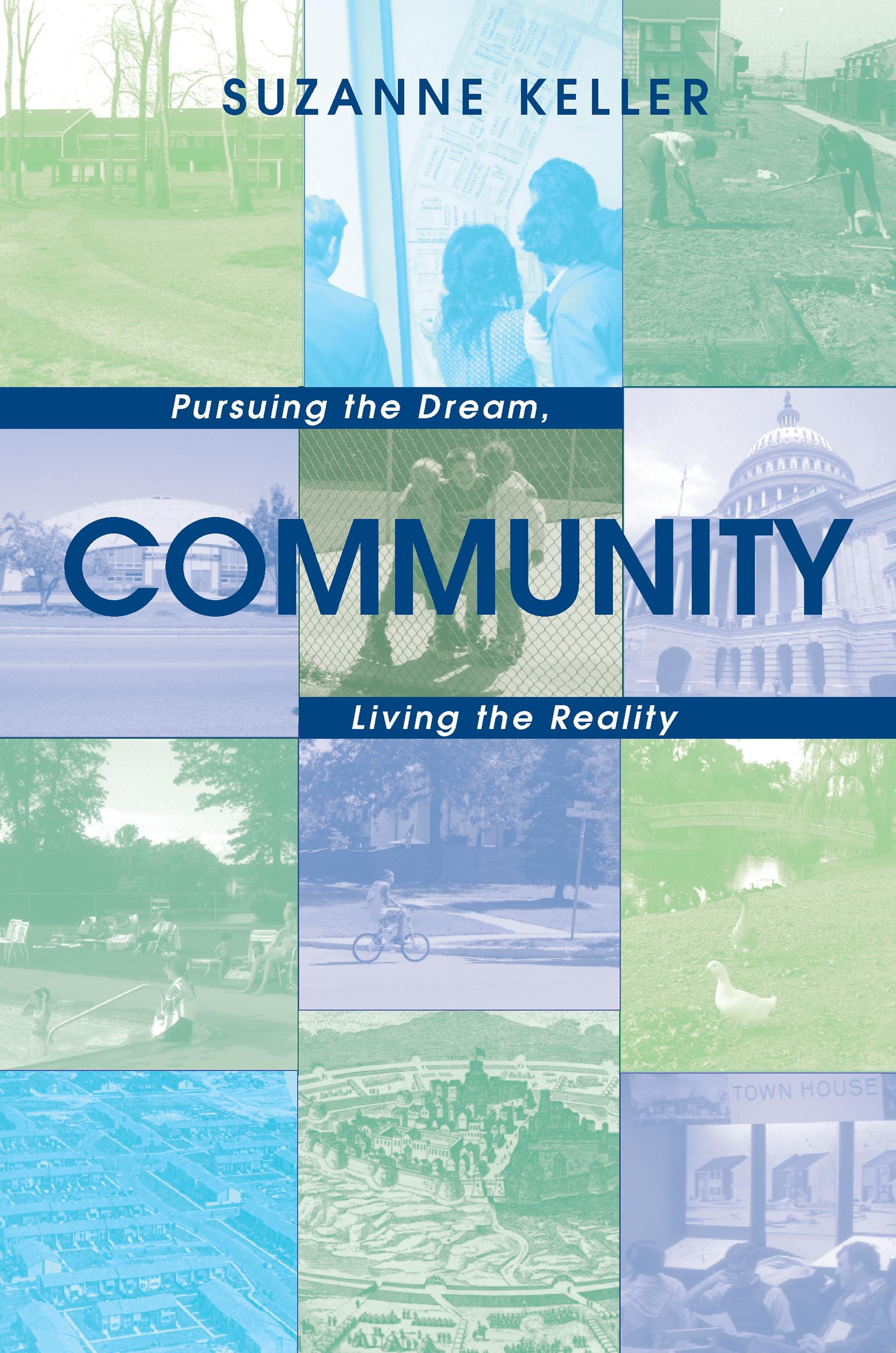
This book tells the story of how a human community comes to be and how aspirations for the good life confront the dilemmas and detours of real life. Suzanne Keller combines penetrating analysis of classic ideas about community with a remarkable and unprecedented thirty-year case study of one of the first "planned unit developments" in America and the first in New Jersey. Twin Rivers, this pioneering venture, featured townhouses and shared spaces for children's play and adult work and play in a society that stresses individual over collective goals and private over public concerns. Hence the timeless questions asked over millennia: How does an aggregate of strangers create an identity of place, shared goals, viable institutions, and a spirit of mutuality and reciprocity? What obstacles stand in the way and how are these overcome? And how does design generate (or deter) community spirit?
Inspired by the legacy of Plato, Rousseau, de Tocqueville, and Tönnies, Keller traces the difficult birth and the rich unfolding of Twin Rivers from a former potato field into a vibrant contemporary community. Most community studies remain at a highly descriptive level. This book has both broader and deeper aims, endeavoring to develop principles of the common life as we enter the age of cyberspace.
Keller reveals the community of Twin Rivers through a multidimensional social microscope, having monitored the community from the day it opened by participant observation, attitude surveys, the study of collective records, and nearly 1,000 in-depth interviews with homeowners. She offers fascinating insight into how residents maintain privacy, relate to neighbors, cope with social conflict, and develop ideas about the common good. She shows that Twin Rivers residents remain hopeful about the possibility of community despite variable success in achieving their desires. Indeed, she argues that the hard-won experience, more than the utopian ideal, is the true measure of community.
Keller concludes that, despite the homogenizing effects of mass communication and globalization, local communities will continue to proliferate in the foreseeable future--due to changing lifestyles and the continuing quest for roots. This important and engaging book will be appreciated by social scientists, architects, physical planners, developers and lenders, and community leaders as well as by the general reader interested in creating a bridge between individualism and community.
Pay easily by card, Klarna, Apple Pay or Google Pay. Not happy? You always have a 14-day money-back guarantee. Read more in our terms. If you have any questions, email us at hello@memmo.org.
Memmo makes studying easier – wherever you are in the world. We bring your course books and smart study tools together in one place: summaries, quizzes, podcasts and flashcards. Plus Ted, your study buddy who answers anything you wonder. Over 50,000 students already study here – built to help you learn faster and stress less.