
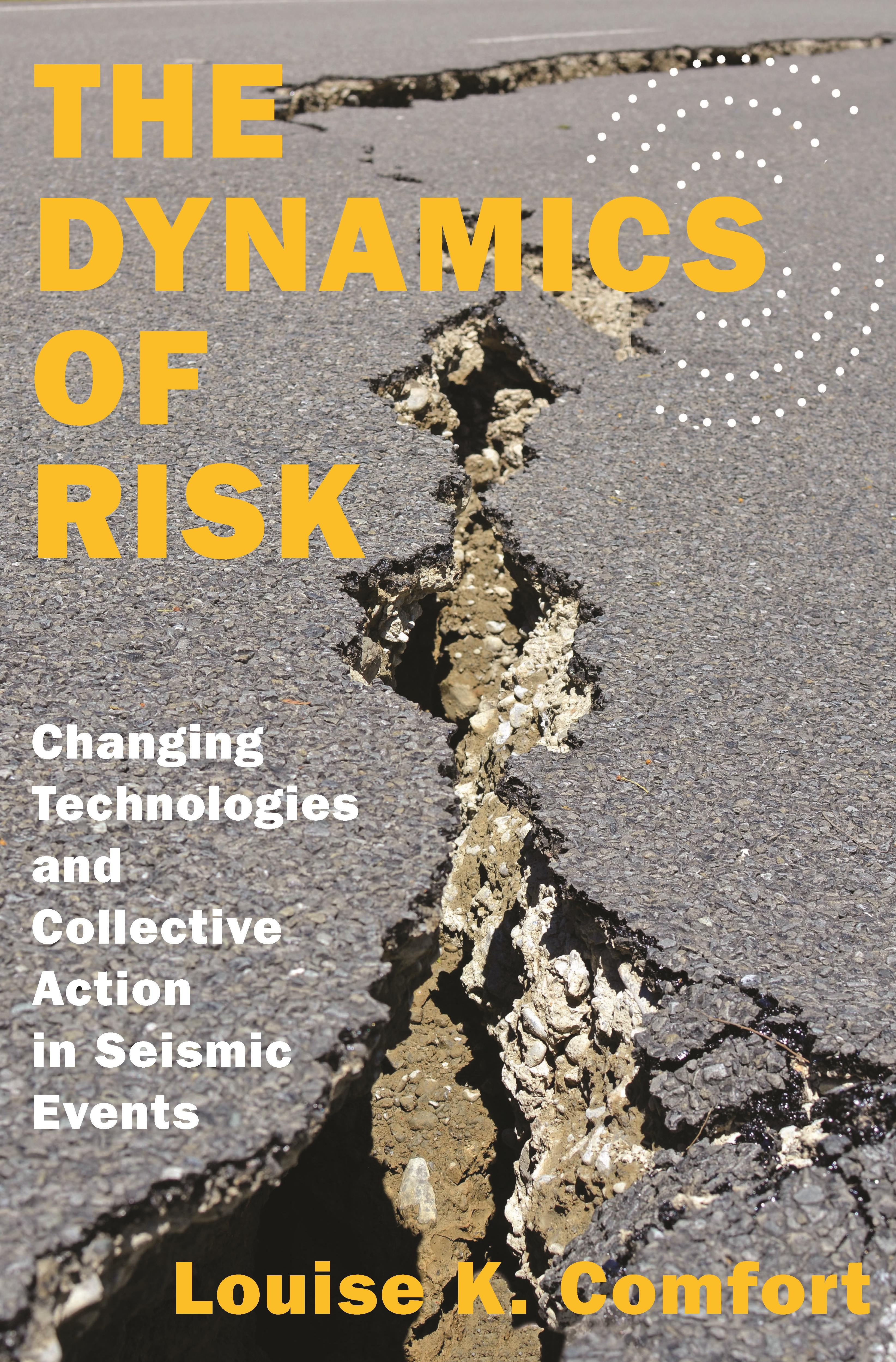
Earthquakes are a huge global threat. In thirty-six countries, severe seismic risks threaten populations and their increasingly interdependent systems of transportation, communication, energy, and finance. In this important book, Louise Comfort provides an unprecedented examination of how twelve communities in nine countries responded to destructive earthquakes between 1999 and 2015. And many of the book’s lessons can also be applied to other large-scale risks.
The Dynamics of Risk sets the global problem of seismic risk in the framework of complex adaptive systems to explore how the consequences of such events ripple across jurisdictions, communities, and organizations in complex societies, triggering unexpected alliances but also exposing social, economic, and legal gaps. The book assesses how the networks of organizations involved in response and recovery adapted and acted collectively after the twelve earthquakes it examines. It describes how advances in information technology enabled some communities to anticipate seismic risk better and to manage response and recovery operations more effectively, decreasing losses. Finally, the book shows why investing substantively in global information infrastructure would create shared awareness of seismic risk and make postdisaster relief more effective and less expensive.
The result is a landmark study of how to improve the way we prepare for and respond to earthquakes and other disasters in our ever-more-complex world.
Pay easily by card, Klarna, Apple Pay or Google Pay. Not happy? You always have a 14-day money-back guarantee. Read more in our terms. If you have any questions, email us at hello@memmo.org.
Memmo makes studying easier – wherever you are in the world. We bring your course books and smart study tools together in one place: summaries, quizzes, podcasts and flashcards. Plus Ted, your study buddy who answers anything you wonder. Over 50,000 students already study here – built to help you learn faster and stress less.