
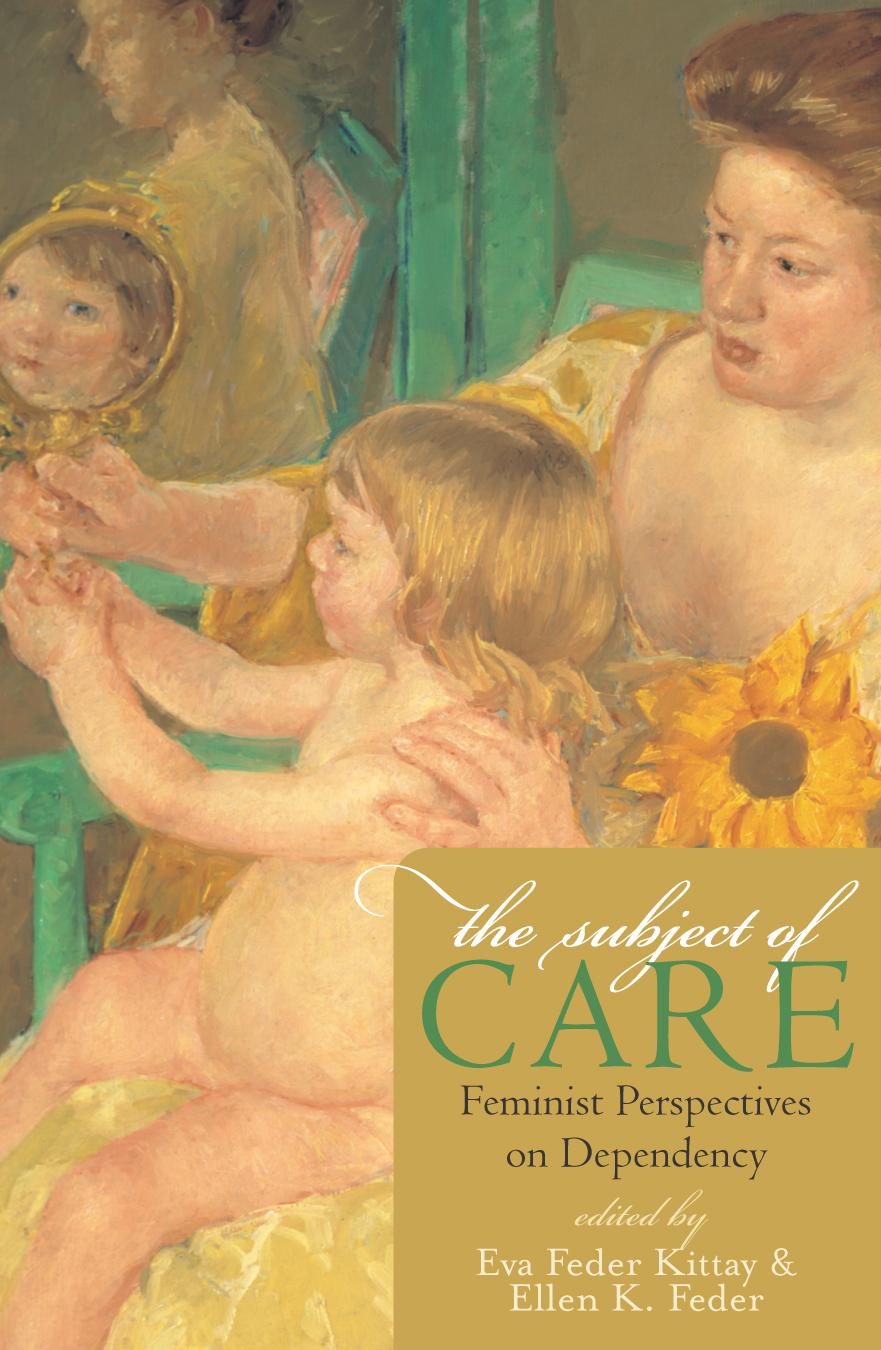
All people spend a considerable portion of their lives either as dependents or the caretakers of dependents. The fact of human dependency-a function of youth, severe illness, disability, or frail old age-marks our lives, not only as those who are cared for, but as those who engage in the work of caring. In spite of the time, energy and resources-material and emotional, social and individual-that dependency care requires, these concerns rarely enter into philosophical, legal, and political discussions.
In The Subject of Care, feminist scholars consider how acknowledgement of the fact of dependency changes our conceptions of law, political theory, and morality, as well as our very conceptions of self. Contributors develop feminist understandings of dependency, reassessing the place dependency occupies in our lives and in a just social order.
In The Subject of Care, feminist scholars consider how acknowledgement of the fact of dependency changes our conceptions of law, political theory, and morality, as well as our very conceptions of self. Contributors develop feminist understandings of dependency, reassessing the place dependency occupies in our lives and in a just social order.
Pay easily by card, Klarna, Apple Pay or Google Pay. Not happy? You always have a 14-day money-back guarantee. Read more in our terms. If you have any questions, email us at hello@memmo.org.
Memmo makes studying easier – wherever you are in the world. We bring your course books and smart study tools together in one place: summaries, quizzes, podcasts and flashcards. Plus Ted, your study buddy who answers anything you wonder. Over 50,000 students already study here – built to help you learn faster and stress less.