
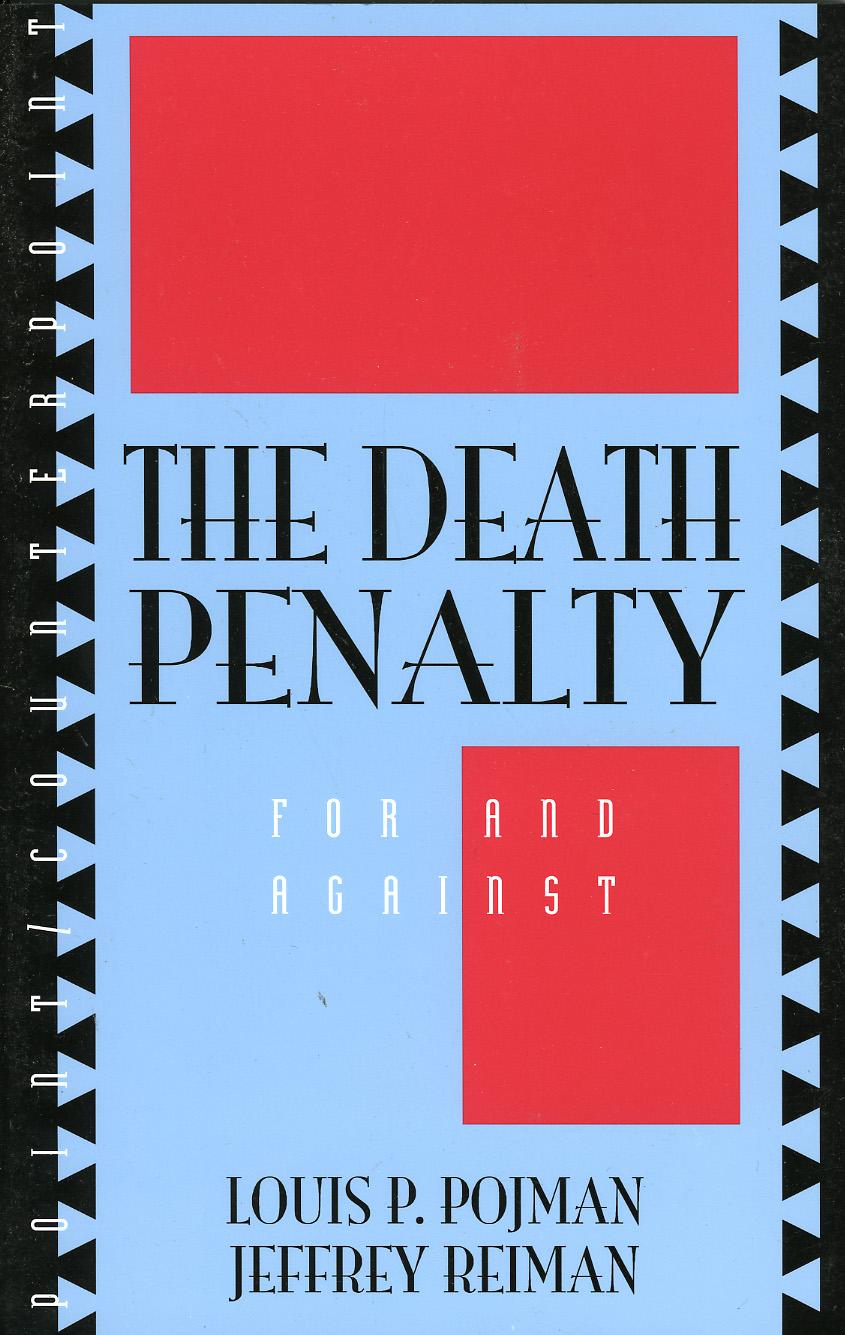
Two distinguished social and political philosophers take opposing positions in this highly engaging work. Louis P. Pojman justifies the practice of execution by appealing to the principle of retribution: we deserve to be rewarded and punished according to the virtue or viciousness of our actions. He asserts that the death penalty does deter some potential murderers and that we risk the lives of innocent people who might otherwise live if we refuse to execute those deserving that punishment.
Jeffrey Reiman argues that although the death penalty is a just punishment for murder, we are not morally obliged to execute murderers. Since we lack conclusive evidence that executing murderers is an effective deterrent and because we can foster the advance of civilization by demonstrating our intolerance for cruelty in our unwillingness to kill those who kill others, Reiman concludes that it is good in principle to avoid the death penalty, and bad in practice to impose it.
Jeffrey Reiman argues that although the death penalty is a just punishment for murder, we are not morally obliged to execute murderers. Since we lack conclusive evidence that executing murderers is an effective deterrent and because we can foster the advance of civilization by demonstrating our intolerance for cruelty in our unwillingness to kill those who kill others, Reiman concludes that it is good in principle to avoid the death penalty, and bad in practice to impose it.
Pay easily by card, Klarna, Apple Pay or Google Pay. Not happy? You always have a 14-day money-back guarantee. Read more in our terms. If you have any questions, email us at hello@memmo.org.
Memmo makes studying easier – wherever you are in the world. We bring your course books and smart study tools together in one place: summaries, quizzes, podcasts and flashcards. Plus Ted, your study buddy who answers anything you wonder. Over 50,000 students already study here – built to help you learn faster and stress less.