
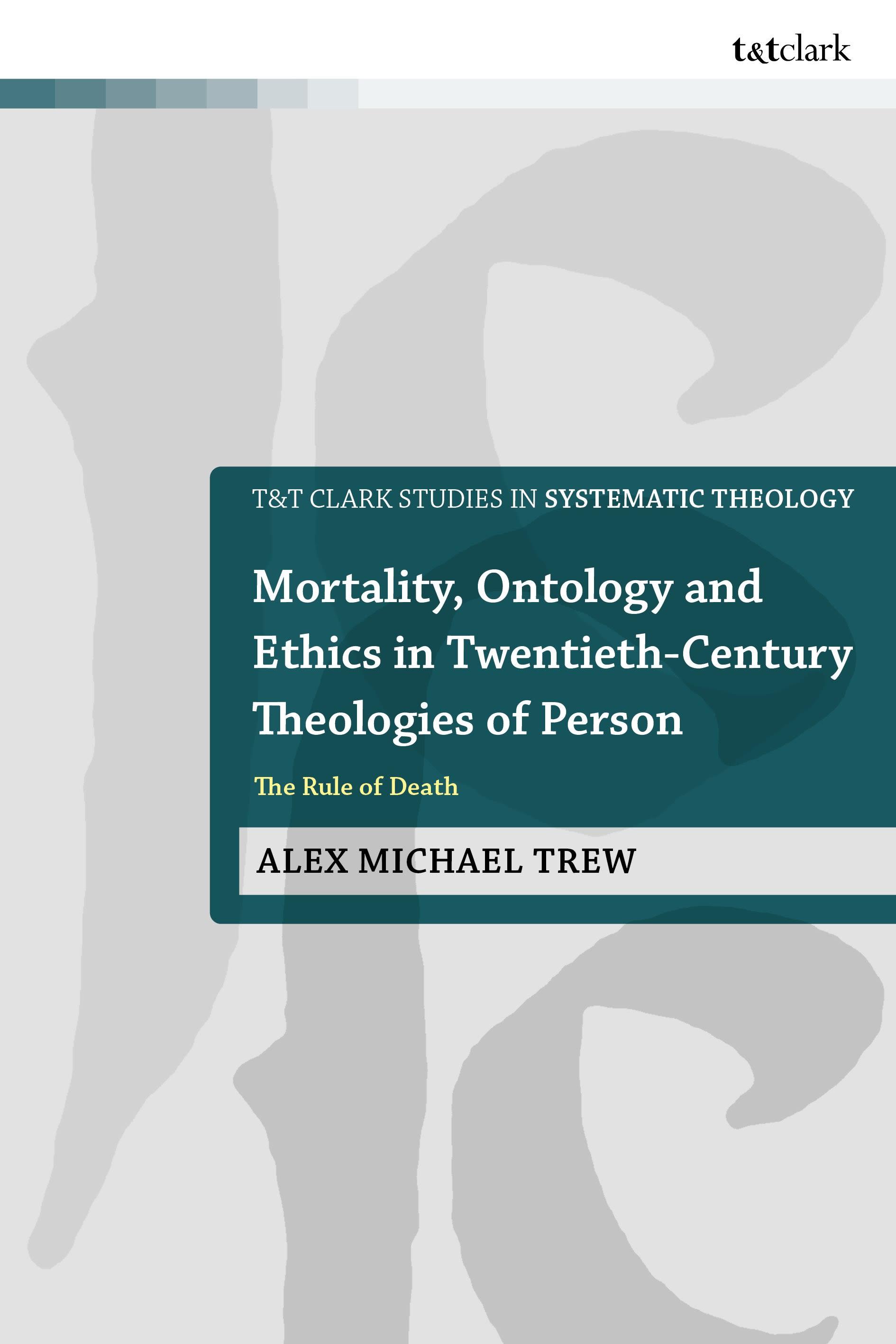
This book considers what it means to die.
Trew achieves this through the prism of two significant twentieth century thinkers: Dietrich Bonhoeffer and Christos Yannaras. In doing so, he continues an esteemed tradition of works considering the theology and philosophy of death, including Karl Rahner's On the Theology of Death and Martin Heidegger's Being and Time. However, Trew is also breaking new ground: this is the first English language book to compare the late Christos Yannaras with major western theologians, making this an innovative and ecumenical work.
Different as they are, both Bonhoeffer and Yannaras are well-known for their robustly relational views of human existence. Trew elegantly guides us through a systematic unfolding of how they both believe that, in and through Christ and his church, human life stands newly formed and empowered before the radical individuation of death.
Bonhoeffer and Yannaras both see in the means for modern theological anthropology to address the asymmetrical togetherness of historical existence and divine transcendence. Trew highlights how this is crucial for a redescription of what individual death might mean in the context of the church as 'communion'. In doing so, he constructively recasts Heidegger's best insights about anticipating death with Bohoeffer and Yannaras.
Ultimately, Trew powerfully argues for the Christological conversion of human creaturely passivity into recapitulative activity wherein human beings, by their 'daily dying' take up death's power and transfigure it into new life. Death becomes entangled within a distinctively and irreducibly relational vision of the human being.
Trew achieves this through the prism of two significant twentieth century thinkers: Dietrich Bonhoeffer and Christos Yannaras. In doing so, he continues an esteemed tradition of works considering the theology and philosophy of death, including Karl Rahner's On the Theology of Death and Martin Heidegger's Being and Time. However, Trew is also breaking new ground: this is the first English language book to compare the late Christos Yannaras with major western theologians, making this an innovative and ecumenical work.
Different as they are, both Bonhoeffer and Yannaras are well-known for their robustly relational views of human existence. Trew elegantly guides us through a systematic unfolding of how they both believe that, in and through Christ and his church, human life stands newly formed and empowered before the radical individuation of death.
Bonhoeffer and Yannaras both see in the means for modern theological anthropology to address the asymmetrical togetherness of historical existence and divine transcendence. Trew highlights how this is crucial for a redescription of what individual death might mean in the context of the church as 'communion'. In doing so, he constructively recasts Heidegger's best insights about anticipating death with Bohoeffer and Yannaras.
Ultimately, Trew powerfully argues for the Christological conversion of human creaturely passivity into recapitulative activity wherein human beings, by their 'daily dying' take up death's power and transfigure it into new life. Death becomes entangled within a distinctively and irreducibly relational vision of the human being.
Pages: 256
Category: Religion & Teologi
e-ISBN: 9780567722621
Shipping weight: 1.2 kg
Ships in: 1-2 days
Pay easily by card, Klarna, Apple Pay or Google Pay. Not happy? You always have a 14-day money-back guarantee. Read more in our terms. If you have any questions, email us at hello@memmo.org.
Memmo makes studying easier – wherever you are in the world. We bring your course books and smart study tools together in one place: summaries, quizzes, podcasts and flashcards. Plus Ted, your study buddy who answers anything you wonder. Over 50,000 students already study here – built to help you learn faster and stress less.