
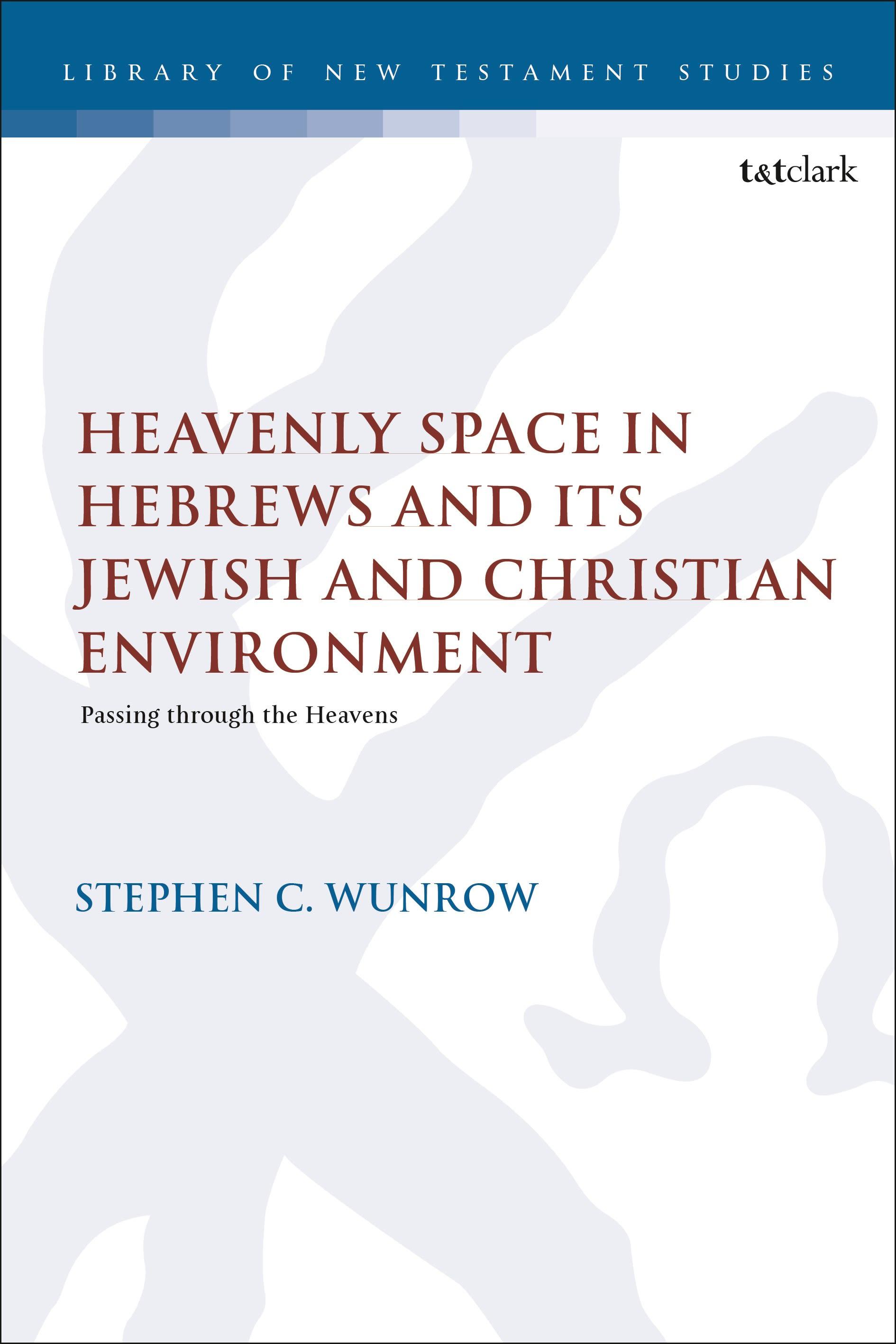
Stephen Wunrow addresses the pressing question of what the author of Hebrews meant by his descriptions of heaven, arguing that the author intended his references to heavenly space to be interpreted as realistic descriptions of a real place. Wunrow posits that language about heaven is neither metaphor nor a description of a “place” outside the creation, by examining other early Jewish and Christian texts that narrate or describe humans ascending into heaven. Given the nature and the function of heavenly space as described in these texts, Wunrow suggests it is most probable that the authors of the texts intended their descriptions of heavenly space to be understood as realistic.
Wunrow thus explores 1 and 2 Enoch, 4 Ezra, 2 and 3 Baruch, the Apocalypse of Abraham, the Testament of Levi, the Testament of Abraham, the Ascension of Isaiah, and Revelation; investigating how other roughly contemporary authors described heavenly space, and considering that the rhetorical aims of most of these authors fail unless their readers understand their descriptions of heavenly space in realistic ways. Turning then to examine Hebrews, Wunrow suggests that while the letter does contain unique features and rhetorical aims, it also fits comfortably with other early Jewish and Christian texts that describe humans ascending into heaven in a realistic manner. He concludes with reflections on how this conclusion helps to clarify other topics in Hebrews, including atonement and eschatology.
Wunrow thus explores 1 and 2 Enoch, 4 Ezra, 2 and 3 Baruch, the Apocalypse of Abraham, the Testament of Levi, the Testament of Abraham, the Ascension of Isaiah, and Revelation; investigating how other roughly contemporary authors described heavenly space, and considering that the rhetorical aims of most of these authors fail unless their readers understand their descriptions of heavenly space in realistic ways. Turning then to examine Hebrews, Wunrow suggests that while the letter does contain unique features and rhetorical aims, it also fits comfortably with other early Jewish and Christian texts that describe humans ascending into heaven in a realistic manner. He concludes with reflections on how this conclusion helps to clarify other topics in Hebrews, including atonement and eschatology.
Pages: 208
Category: Religion & Teologi
e-ISBN: 9780567721549
Shipping weight: 1.2 kg
Ships in: 1-2 days
Pay easily by card, Klarna, Apple Pay or Google Pay. Not happy? You always have a 14-day money-back guarantee. Read more in our terms. If you have any questions, email us at hello@memmo.org.
Memmo makes studying easier – wherever you are in the world. We bring your course books and smart study tools together in one place: summaries, quizzes, podcasts and flashcards. Plus Ted, your study buddy who answers anything you wonder. Over 50,000 students already study here – built to help you learn faster and stress less.