
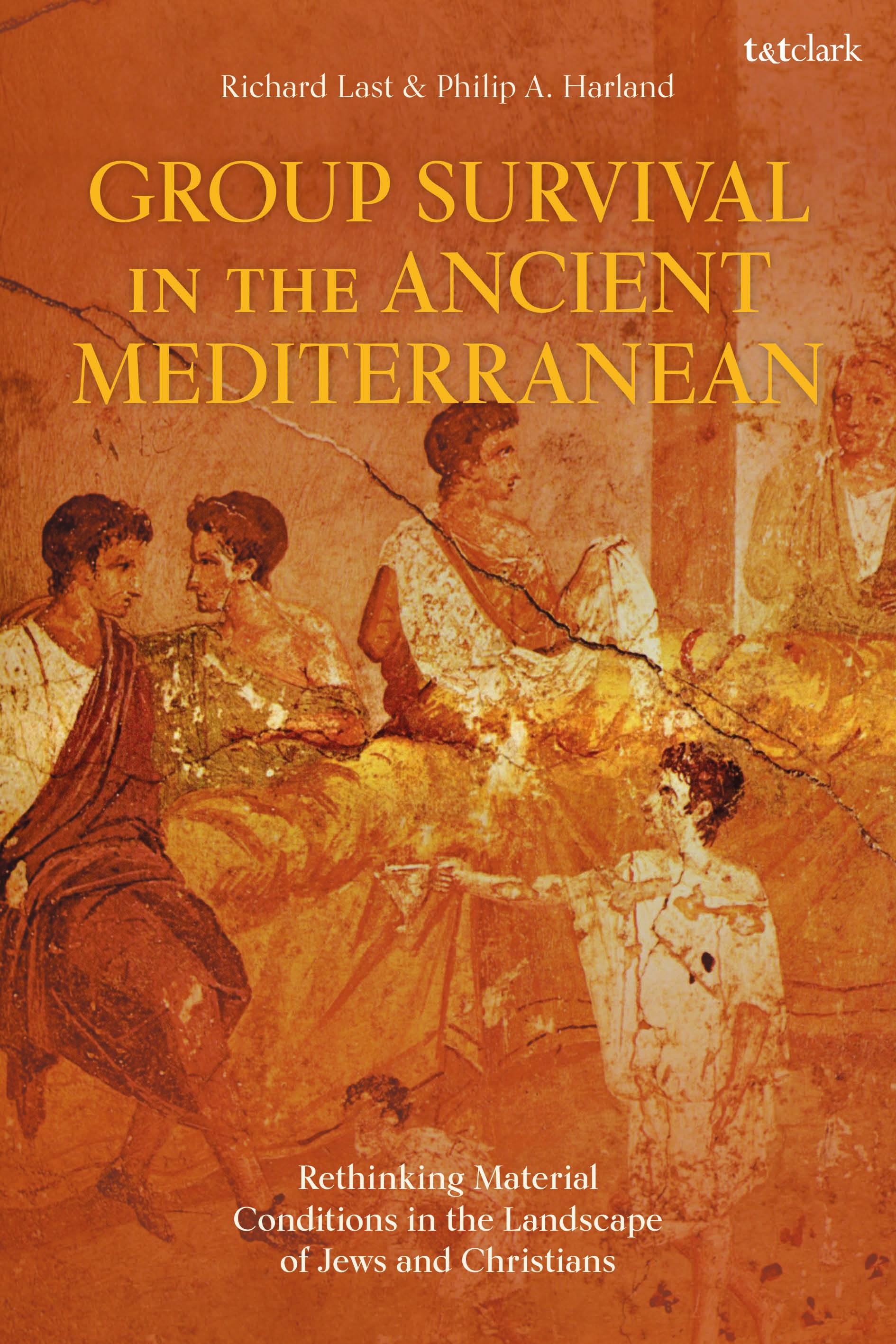
Philip A. Harland and Richard Last consider the economics of early Christian group life within its social, cultural and economic contexts, by drawing on extensive epigraphic and archaeological evidence. In exploring the informal associations, immigrant groups, and guilds that dotted the world of the early Christians, Harland
and Last provide fresh perspective on the question of how Christian assemblies and Judean/Jewish gatherings gained necessary resources to pursue their social, religious, and additional aims.
By considering both neglected archaeological discoveries and literary evidence, the authors analyse financial and material aspects of group life, both sources of income and various areas of expenditure. Harland and Last then turn to the use of material resources for mutual support of members in various groups, including the importance of burial and the practice of interest-free loans. Christian and Judean evidence is explored throughout this book, culminating in a discussion of texts detailing the internal financial life of Christian assemblies as seen in first and second century sources, including Paul, the Didache, Justin Martyr, and Tertullian. In shedding new light on early Christian financial organisation, this volume aids further understanding of how some Christian groups survived and developed in the Greco-Roman world.
and Last provide fresh perspective on the question of how Christian assemblies and Judean/Jewish gatherings gained necessary resources to pursue their social, religious, and additional aims.
By considering both neglected archaeological discoveries and literary evidence, the authors analyse financial and material aspects of group life, both sources of income and various areas of expenditure. Harland and Last then turn to the use of material resources for mutual support of members in various groups, including the importance of burial and the practice of interest-free loans. Christian and Judean evidence is explored throughout this book, culminating in a discussion of texts detailing the internal financial life of Christian assemblies as seen in first and second century sources, including Paul, the Didache, Justin Martyr, and Tertullian. In shedding new light on early Christian financial organisation, this volume aids further understanding of how some Christian groups survived and developed in the Greco-Roman world.
Pay easily by card, Klarna, Apple Pay or Google Pay. Not happy? You always have a 14-day money-back guarantee. Read more in our terms. If you have any questions, email us at hello@memmo.org.
Memmo makes studying easier – wherever you are in the world. We bring your course books and smart study tools together in one place: summaries, quizzes, podcasts and flashcards. Plus Ted, your study buddy who answers anything you wonder. Over 75,000 students already study here – built to help you learn faster and stress less.