
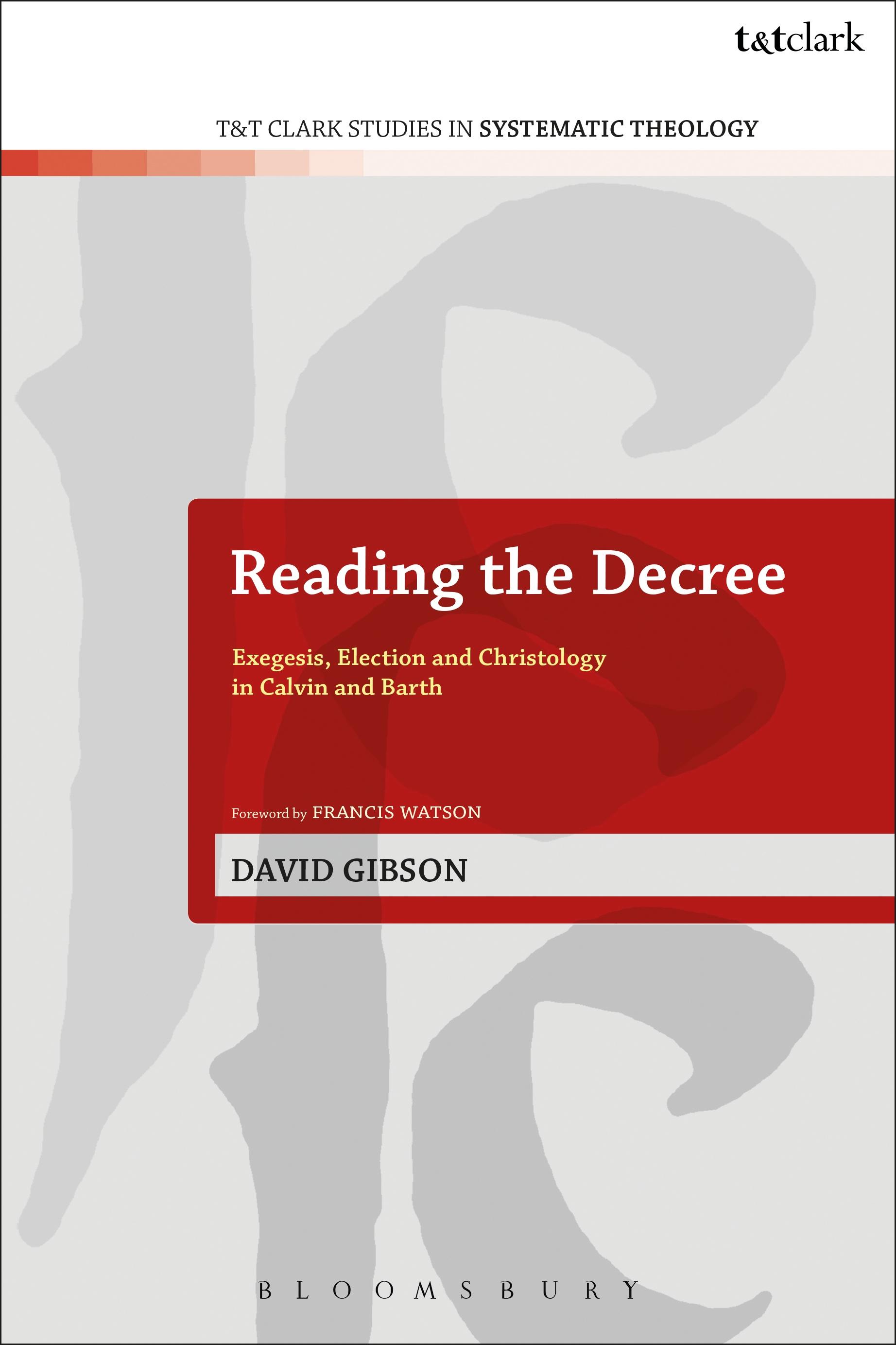
What role does the interpretation of Scripture play in theological construction? In Reading the Decree David Gibson examines the exegesis of election in John Calvin and Karl Barth, and considers the relationship between election and Christology in their thought. He argues that for both Calvin and Barth their doctrine of election and its exegetical moorings are christologically shaped, but in significantly different ways.
Building on Richard A. Muller's conceptual distinction between Calvin's soteriological christocentrism and Barth's principial christocentrism, Gibson carefully explores their exegesis of the topics of Christ and election, and the election of Israel and the church. This distinction is then further developed by showing how it has a corresponding hermeneutical form: extensive christocentrism (Calvin) and intensive christocentrism (Barth). By focussing on the reception of biblical texts Reading the Decree draws attention to the neglected exegetical foundations of Calvin's doctrine of election, and makes a fresh contribution to current debates over election in Barth's thought.
The result is a study which will be of interest to biblical scholars, as well as historical and systematic theologians alike.
Building on Richard A. Muller's conceptual distinction between Calvin's soteriological christocentrism and Barth's principial christocentrism, Gibson carefully explores their exegesis of the topics of Christ and election, and the election of Israel and the church. This distinction is then further developed by showing how it has a corresponding hermeneutical form: extensive christocentrism (Calvin) and intensive christocentrism (Barth). By focussing on the reception of biblical texts Reading the Decree draws attention to the neglected exegetical foundations of Calvin's doctrine of election, and makes a fresh contribution to current debates over election in Barth's thought.
The result is a study which will be of interest to biblical scholars, as well as historical and systematic theologians alike.
Pay easily by card, Klarna, Apple Pay or Google Pay. Not happy? You always have a 14-day money-back guarantee. Read more in our terms. If you have any questions, email us at hello@memmo.org.
Memmo makes studying easier – wherever you are in the world. We bring your course books and smart study tools together in one place: summaries, quizzes, podcasts and flashcards. Plus Ted, your study buddy who answers anything you wonder. Over 50,000 students already study here – built to help you learn faster and stress less.