
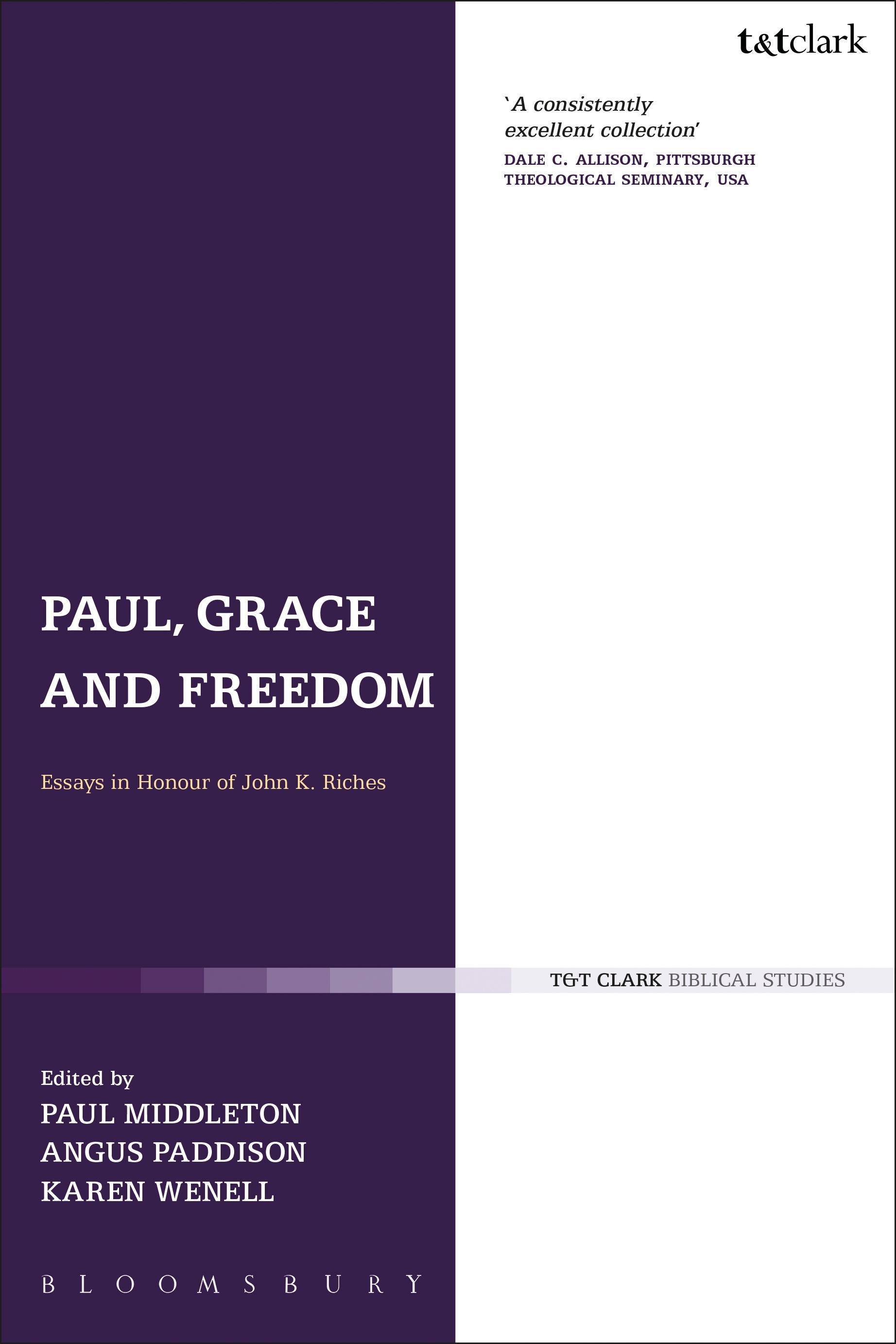
This collection of twelve essays will celebrate the distinguished contribution of Professor John Kenneth Riches to biblical interpretation. The international selection of contributors are all either former students or colleagues of Professor Riches and the focus of the essays all reflect (and extend) Professor Riches' particular research interests and contribution to biblical and theological studies.
The essays in this volume are clustered around two closely related topics: historical and theological contributions to understanding the nature of Christian freedom and agency, and studies which investigate how Paul's thought has been interpreted in diverse settings. All the contributors have been asked to centre their thinking around the following issues: how does the grace of being 'in Christ' transform and restore those who receive it in faith; how far they are, as it were, responsible for that transformation; how far their is identity changed by their union with Christ; and how are they to make ethical decisions, are they to be guided (and goaded?) by the law, or are to be led by the Spirit and called to discern what is right and good in the law?There are four parts to this book. Part I explores grace and human agency by looking at texts both within and outside of the New Testament, highlighting the themes of ethical responsibility and freedom. Part II turns to look at how Pauline themes of grace and the Christian life have been interpreted at various points of Christian history. Part III reflects John Riches' substantial interest in and contribution to African biblical interpretation and includes essays that investigate how Paul is appropriated in African contexts. Part IV reflects John Riches' interest in the mutual engagement between theology and Scripture and includes contributions investigating the theological aspects of the Law and the Spirit, and transformation in Christ in the theology and ethics of P.T. Forsyth.
The essays in this volume are clustered around two closely related topics: historical and theological contributions to understanding the nature of Christian freedom and agency, and studies which investigate how Paul's thought has been interpreted in diverse settings. All the contributors have been asked to centre their thinking around the following issues: how does the grace of being 'in Christ' transform and restore those who receive it in faith; how far they are, as it were, responsible for that transformation; how far their is identity changed by their union with Christ; and how are they to make ethical decisions, are they to be guided (and goaded?) by the law, or are to be led by the Spirit and called to discern what is right and good in the law?There are four parts to this book. Part I explores grace and human agency by looking at texts both within and outside of the New Testament, highlighting the themes of ethical responsibility and freedom. Part II turns to look at how Pauline themes of grace and the Christian life have been interpreted at various points of Christian history. Part III reflects John Riches' substantial interest in and contribution to African biblical interpretation and includes essays that investigate how Paul is appropriated in African contexts. Part IV reflects John Riches' interest in the mutual engagement between theology and Scripture and includes contributions investigating the theological aspects of the Law and the Spirit, and transformation in Christ in the theology and ethics of P.T. Forsyth.
Pages: 234
Category: Religion & Teologi
e-ISBN: 9780567321527
Shipping weight: 1.2 kg
Ships in: 1-2 days
Pay easily by card, Klarna, Apple Pay or Google Pay. Not happy? You always have a 14-day money-back guarantee. Read more in our terms. If you have any questions, email us at hello@memmo.org.
Memmo makes studying easier – wherever you are in the world. We bring your course books and smart study tools together in one place: summaries, quizzes, podcasts and flashcards. Plus Ted, your study buddy who answers anything you wonder. Over 50,000 students already study here – built to help you learn faster and stress less.