
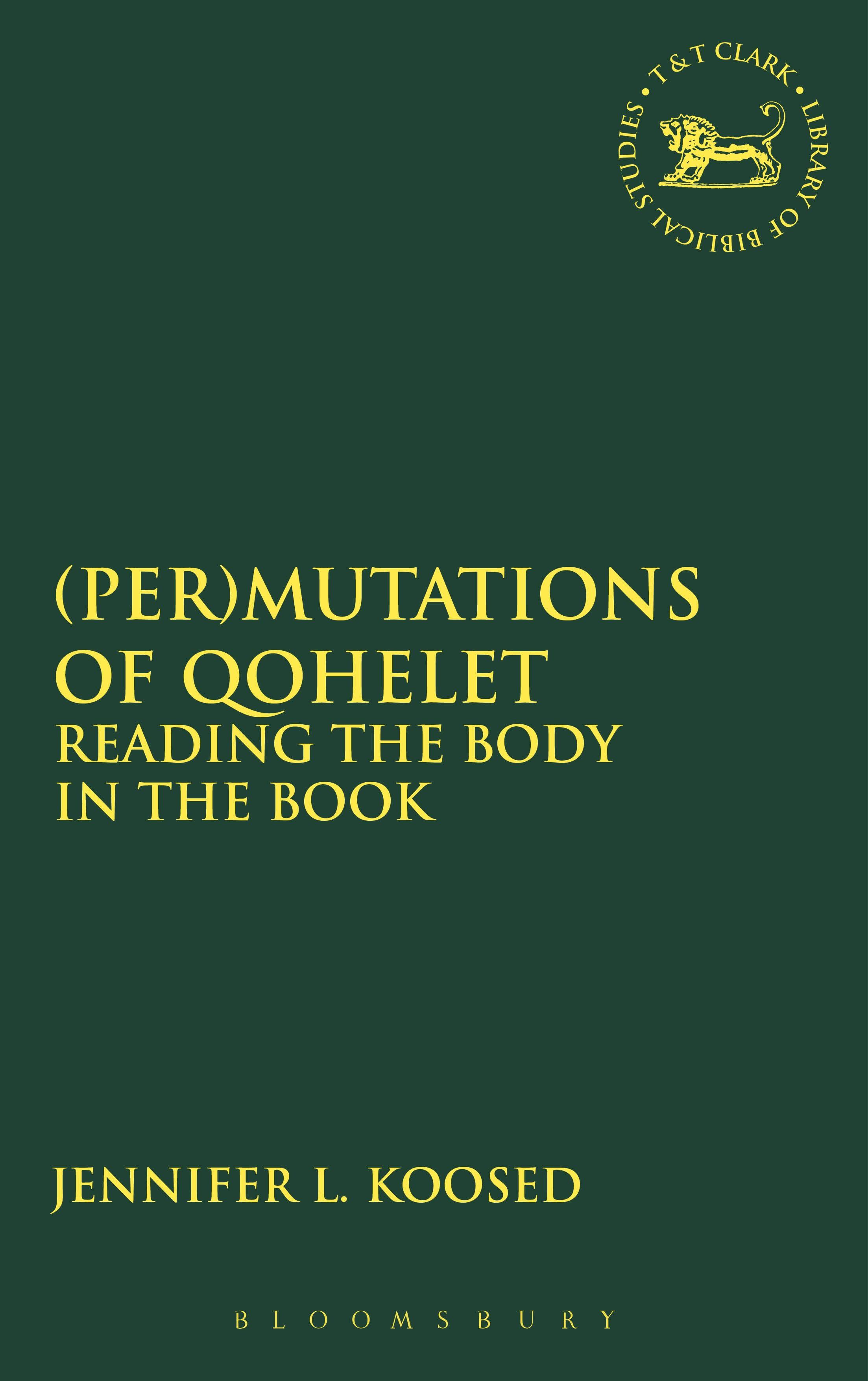
(Per)mutations of Qohelet explores the question, Who is Qohelet? Rather than peering behind or through the text to answer this question in terms of authorship, Koosed analyzes the identity that is created through the words on the page. The text is not a transparent medium connecting reader with author; instead, it is an opaque body - it has weight, substance, skin. Koosed begins with an analysis of the ways in which words construct identities and the reasons why words can affect us so profoundly, relying primarily on the work of Judith Butler and Elaine Scarry. She then explores autobiography and how the genre of autobiography - as reconfigured by Roland Barthes and Jacques Derrida - relates to Qohelet. These two chapters then set the framework for what follows: an analysis of the various bodily organs and sensations contained within the book of Qohelet. The body is embedded in the text through the naming of body parts (eye, hand, heart). And this same body is encoded in form, structure, and syntax, so that the text becomes a body with organs, systems, and even a life of its own. The book is a body and the book speaks of bodies. It speaks of the body's organs and senses; it concerns itself with the pleasures and pains of the body, the gendered body, the dying body. Finally, the ritual body is highlighted in the final passage of this enigmatic book.
Pay easily by card, Klarna, Apple Pay or Google Pay. Not happy? You always have a 14-day money-back guarantee. Read more in our terms. If you have any questions, email us at hello@memmo.org.
Memmo makes studying easier – wherever you are in the world. We bring your course books and smart study tools together in one place: summaries, quizzes, podcasts and flashcards. Plus Ted, your study buddy who answers anything you wonder. Over 50,000 students already study here – built to help you learn faster and stress less.