
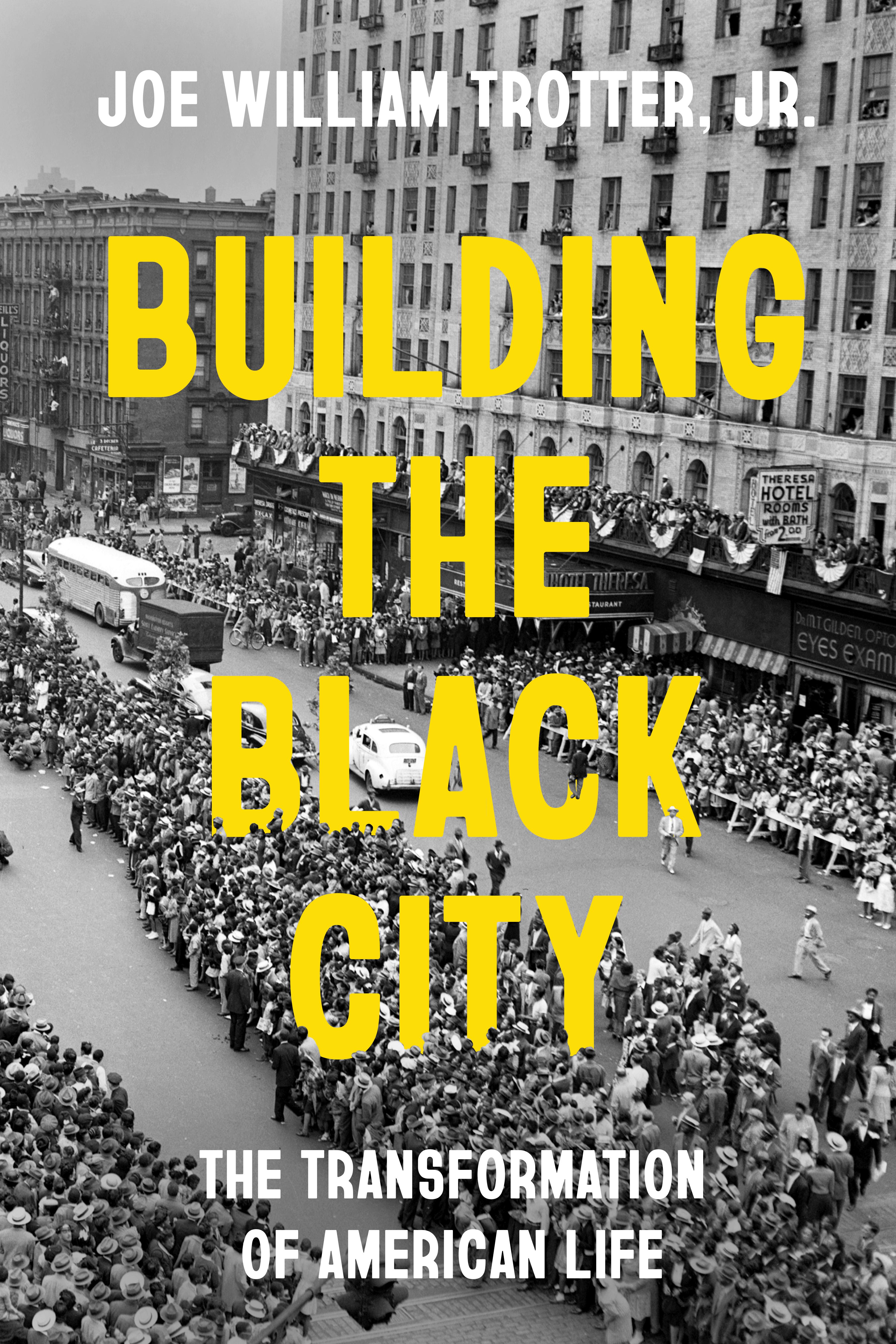
A new way of seeing Black history—the sweeping story of how American cities as we know them developed from the vision, aspirations, and actions of the Black poor.
Building the Black City shows how African Americans built and rebuilt thriving cities for themselves, even as their unpaid and underpaid labor enriched the nation's economic, political, and cultural elites. Covering an incredible range of cities from the North to the South, the East to the West, Joe William Trotter, Jr., traces the growth of Black cities and political power from the preindustrial era to the present.
Trotter defines the Black city as a complicated socioeconomic, spiritual, political, and spatial process, unfolding time and again as Black communities carved out urban space against the violent backdrop of recurring assaults on their civil and human rights—including the right to the city. As we illuminate the destructive depths of racial capitalism and how Black people have shaped American culture, politics, and democracy, Building the Black City reminds us that the case for reparations must also include a profound appreciation for the creativity and productivity of African Americans on their own behalf.
Cities covered: Charleston, Savannah, New Orleans, Washington, D.C., Baltimore, Richmond, Birmingham, Durham, Atlanta, Houston, Miami, Tulsa, early New York (New Amsterdam), Philadelphia, Boston Chicago, Detroit, Milwaukee, Cleveland, Cincinnati, Pittsburgh, San Francisco Bay Area, Los Angeles, and Seattle
Building the Black City shows how African Americans built and rebuilt thriving cities for themselves, even as their unpaid and underpaid labor enriched the nation's economic, political, and cultural elites. Covering an incredible range of cities from the North to the South, the East to the West, Joe William Trotter, Jr., traces the growth of Black cities and political power from the preindustrial era to the present.
Trotter defines the Black city as a complicated socioeconomic, spiritual, political, and spatial process, unfolding time and again as Black communities carved out urban space against the violent backdrop of recurring assaults on their civil and human rights—including the right to the city. As we illuminate the destructive depths of racial capitalism and how Black people have shaped American culture, politics, and democracy, Building the Black City reminds us that the case for reparations must also include a profound appreciation for the creativity and productivity of African Americans on their own behalf.
Cities covered: Charleston, Savannah, New Orleans, Washington, D.C., Baltimore, Richmond, Birmingham, Durham, Atlanta, Houston, Miami, Tulsa, early New York (New Amsterdam), Philadelphia, Boston Chicago, Detroit, Milwaukee, Cleveland, Cincinnati, Pittsburgh, San Francisco Bay Area, Los Angeles, and Seattle
Pay easily by card, Klarna, Apple Pay or Google Pay. Not happy? You always have a 14-day money-back guarantee. Read more in our terms. If you have any questions, email us at hello@memmo.org.
Memmo makes studying easier – wherever you are in the world. We bring your course books and smart study tools together in one place: summaries, quizzes, podcasts and flashcards. Plus Ted, your study buddy who answers anything you wonder. Over 75,000 students already study here – built to help you learn faster and stress less.
You might also like
Buy the book0