
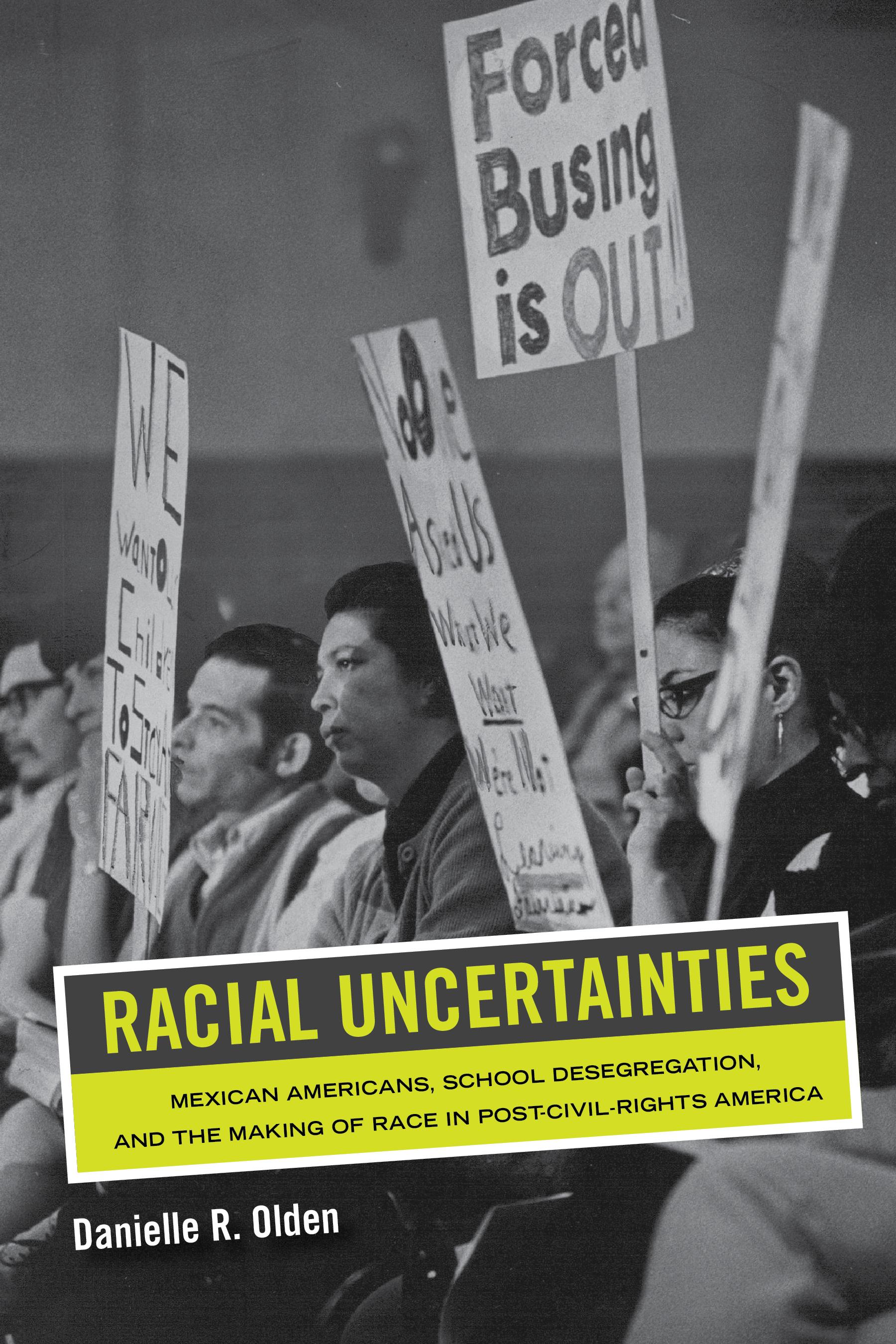
Mexican American racial uncertainty has long been a defining feature of US racial understanding. Were Mexican Americans white or nonwhite? In the post–civil rights period, this racial uncertainty took on new meaning as the courts, the federal bureaucracy, local school officials, parents, and community activists sought to turn Mexican American racial identity to their own benefit. This is the first book that examines the pivotal 1973 Keyes v. Denver School District No. 1 Supreme Court ruling, and how debates over Mexican Americans' racial position helped reinforce the emerging tropes of colorblind racial ideology.
In the post–civil rights era, when overt racism was no longer socially acceptable, anti-integration voices utilized the indeterminacy of Mexican American racial identity to frame their opposition to school desegregation. That some Mexican Americans adopted these tropes only reinforced the strength of colorblindness in battles against civil rights in the 1970s.
In the post–civil rights era, when overt racism was no longer socially acceptable, anti-integration voices utilized the indeterminacy of Mexican American racial identity to frame their opposition to school desegregation. That some Mexican Americans adopted these tropes only reinforced the strength of colorblindness in battles against civil rights in the 1970s.
Pay easily by card, Klarna, Apple Pay or Google Pay. Not happy? You always have a 14-day money-back guarantee. Read more in our terms. If you have any questions, email us at hello@memmo.org.
Memmo makes studying easier – wherever you are in the world. We bring your course books and smart study tools together in one place: summaries, quizzes, podcasts and flashcards. Plus Ted, your study buddy who answers anything you wonder. Over 50,000 students already study here – built to help you learn faster and stress less.
You might also like
Buy the book0