
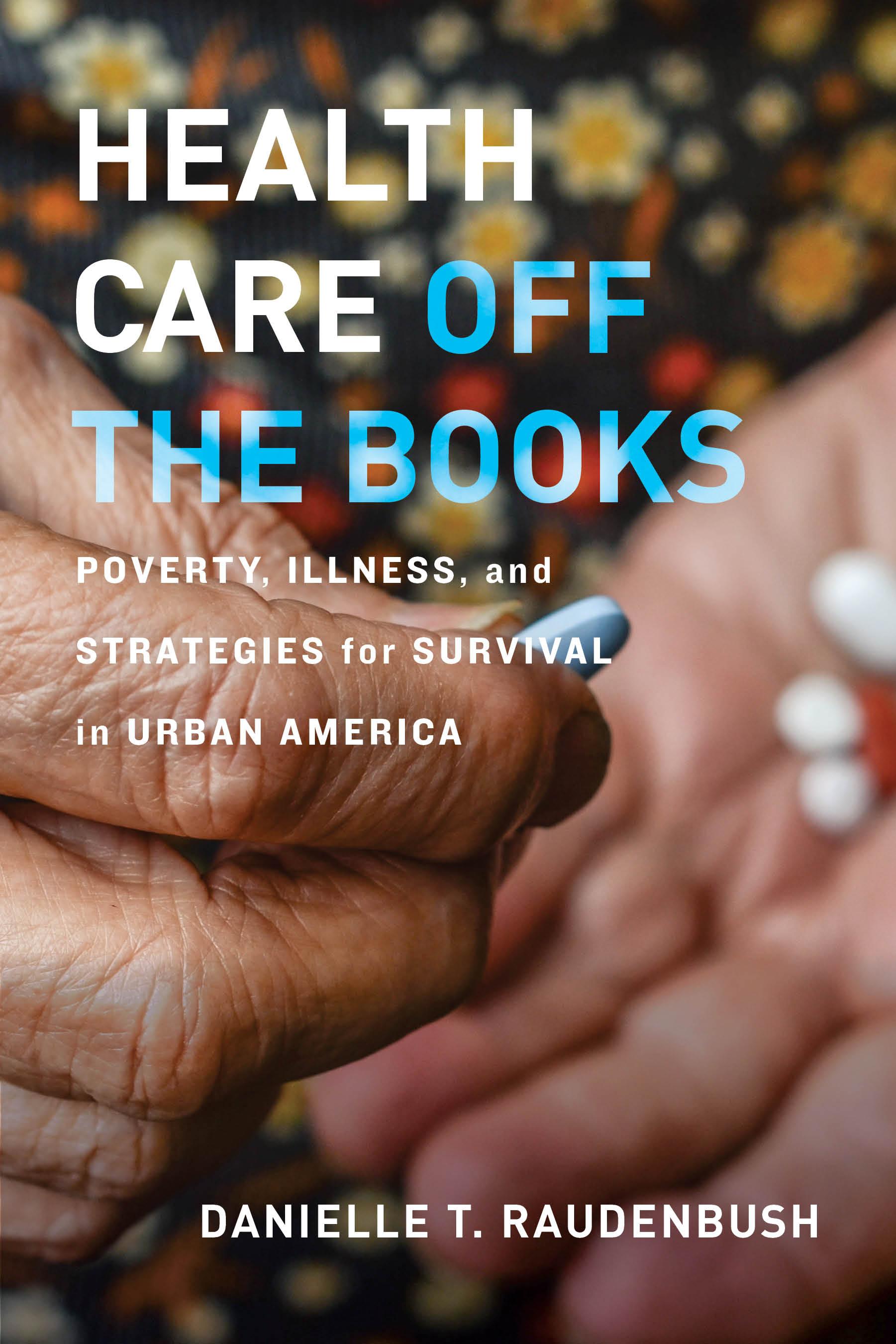
Millions of low-income African Americans in the United States lack access to health care. How do they treat their health care problems? In Health Care Off the Books, Danielle T. Raudenbush provides an answer that challenges public perceptions and prior scholarly work. Informed by three and a half years of fieldwork in a public housing development, Raudenbush shows how residents who face obstacles to health care gain access to pharmaceutical drugs, medical equipment, physician reference manuals, and insurance cards by mobilizing social networks that include not only their neighbors but also local physicians. However, membership in these social networks is not universal, and some residents are forced to turn to a robust street market to obtain medicine. For others, health problems simply go untreated.
Raudenbush reconceptualizes U.S. health care as a formal-informal hybrid system and explains why many residents who do have access to health services also turn to informal strategies to treat their health problems. While the practices described in the book may at times be beneficial to people’s health, they also have the potential to do serious harm. By understanding this hybrid system, we can evaluate its effects and gain new insight into the sources of social and racial disparities in health outcomes.
Pay easily by card, Klarna, Apple Pay or Google Pay. Not happy? You always have a 14-day money-back guarantee. Read more in our terms. If you have any questions, email us at hello@memmo.org.
Memmo makes studying easier – wherever you are in the world. We bring your course books and smart study tools together in one place: summaries, quizzes, podcasts and flashcards. Plus Ted, your study buddy who answers anything you wonder. Over 50,000 students already study here – built to help you learn faster and stress less.