
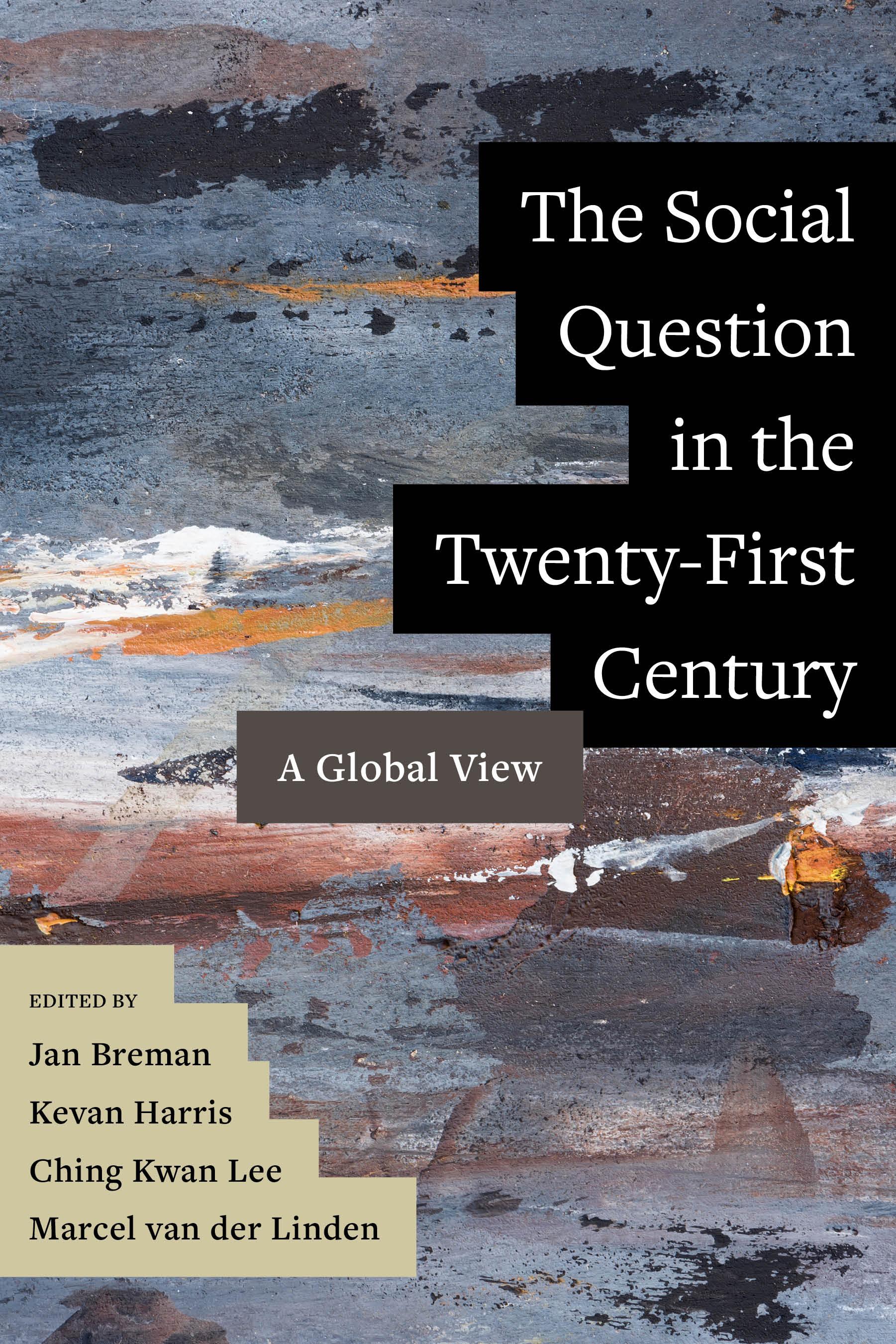
A free open access book is available upon publication. Learn more at www.luminosoa.org.
Want, disease, ignorance, squalor, and idleness: first recognized together in mid-nineteenth-century Europe, these are the focus of the Social Question. In 1942 William Beveridge called them the “giant evils” while diagnosing the crises produced by the emergence of industrial society. More recently, during the final quarter of the twentieth century, the global spread of neoliberal policies enlarged these crises so much that the Social Question has made a comeback.
The Social Question in the Twenty-First Century maps out the linked crises across regions and countries and identifies the renewed and intensified Social Question as a labor issue above all. The volume includes discussions from every corner of the globe, focusing on American exceptionalism, Chinese repression, Indian exclusion, South African colonialism, democratic transitions in Eastern Europe, and other phenomena. The effects of capitalism dominating the world, the impact of the scarcity of waged work, and the degree to which the dispossessed poor bear the brunt of the crisis are all evaluated in this carefully curated volume. Both thorough and thoughtful, the book serves as collective effort to revive and reposition the Social Question, reconstructing its meaning and its politics in the world today.
Want, disease, ignorance, squalor, and idleness: first recognized together in mid-nineteenth-century Europe, these are the focus of the Social Question. In 1942 William Beveridge called them the “giant evils” while diagnosing the crises produced by the emergence of industrial society. More recently, during the final quarter of the twentieth century, the global spread of neoliberal policies enlarged these crises so much that the Social Question has made a comeback.
The Social Question in the Twenty-First Century maps out the linked crises across regions and countries and identifies the renewed and intensified Social Question as a labor issue above all. The volume includes discussions from every corner of the globe, focusing on American exceptionalism, Chinese repression, Indian exclusion, South African colonialism, democratic transitions in Eastern Europe, and other phenomena. The effects of capitalism dominating the world, the impact of the scarcity of waged work, and the degree to which the dispossessed poor bear the brunt of the crisis are all evaluated in this carefully curated volume. Both thorough and thoughtful, the book serves as collective effort to revive and reposition the Social Question, reconstructing its meaning and its politics in the world today.
Pay easily by card, Klarna, Apple Pay or Google Pay. Not happy? You always have a 14-day money-back guarantee. Read more in our terms. If you have any questions, email us at hello@memmo.org.
Memmo makes studying easier – wherever you are in the world. We bring your course books and smart study tools together in one place: summaries, quizzes, podcasts and flashcards. Plus Ted, your study buddy who answers anything you wonder. Over 50,000 students already study here – built to help you learn faster and stress less.
You might also like
Buy the book0