
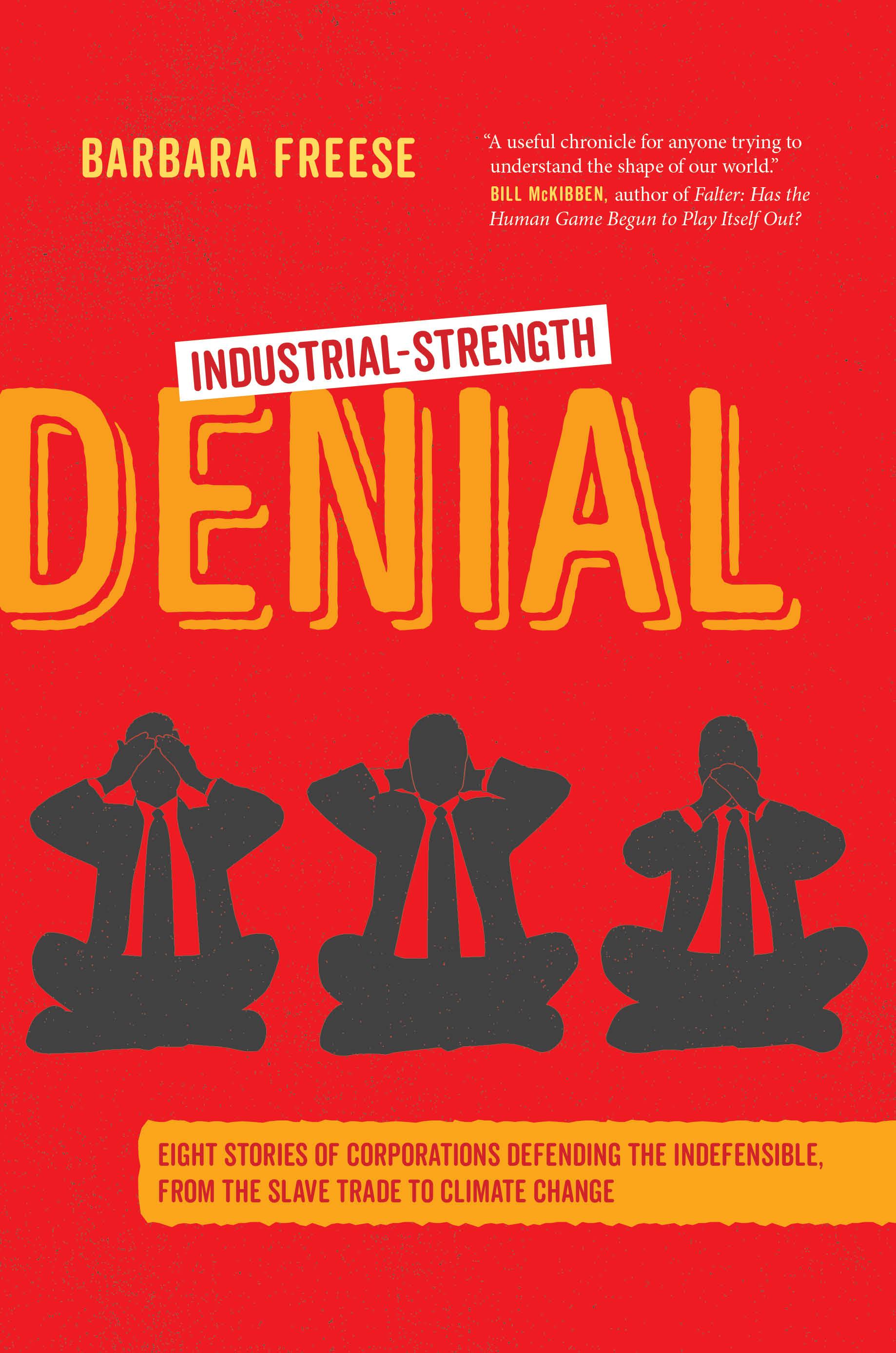
How corporate denial harms our world and continues to threaten our future.
Corporations faced with proof that they are hurting people or the planet have a long history of denying evidence, blaming victims, complaining of witch hunts, attacking their critics’ motives, and otherwise rationalizing their harmful activities. Denial campaigns have let corporations continue dangerous practices that cause widespread suffering, death, and environmental destruction. And, by undermining social trust in science and government, corporate denial has made it harder for our democracy to function.
Barbara Freese, an environmental attorney, confronted corporate denial years ago when cross-examining coal industry witnesses who were disputing the science of climate change. She set out to discover how far from reality corporate denial had led society in the past and what damage it had done.
Her resulting, deeply-researched book is an epic tour through eight campaigns of denial waged by industries defending the slave trade, radium consumption, unsafe cars, leaded gasoline, ozone-destroying chemicals, tobacco, the investment products that caused the financial crisis, and the fossil fuels destabilizing our climate. Some of the denials are appalling (slave ships are festive). Some are absurd (nicotine is not addictive). Some are dangerously comforting (natural systems prevent ozone depletion). Together they reveal much about the group dynamics of delusion and deception.
Industrial-Strength Denial delves into the larger social dramas surrounding these denials, including how people outside the industries fought back using evidence and the tools of democracy. It also explores what it is about the corporation itself that reliably promotes such denial, drawing on psychological research into how cognition and morality are altered by tribalism, power, conflict, anonymity, social norms, market ideology, and of course, money. Industrial-Strength Denial warns that the corporate form gives people tremendous power to inadvertently cause harm while making it especially hard for them to recognize and feel responsible for that harm.
Pay easily by card, Klarna, Apple Pay or Google Pay. Not happy? You always have a 14-day money-back guarantee. Read more in our terms. If you have any questions, email us at hello@memmo.org.
Memmo makes studying easier – wherever you are in the world. We bring your course books and smart study tools together in one place: summaries, quizzes, podcasts and flashcards. Plus Ted, your study buddy who answers anything you wonder. Over 50,000 students already study here – built to help you learn faster and stress less.