
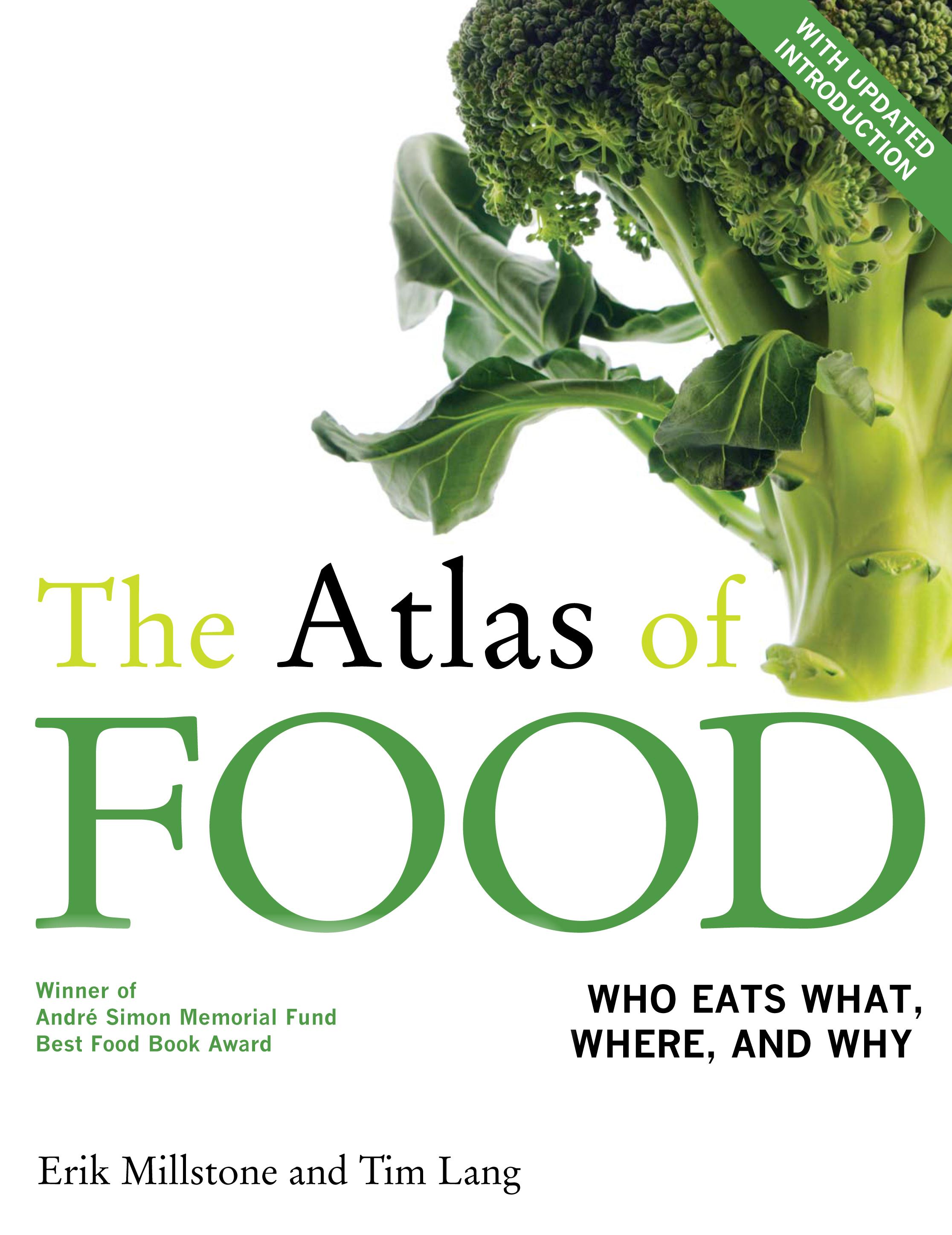
What we eat, where we eat, and how we eat: these questions are explored in this remarkable book, now with a new introduction contextualizing the atlas for 2013 and beyond.
By providing an up-to-date and visually appealing understanding of important issues around global food and agriculture, The Atlas of Food maps out broad areas of investigation—contamination of food and water, overnutrition, micronutrient deficiency, processing, farming, and trade—to offer a concise overview of today's food and farming concerns. Buttressed by engaging prose and vivid graphics, Erik Millstone and Tim Lang convincingly argue that human progress depends on resolving global inequality and creating a more sustainable food production system.
By providing an up-to-date and visually appealing understanding of important issues around global food and agriculture, The Atlas of Food maps out broad areas of investigation—contamination of food and water, overnutrition, micronutrient deficiency, processing, farming, and trade—to offer a concise overview of today's food and farming concerns. Buttressed by engaging prose and vivid graphics, Erik Millstone and Tim Lang convincingly argue that human progress depends on resolving global inequality and creating a more sustainable food production system.
Pay easily by card, Klarna, Apple Pay or Google Pay. Not happy? You always have a 14-day money-back guarantee. Read more in our terms. If you have any questions, email us at hello@memmo.org.
Memmo makes studying easier – wherever you are in the world. We bring your course books and smart study tools together in one place: summaries, quizzes, podcasts and flashcards. Plus Ted, your study buddy who answers anything you wonder. Over 50,000 students already study here – built to help you learn faster and stress less.
You might also like
Buy the book0